

 Made to your size
- 100 boxes
- Custom sizes & styles
- Free dieline support
- Quality print options
- Proof before production
- 8–12 business day production
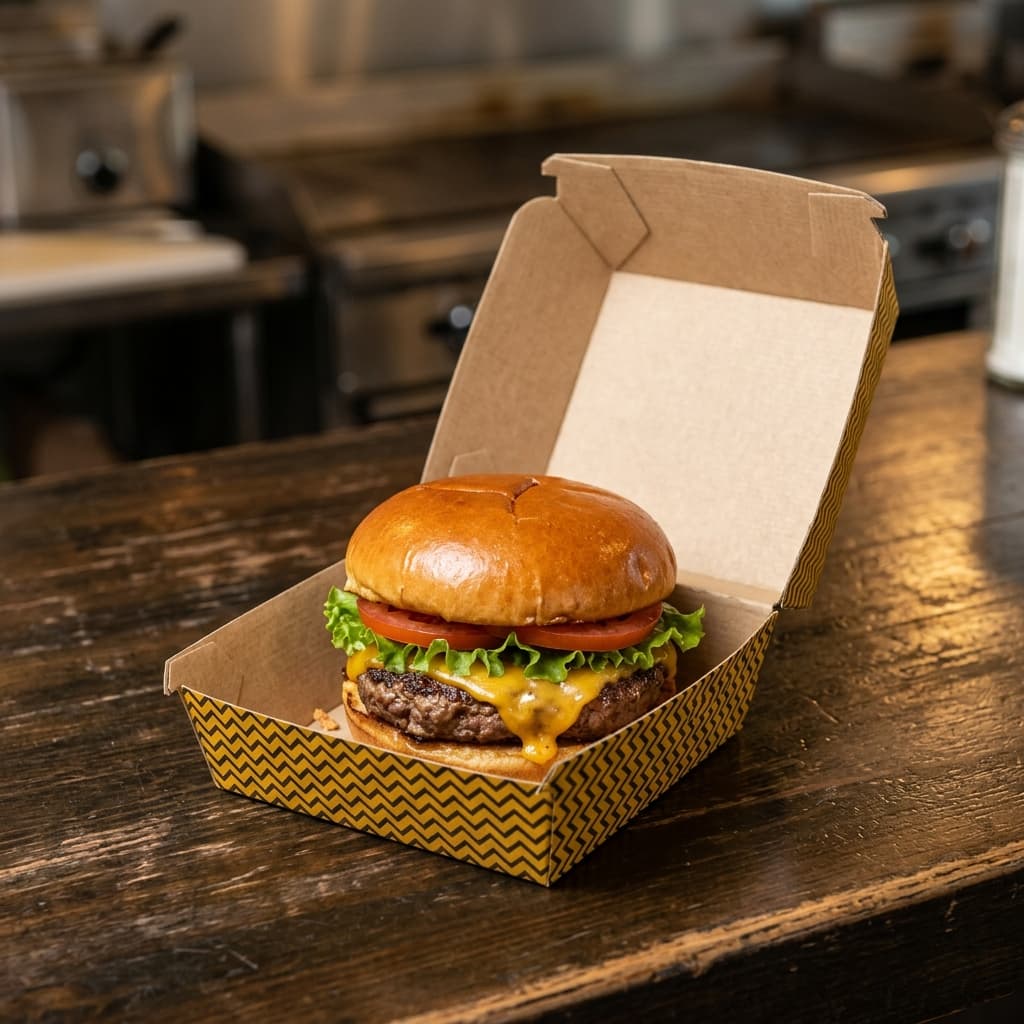
A burger box is a clamshell: one die-cut sheet that forms a base and a hinged lid that locks at the front. It protects the shape of the burger, holds some heat, and stacks in a bag better than a wrap, and grease-resistant board is worth asking for. Burger boxes suit burger bars, takeaways, food trucks and delivery kitchens.
Takeaway clamshell
Custom Burger Boxes
✓Clear proofing before productionSee our process
Get a free quote
Tell us what you are packing and we’ll reply with practical options.
Product features
Built around the jobFront tab lock
Vent hole options
Grease-resistant board available
Pre-glued or hand-locked corners
Single, double and slider sizes
Fine-flute corrugated option
Seal sticker across the lid
Specifications made for your product.
Technical snapshotEvery final specification is confirmed against product weight, packing method, print coverage, route, and order volume.
View artwork preparation guide- SKU
- bm-1032
- Dimensions
- Custom-made around the product and packing workflow
- Materials
- SBS paperboard, Recycled kraft board, F-flute or E-flute corrugated
- Printing
- CMYK, Pantone, white ink, or unprinted
- Finishes
- Matte, gloss, soft-touch, foil, embossing, spot UV
- Quantities
- Starting at 100 on selected configurations
- Proofing
- Dieline and digital proof
Brand the lid they open first.
Artwork and materialsThe clamshell lid is the first thing a customer sees, so your logo belongs on top. Darker or patterned artwork on the lower panels keeps the box looking sharp on arrival. Our packaging guides cover sizing, materials, print, and cost in more depth.
Lid top and side panels
We place your main artwork on the lid top and carry patterns down the front and side panels. We keep key details away from the hinge and the front tab, and the inside is left unprinted.
Explore print and finishesPaperboard, kraft or fine flute
Coated paperboard gives the crispest colour, kraft board gives a natural street-food look, and fine-flute corrugated adds a sturdier feel for delivery. A grease-resistant coating keeps your print clean through service.
Explore material decisionsChoose your box
Tell us your burger builds, the tallest stack on the menu and whether you serve in-store or delivery.
Request a quote
We recommend the board, sizes and corner style that suit your menu and your service line.
Finalize the order
Confirm your sizes, board, vent holes, corner style and delivery details before production starts.
Build the dieline
We draw the clamshell around your bun size and tallest build, with the front lock and any vents.
Approve the proof
Check the lid, front and side artwork on the digital proof, panel by panel.
Roll on production
We print and cut your boxes, glue the corners if chosen, check them, and pack them for delivery.
Best for
Burger barsFood trucksDelivery kitchensTakeawaysWhat changes the price.
Cost factorsEvery project is quoted individually. These are the choices that move the price on almost every order.
- Board
- Coated paperboard costs less than fine-flute corrugated, which holds heat better and costs more.
- Size
- A deeper box for stacked burgers uses more board than a standard single.
- Pre-gluing
- Boxes that arrive with glued corners cost more than flat blanks that lock by hand.
- Quantity
- Takeaway packs run in volume, and the price per box falls as runs get longer.
Buyer guidance
Choosing this format
How a burger clamshell is cut and folded
A burger box is a clamshell: one sheet that forms a base and a hinged lid that locks at the front.
The base and lid are cut as one piece joined along the back fold. Corners are either glued in advance, so the box pops up, or folded and locked by hand, and a tab on the lid slots into the base front.
Pre-glued boxes are faster on a busy line. Hand-locked blanks take less storage space and cost less, but each one takes a few seconds to fold.
- One sheet, back-hinged lid
- Tab and slot front lock
- Pre-glued or hand-locked corners
Paperboard or fine-flute corrugated?
Coated paperboard covers most burgers. Fine-flute corrugated holds heat longer for delivery.
SBS or kraft board with a grease-resistant coating is light, prints well and keeps juice from soaking through. The coating is worth asking for, since meat juice and sauce collect at the base corners.
F-flute or E-flute corrugated is thicker and has a small air layer that keeps the burger warm and the box rigid. It suits delivery, where the box sits in a bag for longer.
Sizing for the tallest build
Size the box for the tallest burger on the menu, with room for any wrap around it.
Measure the bun diameter and the full height of a double or stacked build. A lid that presses down squashes the bun and smears sauce onto the box, which spoils the look on arrival.
Many outlets settle on two or three sizes: a standard single, a deeper box for stacked builds, and a smaller one for sliders or kids' meals. One box for every burger usually means too much air around the small ones. Send us the bun size and your tallest build, and we size the range around them.
Burger box or paper wrap?
A wrap is cheaper and holds a burger tight. A box protects its shape and stacks in a bag.
Wrap paper uses little material and works well when the burger is eaten at once. In a delivery bag, wrapped burgers get pressed under drinks and sides and arrive flattened.
A clamshell keeps the burger's height and can sit under other items. Plenty of kitchens use both, with a light wrap inside the box to hold the burger together.
Steam, vents and print
Trapped steam softens the bun, so vent holes and where the print goes both matter.
A closed clamshell traps moisture from a hot patty. Small vent holes in the lid let some escape, keeping the bun firmer over a short delivery while holding most of the heat.
The lid top is the panel the customer sees first. Grease tends to show near the base, so darker or patterned artwork lower down hides marks, and the inside is left unprinted.
- Vent holes keep buns firmer
- Lid top carries the brand
- Inside left unprinted
Burger box or open food tray?
A clamshell is the right pick for burgers that travel in a bag. An open tray is the right pick for burgers eaten at a counter or a stall within minutes.
For burgers eaten on the spot, a wrap or an open food tray does the job with far less material. We make both, so a kitchen can serve on trays in-house and box the delivery orders.
A clamshell is not sealed, so loose sauce finds its seams. Burgers dripping with sauce or loose toppings leak at the corners and the hinge, and are better in a box with a coated tray inside or a tall-walled container.
Related packaging formats
Compare your options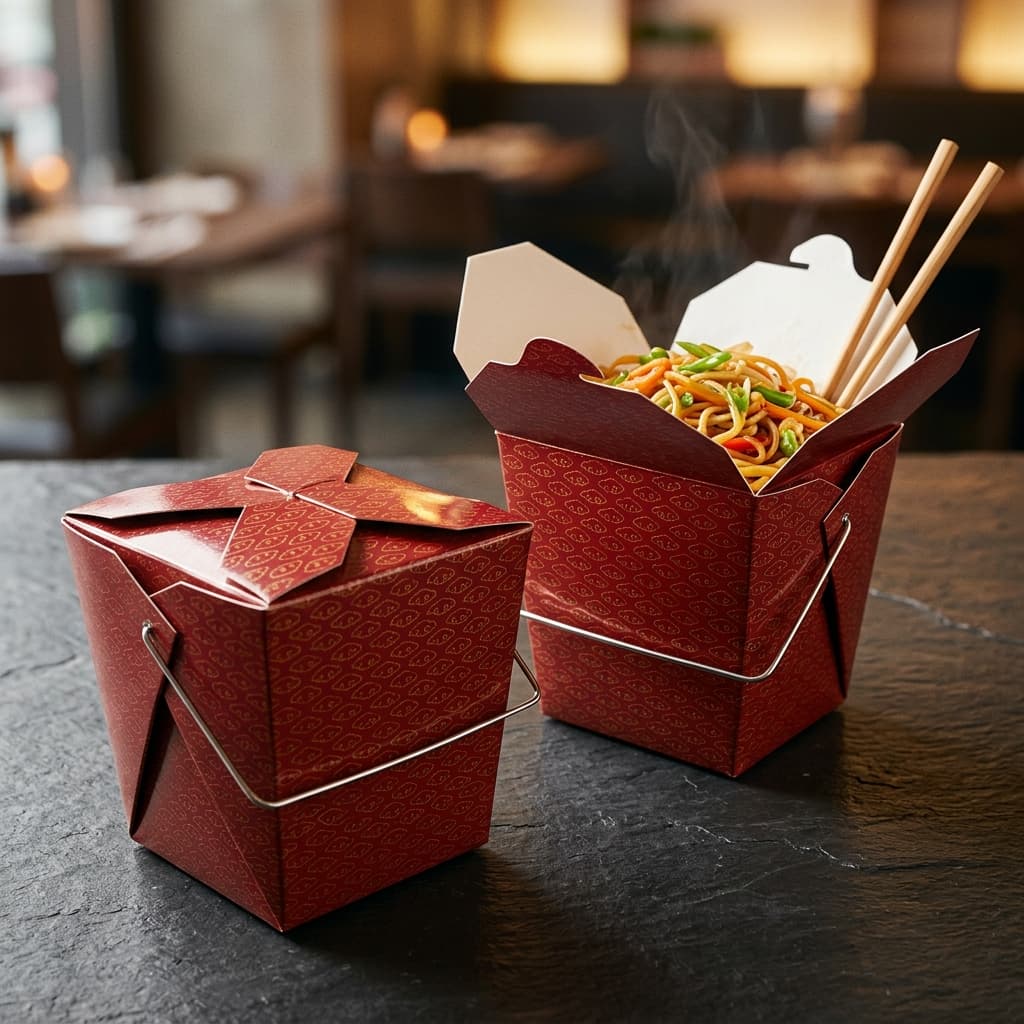
Takeout Boxes
Folded paper pails with locking top flaps and a handle, for noodles, rice and favours.
Explore box style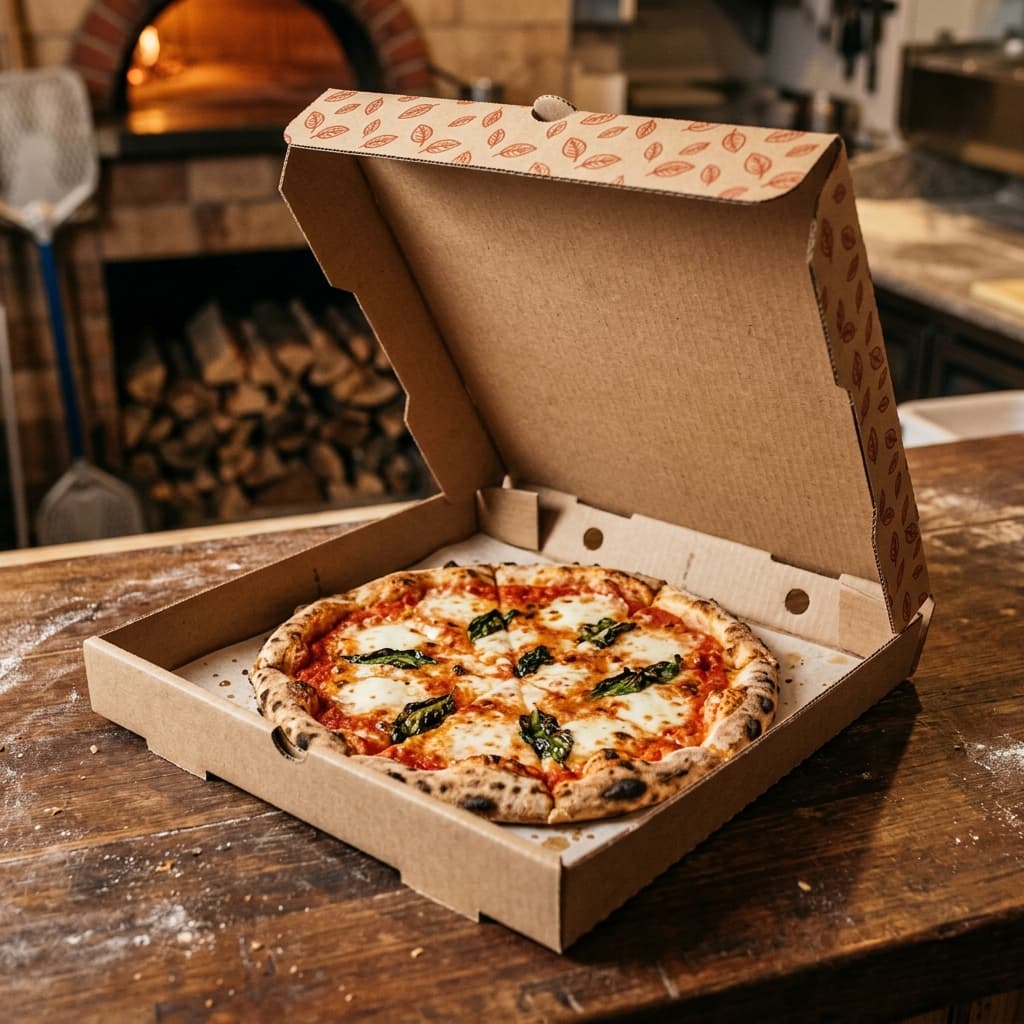
Pizza Boxes
Corrugated boxes that hold heat, vent steam and stack in a delivery bag without crushing.
Explore box style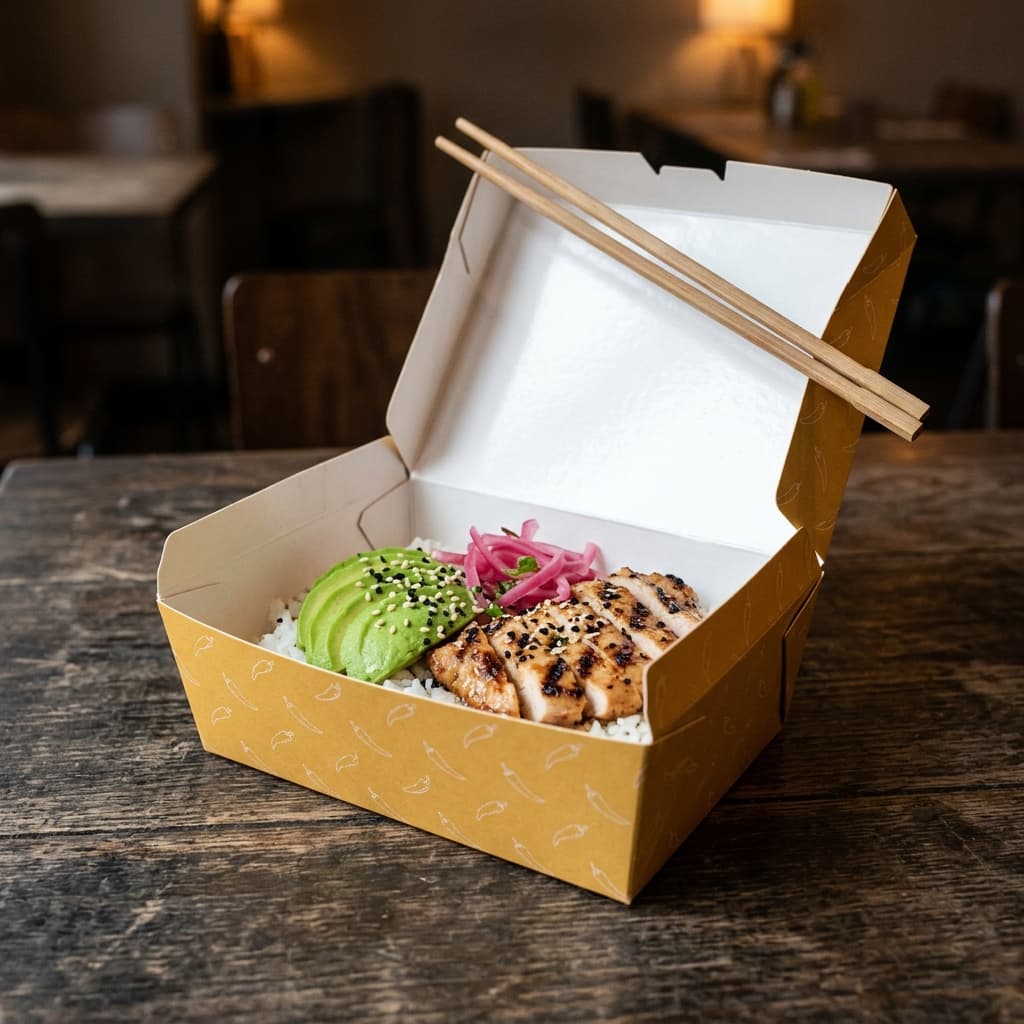
Food Boxes
Thoughtful cartons, sleeves, and carry boxes for food and beverage brands.
Explore box styleQuestions about burger boxes.
Box style FAQsWe’ll confirm the exact details that apply to your structure and volume.
Read all frequently asked questionsCan fries go in the same box as the burger?+
Will a burger box stay closed in a delivery bag?+
Yes. Our burger boxes close with a locking tab and slot made for the size of the box, so the lid stays shut through packing, the delivery bag and the ride. If you want an extra visible seal on top of that, a paper sticker across the lid does the job and also shows the customer the box has not been opened since it left the kitchen.
Is a burger box safe for direct contact with a hot patty?+
Yes. We give burger boxes an inside surface made for hot, greasy food and leave that side unprinted, so nothing printed touches the patty. We confirm the board and coating are suitable for direct food contact before anything goes into production.
Are burger boxes recyclable?+
Yes. We make burger boxes from paperboard, which goes in with paper recycling as long as it is not heavily soiled with food. For the grease barrier we can use a water-based coating instead of a plastic film, which keeps the board easy to recycle.
Start with a free recommendation
Get pricing