 Made to your size
- 100 boxes
- Custom sizes & styles
- Free dieline support
- Quality print options
- Proof before production
- 8–12 business day production
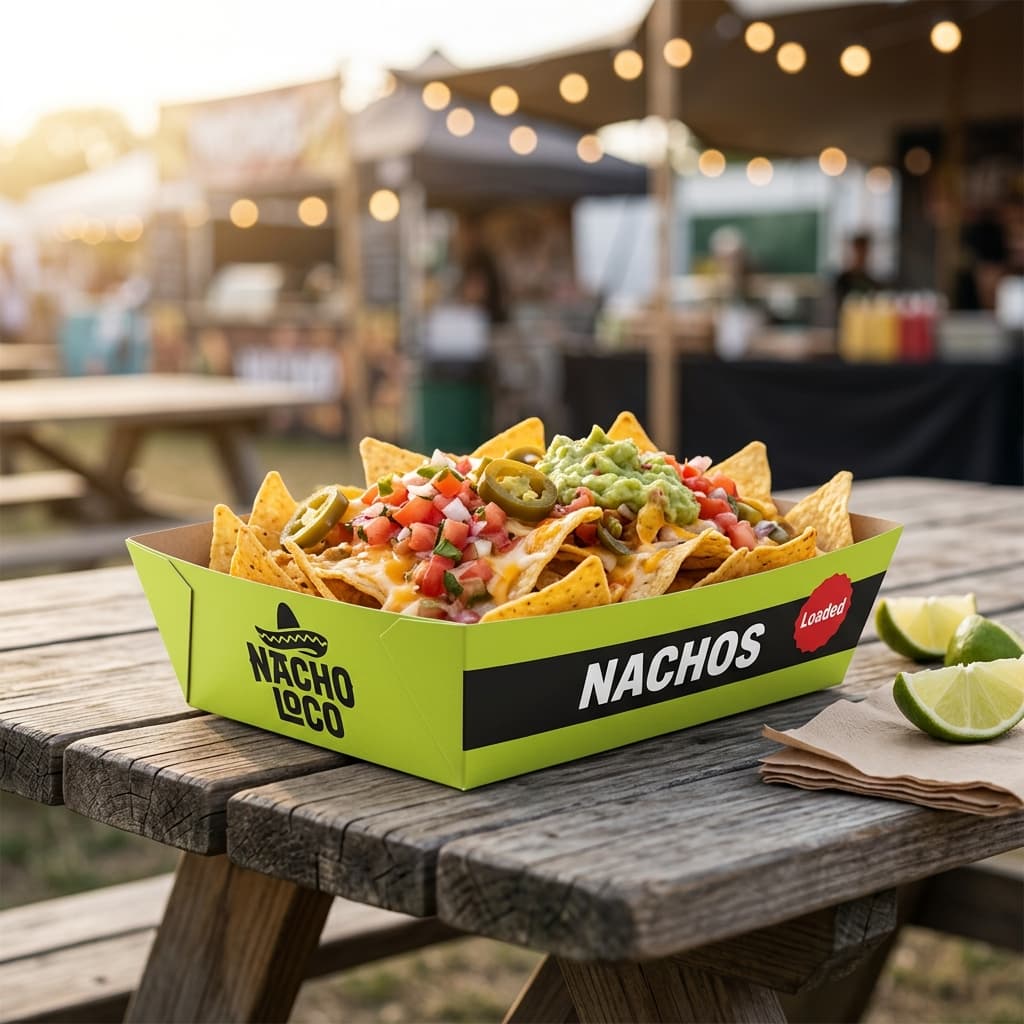
Food trays are open, shallow paperboard or corrugated trays used to serve food that is eaten right away - nachos, loaded fries, hot dogs, snacks and sides. They fold flat for storage and pop up in seconds at a busy counter. Because there is no lid, steam escapes freely and fried food stays crisper, and the sides give a printable surface customers see throughout the meal.
Open trays for serving
Custom Food Trays
✓Clear proofing before productionSee our process
Get a free quote
Tell us what you are packing and we’ll reply with practical options.
Product features
Built around the jobFolds flat, pops up fast
Raised sides hold food in
Grease-resistant board
Boat or square shapes
Pre-formed nesting option
Inside printing
Slide-on takeaway sleeve
Specifications made for your product.
Technical snapshotEvery final specification is confirmed against product weight, packing method, print coverage, route, and order volume.
View artwork preparation guide- SKU
- bm-1086
- Dimensions
- Custom-made around the product and packing workflow
- Materials
- Grease-resistant paperboard, Corrugated board for heavy portions, Kraft paperboard
- Printing
- CMYK, Pantone, white ink, or unprinted
- Finishes
- Matte, gloss, soft-touch, foil, embossing, spot UV
- Quantities
- Starting at 100 on selected configurations
- Proofing
- Dieline and digital proof
Brand the tray, inside and out.
Artwork and materialsWith no lid, the outer walls and the inside of the tray are both seen throughout the meal. Inside print is a strong spot for a logo, with plain areas left where wet food sits. Our packaging guides cover sizing, materials, print, and cost in more depth.
Outer walls and inside base
We set your design on the outer walls and can print the inside, keeping a plain area where sauces sit. A slide-on sleeve gives a second printed panel for takeaway orders.
Explore print and finishesPaperboard, kraft or corrugated
Grease-resistant paperboard shows crisp colour, kraft gives a street-food feel and hides light marks, and corrugated board stays stiff under heavy, wet portions like loaded fries and nachos while still taking your design.
Explore material decisionsChoose your box
Choose boat or square shapes, small to sharing sizes, and flat or pre-formed nesting trays.
Request a quote
Send us your portions and how you serve them, and we recommend shapes, sizes and board.
Finalize the order
Approve the board, coating, inside print, sleeves and quantities for each size before we start.
Build the dieline
We draw each tray around your portions, with lock corners or glued corners as you chose.
Approve the proof
Check the outer wall artwork, inside print and plain areas on your digital proof.
Roll on production
We print, cut and fold or glue your food trays, then check and pack them.
Best for
Food trucks and stallsStadiums and concessionsNachos and loaded friesSharing plates and sidesWhat changes the price.
Cost factorsEvery project is quoted individually. These are the choices that move the price on almost every order.
- Size and depth
- Deeper trays and larger sharing sizes use more board.
- Board
- Corrugated holds heavy, wet portions better but costs more than paperboard.
- Coating
- Sauce-heavy food needs a coated or treated surface.
- Printing inside and outside costs more than outside only.
Buyer guidance
Choosing this format
Open tray or lidded food box?
Pick an open tray when the food is eaten within minutes of serving, and a lidded box when it has to travel.
At a festival, stadium or food truck, most food is eaten within a few minutes of being served. A tray is the quickest pack to fill and hand over, and it lets steam out so fried food keeps its crunch.
For takeaway or delivery, an open tray offers no protection, so we point those orders to a lidded food box that keeps the meal in place and stacks in a bag.
- Fast service at busy counters
- Steam escapes freely
- Lidded box for delivery
Wet and heavy toppings
Cheese sauce, chilli and gravy load the middle of the tray.
A paperboard tray can sag when a heavy, wet portion sits in the centre for a while. Corrugated board or a deeper tray with folded corners stays stiffer. A coated surface keeps sauces from soaking through and onto hands. Tell us your heaviest, wettest dish and we choose the board and depth around that one.
Sizes that work for a menu
Two or three tray sizes usually cover a whole street-food menu.
A small tray for sides and snacks, a medium for a main, and a large sharing tray handle most orders. Using the same trays across items keeps storage simple and service quick.
Related packaging formats
Compare your options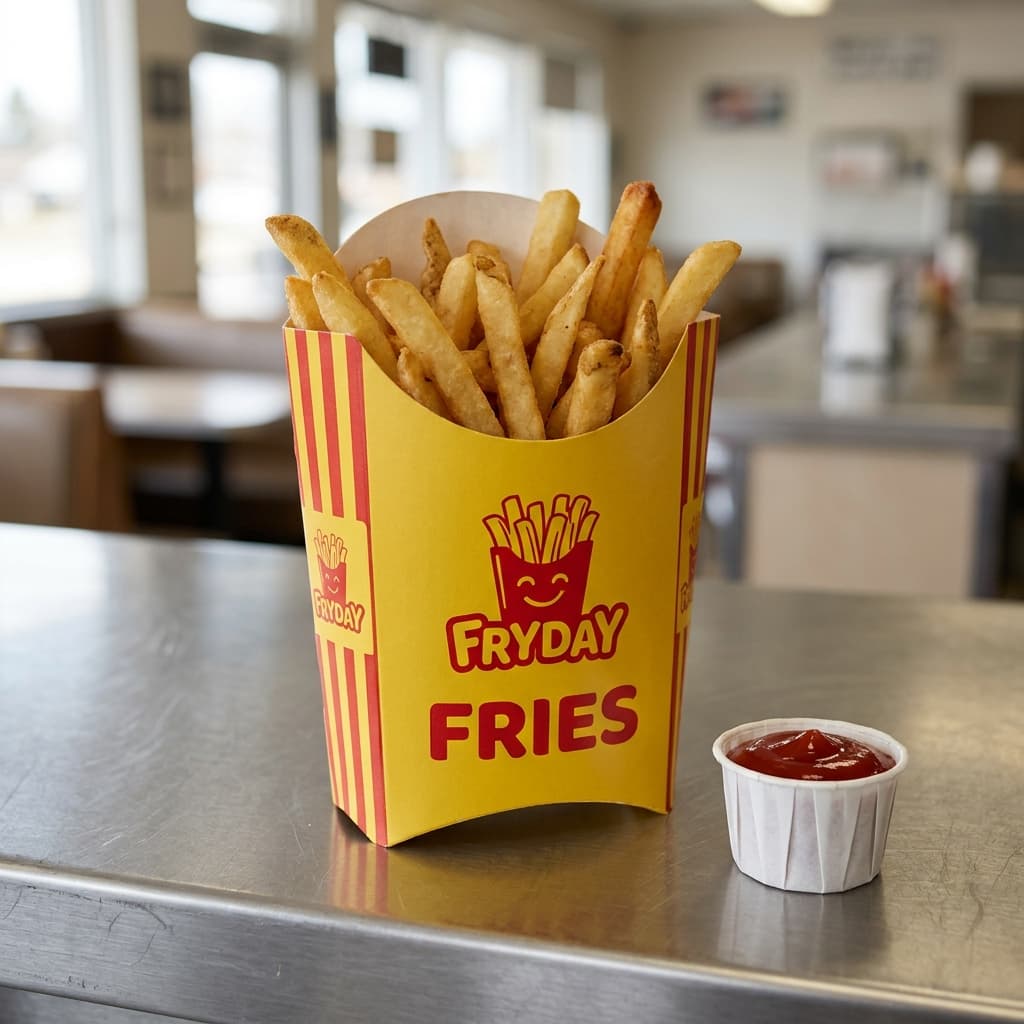
French Fry Boxes
Open-top fry scoops and cartons that keep chips upright, crisp and easy to grab.
Explore box style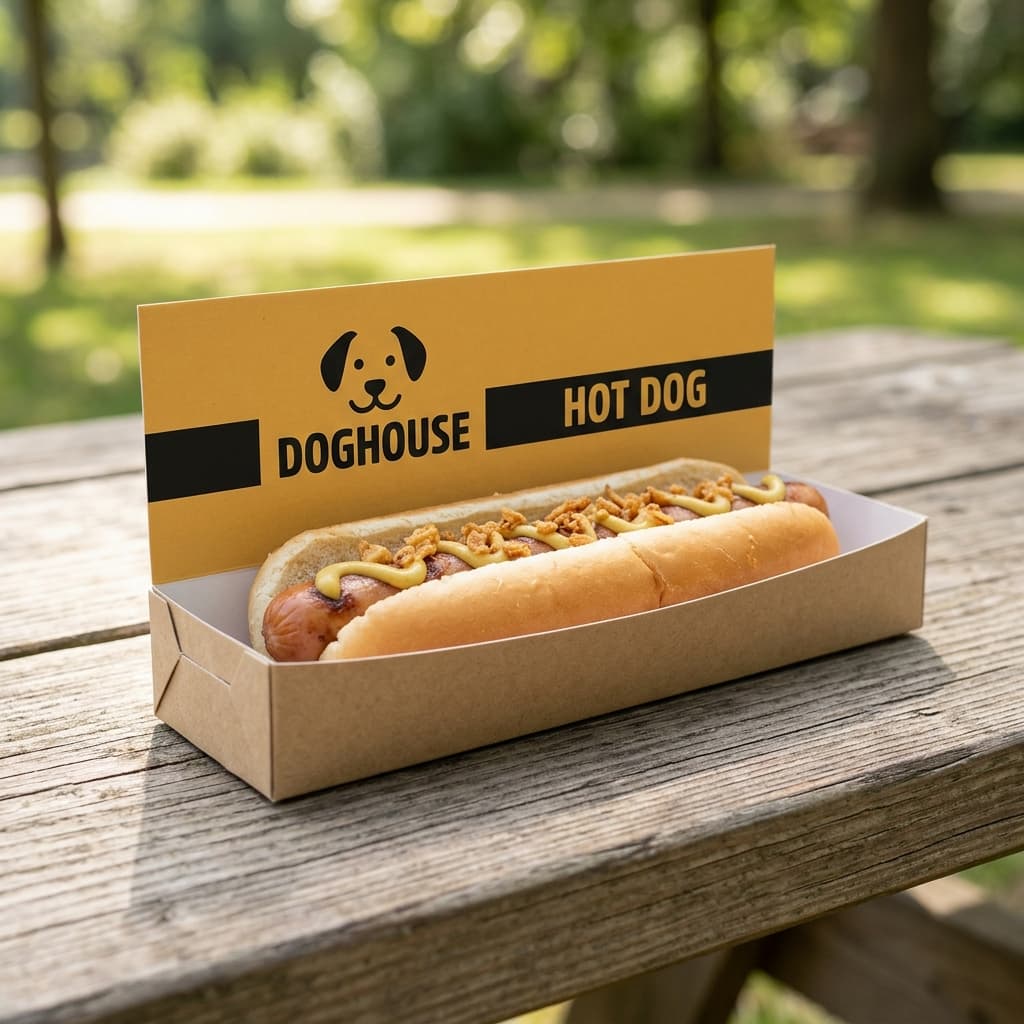
Hot Dog Boxes
Narrow clamshell and tray boxes shaped to cradle a hot dog and its toppings.
Explore box style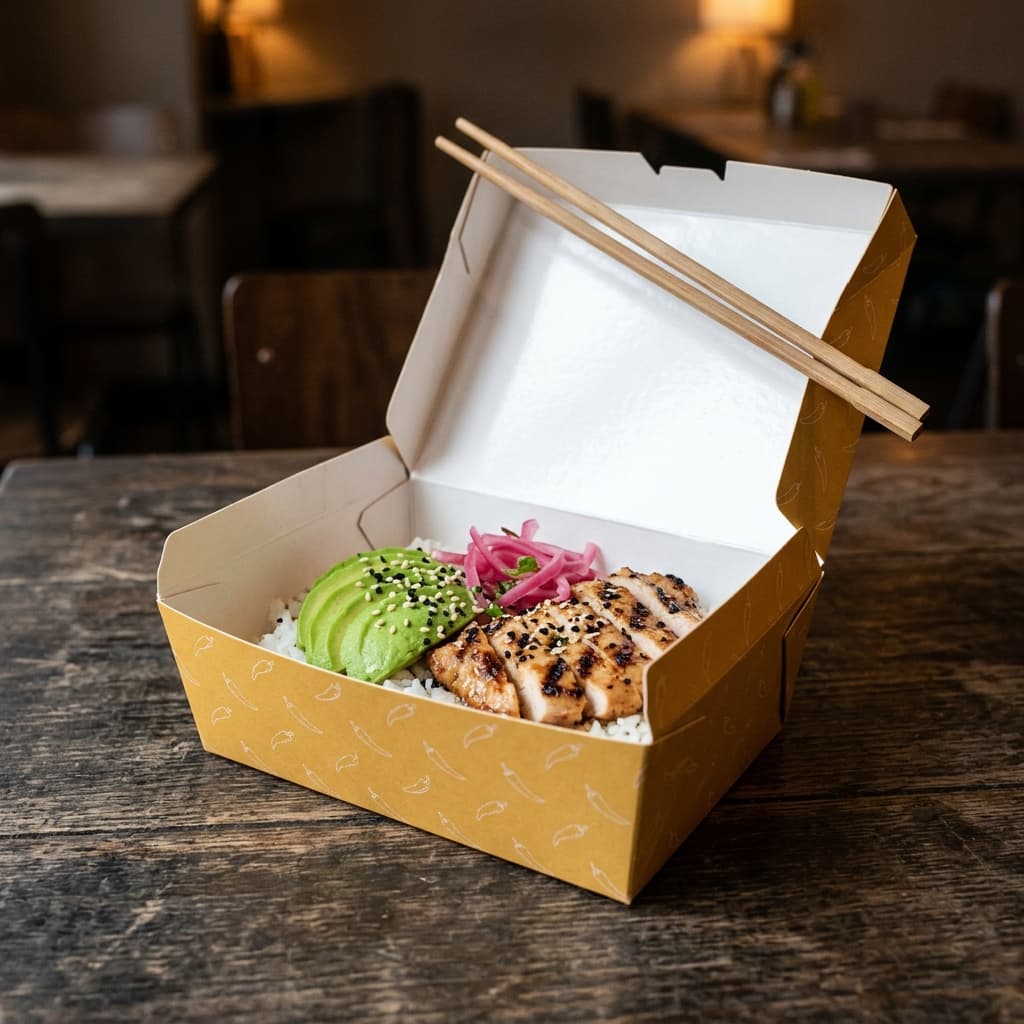
Food Boxes
Thoughtful cartons, sleeves, and carry boxes for food and beverage brands.
Explore box styleQuestions about food trays.
Box style FAQsWe’ll confirm the exact details that apply to your structure and volume.
Read all frequently asked questionsDo food trays come flat or pre-formed?+
We make both. Pre-formed trays with glued corners nest inside each other and are ready to fill, which is fastest at a busy counter but takes more storage. Flat trays with lock corners fold up in a few seconds and pack tightly, which suits food trucks and stalls with little space. Tell us how you serve and we suggest the better fit.
Can food trays be printed on the inside?+
Yes. Inside printing is seen throughout the meal as the food is eaten, which makes it a good spot for a logo or pattern. Because it touches the food directly, we confirm the inks and coating are suitable for direct food contact before anything goes into production, and we can leave a plain area where wet food sits.
Can a food tray be closed for takeaway?+
Yes, for short trips. We can make a fitted paperboard sleeve that slides over the tray and turns it into a simple takeaway pack. A sleeve suits dry snacks and a walk home rather than saucy dishes or long rides, so for delivery we recommend a lidded food box instead.
Can food trays go in the oven?+
No, our standard food trays are made for serving hot food, not for oven heat. If you need trays for ready meals or bakes that go in the oven, tell us the temperature and time and we advise whether an ovenable board and coating suits your product before anything is made. For serving straight from your kitchen, the standard tray is the right choice.
Should I choose a boat tray or a square tray?+
We make both, and most menus use each for different dishes. Boat trays are long with angled ends, which suits hot dogs, nachos and fries eaten from one end. Square or rectangular trays sit flatter and suit sharing plates and portions with several items. Many street-food menus use a boat tray for single items and a square tray for sharing.
Start with a free recommendation
Get pricing