

 Made to your size
- 100 boxes
- Custom sizes & styles
- Free dieline support
- Quality print options
- Proof before production
- 8–12 business day production
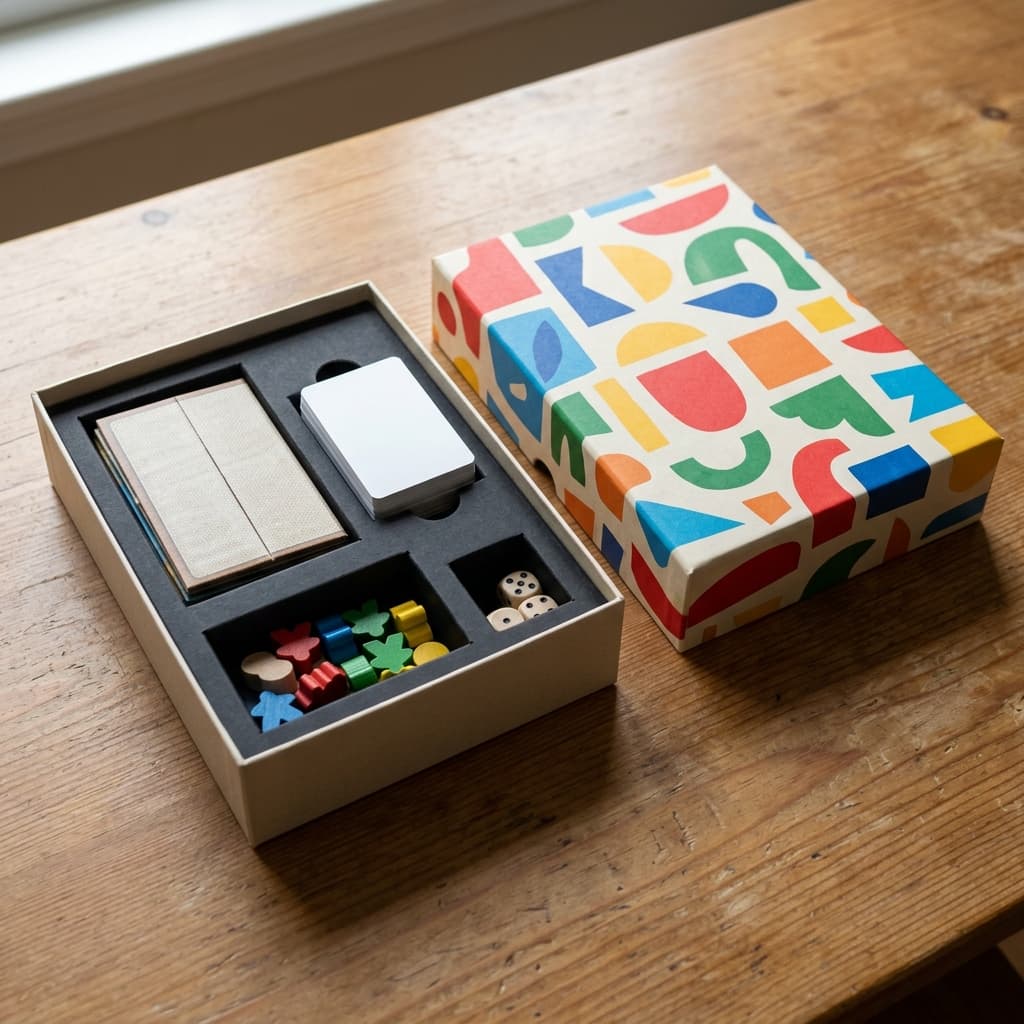
A board game box is a two-piece rigid set-up box: a base and a full or deep lid, both made from thick greyboard wrapped in printed paper. Inside, a tray or set of card dividers holds the folded board, cards, tokens and dice so the game packs away the same way each time. It suits board games, card-driven strategy games, family games and boxed collector editions.
Tabletop games
Custom Board Game Boxes
✓Clear proofing before productionSee our process
Get a free quote
Tell us what you are packing and we’ll reply with practical options.
Product features
Built around the jobInner trays for components
Title print on lid sides
Linen and matt finishes
Full-depth or shallow lid
Card wells sized for sleeves
Printed rules inside the lid
Room left for expansions
Specifications made for your product.
Technical snapshotEvery final specification is confirmed against product weight, packing method, print coverage, route, and order volume.
View artwork preparation guide- SKU
- bm-1041
- Dimensions
- Custom-made around the product and packing workflow
- Materials
- Greyboard, Printed wrap paper, Card or moulded trays
- Printing
- CMYK, Pantone, white ink, or unprinted
- Finishes
- Matte, gloss, soft-touch, foil, embossing, spot UV
- Quantities
- Starting at 100 on selected configurations
- Proofing
- Dieline and digital proof
Put the game on the shelf first.
Artwork and materialsThe lid top and its sides sell the game, and the inside lid helps players set up. Title print on the lid sides keeps it readable when stacked on a shelf. Our packaging guides cover sizing, materials, print, and cost in more depth.
Lid, sides and inside print
We set your cover art on the lid top and the title on every lid side, wrapping around the corners cleanly. The inside of the lid and base can carry a set-up diagram or a quick rules summary.
Explore print and finishesLinen, matt and lid finishes
Linen-textured and matt wraps give a premium, tactile feel, while spot finishes or foil can pick out the title. Card or moulded trays inside keep components in place and can be printed to match.
Explore material decisionsChoose your box
Tell us the board, cards, tokens and dice in the game, and any expansions you plan.
Request a quote
We recommend the lid depth, tray layout and finishes that suit your components and shelf.
Finalize the order
Confirm the box size, lid depth, tray layout, finishes and delivery details.
Build the dieline
We draw the box and trays around your components, with card wells sized for sleeves if needed.
Approve the proof
Check the lid art, side titles, inside print and tray layout on the digital proof.
Roll on production
We make and wrap your boxes, fit the trays, check the lid fit, and pack them for delivery.
Best for
Board gamesStrategy gamesFamily gamesCollector editionsWhat changes the price.
Cost factorsEvery project is quoted individually. These are the choices that move the price on almost every order.
- Board thickness
- Thicker greyboard gives a firmer box that resists dents, and costs more in board and in freight.
- Inner trays
- A plain card well is the simplest option. Custom trays with a cavity for each component take more tooling and more hand work.
- Wrap and finish
- Full-colour wrap paper is standard. Linen texture, spot gloss or foil on the lid each add a step.
- Quantity
- Wrapping, tooling and set-up are shared across the run, so the cost per box falls as the order grows.
Buyer guidance
Choosing this format
Two wrapped trays make a game box
A game box is two rigid trays, a base and a lid, each made from greyboard and wrapped in printed paper.
Each half starts as a flat piece of greyboard cut and scored into a tray. The corners are taped or stayed, then a sheet of printed paper is glued over the outside and folded over the top edge into the inside. The lid is made a little larger than the base so it slides down over it.
Because the box is made up rather than folded flat, it arrives ready to use and keeps its shape for years of play. That strength is the reason games use it: the box is opened and closed many times, stacked on shelves and carried to friends' houses.
- Base and lid made as separate trays
- Paper wrap folds over into the inside edge
- Arrives made up, not flat
Greyboard, wrap paper and trays
Greyboard gives the strength, the wrap paper carries the art, and the tray decides how well the game packs away.
Greyboard for game boxes is commonly in the 1.5-2.5mm range. Thinner board keeps the weight down for small games; thicker board stops a heavy box from bowing in the middle of the lid when other games sit on top of it.
The inner tray can be a simple card well that holds the board flat with the bits in a space below, a set of card dividers, or a vacuum-formed or moulded tray with a cavity for each type of piece. A fitted tray looks tidy and stops pieces mixing, but it has to be drawn around the final components, so it is best left until they are fixed.
Sizing around the board and the bits
The folded board sets the footprint, and the components set the depth.
Start with the game board folded to its final size, then add a few millimetres of clearance on each side so it drops in and lifts out without catching. The rulebook usually sits on top, so it should be the same size as the folded board or a little smaller.
Depth comes from what sits under the board: trays, card decks, tokens, dice and any figures. Measure the tallest stack and allow some air, because a lid that has to be forced down over a full tray will split its corners. Send us every final component before the size is settled, as a late change can mean a new tray and a new box.
- Footprint: folded board plus clearance
- Depth: tallest stack of components
- Fix components before sizing the tray
Rigid set-up box or tuck-end carton?
A small card game can live in a tuck-end carton. A game with a board and many pieces needs a rigid box.
A tuck-end carton is printed folding board, cheap to make and ships flat. It suits a single deck of cards or a small filler game where the box is light and is not opened and stacked for years.
A rigid set-up box costs more and takes more space in transit because it travels made up, but it survives repeated play, holds a heavy board without sagging and stacks on a shelf. For anything sold as a full board game, players expect the rigid box and judge the game partly by it.
Printing the lid and sides
The wrap paper is printed flat and folded round the edges, so the art needs extra room to turn in.
Artwork for a wrapped box extends past the visible faces, round the edges and into the inside of the lid, so we add a turn-in allowance on every side of the dieline. Keep text and key details away from the edges, where the paper bends and can shift slightly.
Games are stored stacked, so the long side of the lid often shows more than the top. Putting the title, player count and play time on the sides helps on a shop shelf and at home. A linen-textured or matt laminated paper resists scuffs from being slid in and out of a pile, which is why it is common on games.
- Allow for the turn-in round each edge
- Title and player count on the lid sides
- Textured or matt finishes hide scuffs
Game box alone or inside a mailer?
A rigid game box is the right pick for the shop shelf and the games cupboard. A mailer around it is the right pick for the trip to a player's door.
The corners of a wrapped box dent and the wrap scuffs if it travels bare, so games sent by post need an outer mailer box or shipper sized closely to the game. A snug fit stops the game box sliding about and knocking its corners inside the outer.
Games for young children often carry age warnings or safety marks, so we leave room for the information your game must carry and lay it out on the proof. The packaging itself should avoid small loose parts that could come away.
Related packaging formats
Compare your options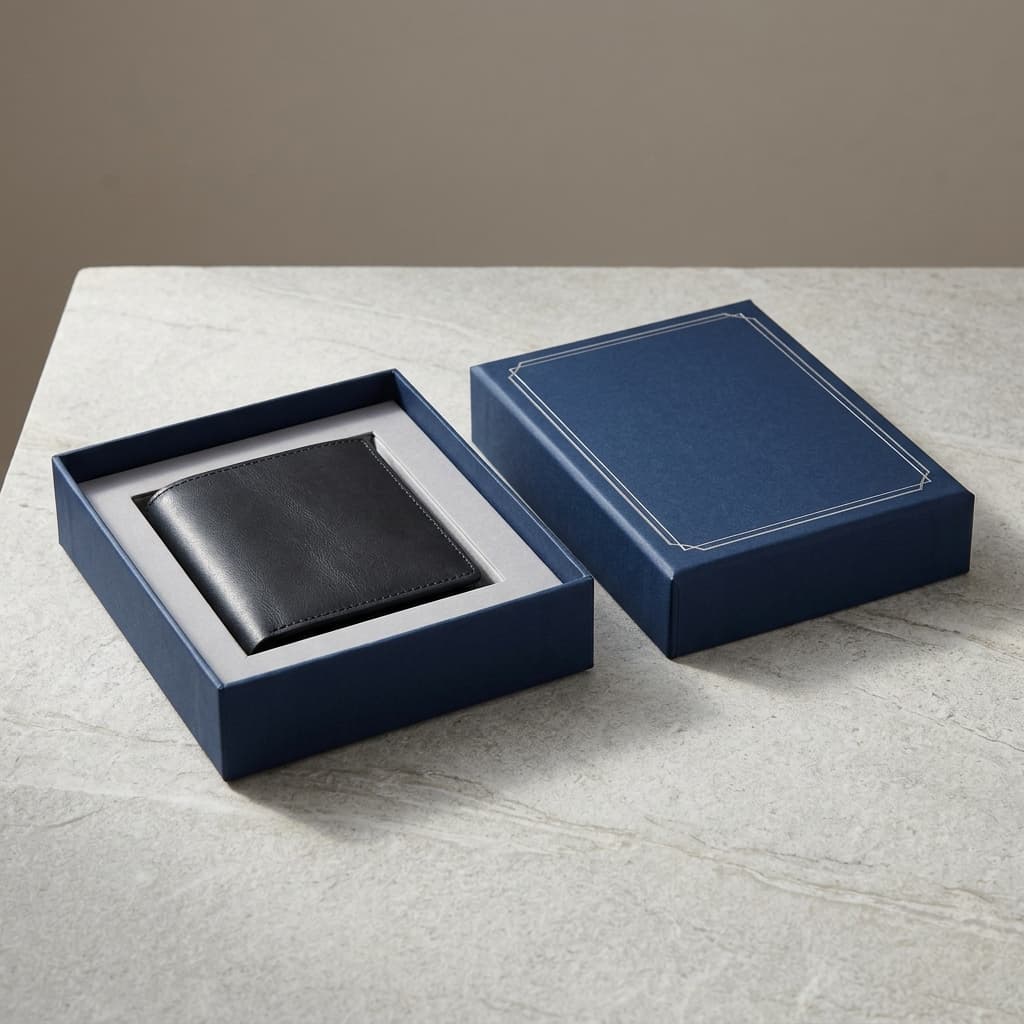
Rigid Boxes
Luxury two-piece and magnetic boxes with a substantial, keepsake feel.
Explore box style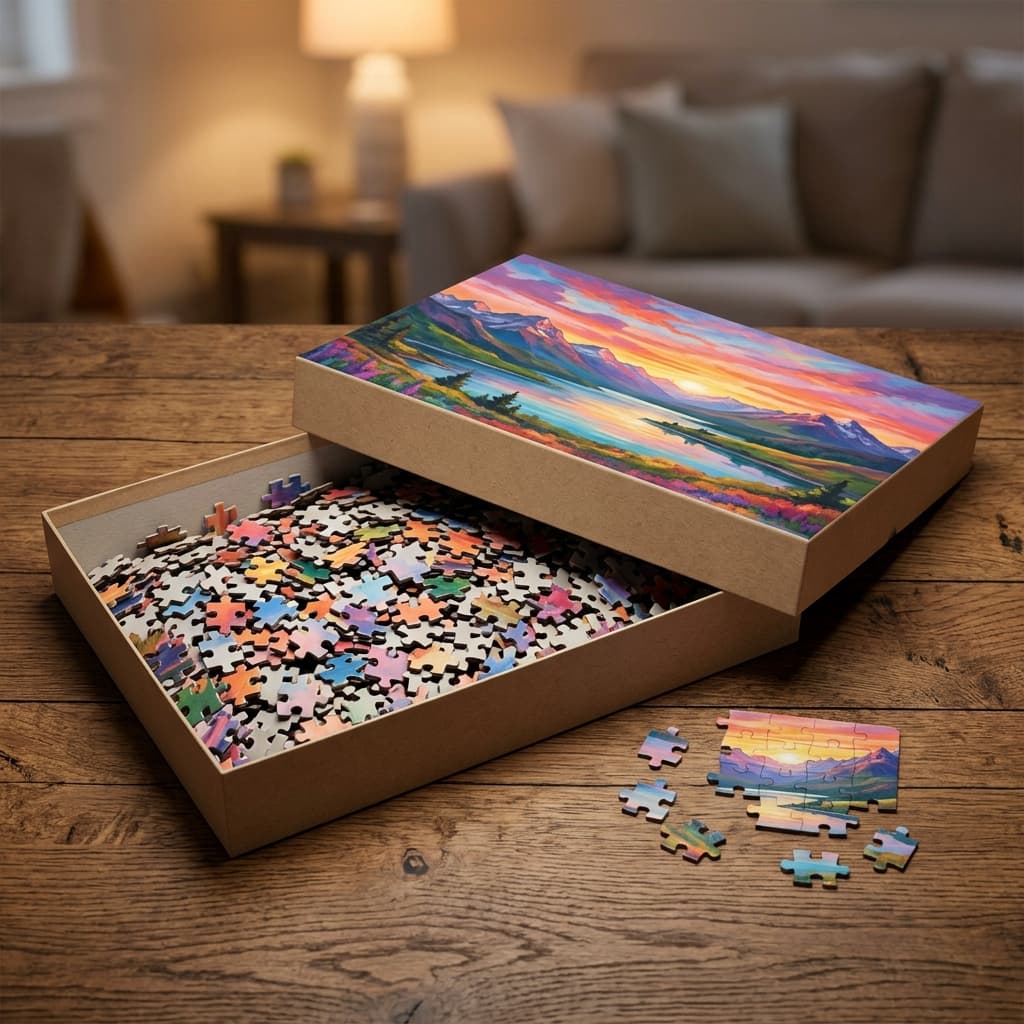
Puzzle Boxes
Lift-off lid boxes sized to the piece count, with the finished picture printed on the lid.
Explore box style
Inserts
Fitted inserts that hold a product still, so it arrives as it was packed.
Explore box styleQuestions about game boxes.
Box style FAQsWe’ll confirm the exact details that apply to your structure and volume.
Read all frequently asked questionsShould a game box have a full-depth lid or a shallower one?+
We make both. A full-depth lid covers the whole base, which gives a stronger box for stacking because both walls carry the load. A shallower lid is easier to lift off and shows part of the base, which we then wrap and print too. Many board games use a deep lid that stops just short of the table, leaving a small finger gap, and that is what we recommend for retail.
Can the box leave room for sleeved cards and expansions?+
Yes, and we recommend deciding before the insert is drawn, because it sets the box depth. Many players put cards in protective sleeves, which make a deck noticeably thicker, so we can size the card wells for sleeved decks. If expansions are planned, we leave space in the base so players keep everything in one box. Our die cut inserts hold each part in place.
Can the lid of a game box have a special finish?+
Yes. We can add foiling to the title, embossing to raise the logo, or spot UV to make the cover art shine. A matte or gloss lamination protects the lid from scuffs as it is handled. Games are opened, stacked and carried again and again, so we recommend a protective finish on every game box lid.
Can the inside of the lid and base be printed?+
Yes. We line the inside with a separate printed sheet, which can carry artwork, a set-up diagram or a quick rules summary. Players see it every time they open the box, so it is a useful place for information they need during set-up. We print it alongside the outer wrap, so the inside and outside match.
Start with a free recommendation
Get pricing