
 Made to your size
- 100 boxes
- Custom sizes & styles
- Free dieline support
- Quality print options
- Proof before production
- 8–12 business day production
A shoe box holds one pair of shoes and spends most of its life stacked in a stockroom, so it has to carry weight and show its label at the end. It comes as a lidded box, a box with a hinged lid, or a drawer that slides out of a sleeve, usually in a few sizes that each cover a range of shoe sizes. It suits trainers, everyday shoes, boots, children's shoes and premium footwear.
Footwear packaging
Custom Shoe Boxes
✓Clear proofing before productionSee our process
Get a free quote
Tell us what you are packing and we’ll reply with practical options.
Product features
Built around the jobSized by shoe size range
Stacking strength
End panel for size labels
End-panel air and finger holes
Cut-in or rope carry handle
Colourway sleeve or band
Heel-to-toe pair layout
Specifications made for your product.
Technical snapshotEvery final specification is confirmed against product weight, packing method, print coverage, route, and order volume.
View artwork preparation guide- SKU
- bm-1043
- Dimensions
- Custom-made around the product and packing workflow
- Materials
- E-flute corrugated, B-flute corrugated, Folding boxboard, Rigid board
- Printing
- CMYK, Pantone, white ink, or unprinted
- Finishes
- Matte, gloss, soft-touch, foil, embossing, spot UV
- Quantities
- Starting at 100 on selected configurations
- Proofing
- Dieline and digital proof
Make the stockroom wall look like you.
Artwork and materialsThe lid carries your brand, and the end panel carries the size and colourway label that faces out on the stockroom shelf. Both need to read at a glance. Our packaging guides cover sizing, materials, print, and cost in more depth.
Lid, sides and end panel
We set your branding on the lid and sides, and leave a clear space on the end panel for size and colourway labels. We keep artwork clear of any air holes, finger holes or handle cut-outs.
Explore print and finishesCorrugated, boxboard or rigid
Corrugated gives bold print with strong stacking, boxboard gives crisp colour for everyday ranges, and rigid board gives a premium feel. A printed sleeve or band can give each colourway its own look.
Explore material decisionsChoose your box
Tell us the shoe styles, the size range each box covers and how you stock them.
Request a quote
We recommend the box style, board and number of sizes that cover your range neatly.
Finalize the order
Confirm sizes, board, lid or drawer style, holes, handles and delivery details.
Build the dieline
We draw each box size around the pair laid heel to toe, with the end panel set for labels.
Approve the proof
Check the lid, sides and end panel label space on the digital proof for every size.
Roll on production
We make your boxes, check the stacking and lid fit, and pack them for delivery.
Best for
TrainersBootsChildren's shoesPremium footwearWhat changes the price.
Cost factorsEvery project is quoted individually. These are the choices that move the price on almost every order.
- Number of sizes
- Each box size needs its own cutting tool, so covering the range with fewer sizes keeps tooling down.
- Board
- E-flute corrugated stacks well for the cost. Thicker flute for boots, or rigid board for luxury pairs, costs more.
- Style
- A one-piece box with a hinged lid is the simplest. A separate lid, or a drawer and sleeve, adds parts and steps.
- Print coverage
- One or two colours on kraft is the lowest cost. Full colour inside and out costs more.
Buyer guidance
Choosing this format
Lid, hinge or drawer: shoe box builds
A shoe box is either a base with a lid, a one-piece box with a hinged lid, or a drawer that slides out of a sleeve.
The classic two-piece box has a base and a separate lid that sits over it. The one-piece version folds from a single blank with the lid attached along the back edge, which is quicker to pack and cannot get separated from its base in a busy stockroom.
A drawer-style box has a tray that slides out of an outer sleeve. It feels more considered when opened and suits premium trainers and limited releases, but it uses more board and is slower to pack.
- Two-piece: base and separate lid
- One-piece: lid hinged at the back
- Drawer: tray slides out of a sleeve
Sizing by shoe size range
Brands rarely make one box per shoe size. A few box sizes each cover a band of sizes.
Measure the longest shoe in each band, from heel to toe, and the tallest point, usually the heel or the ankle collar. The box is sized to that pair, with room for tissue or a paper insert. Smaller sizes in the band sit in the same box with a little more air.
Boots, high tops and children's shoes usually need their own sizes because their height and length change so much. Settling the size bands early keeps the number of cutting tools, and the number of box types to store, under control. Tell us your size bands and we keep the number of box sizes as low as the range allows.
Stacking strength and board
Shoe boxes are stacked high on stockroom shelves, so the walls must carry the boxes above without bowing.
E-flute corrugated is the usual choice for everyday shoes: it is light, stacks well and takes print cleanly. Heavier boots often move up to a thicker flute. Folding boxboard is lighter but bows sooner under weight, so it suits small or children's shoes that are not stacked as high.
The lid matters too. A lid that sits loose lets the stack lean, and a lid that is too tight crushes the base corners when it is pressed on. Rigid board boxes stack firmly and feel premium, at a higher cost and with no flat shipping.
- E-flute: light, stacks well, prints cleanly
- Thicker flute for heavy boots
- Boxboard bows sooner under load
Lidded box or drawer-style?
A lidded box is quicker and cheaper. A drawer-style box makes the opening part of the product.
The lidded box is what most stockrooms are set up for: staff lift the lid, check the pair and close it again. It packs fast, stacks well and is easy to make in many sizes.
A drawer box slides out end-on, which works well when boxes are stacked, because the pair can be checked without moving the boxes above. It costs more, though, and the sleeve has to fit closely or the drawer slides out on its own.
Printing and the end label
In a stockroom only the end of the box is seen, so that panel needs room for the size, style and colour label.
We keep a clear, flat area on one end panel for the product label or barcode sticker. It is the part staff read when they look for a size, and it should not be crowded out by artwork.
Many shoe boxes are printed one or two colours on kraft corrugated, which looks clean and keeps cost down. Full colour, inside print or a printed tissue add to the opening, and are common on premium and limited lines.
- Clear end panel for the size label
- Kraft and one colour is common
- Inside print for premium lines
Shoe box or paper bag?
A shoe box is the right pick for a pair that is stocked, stacked and tried on. A paper bag is the right pick for light footwear such as flip-flops and slippers.
Flip-flops, slippers and some sandals are often sold in a paper bag, a band or on a hanger, because a full box costs more than it adds. Knee-high boots sit at the other end and need a long, deep boot box that is closer to a carton in build.
A standard shoe box is not designed as a postal carton. Shoes sold online usually go out in their shoe box inside a bag or an outer box, unless the shoe box itself is made from heavier corrugated and designed to ship on its own, which we can do.
Related packaging formats
Compare your options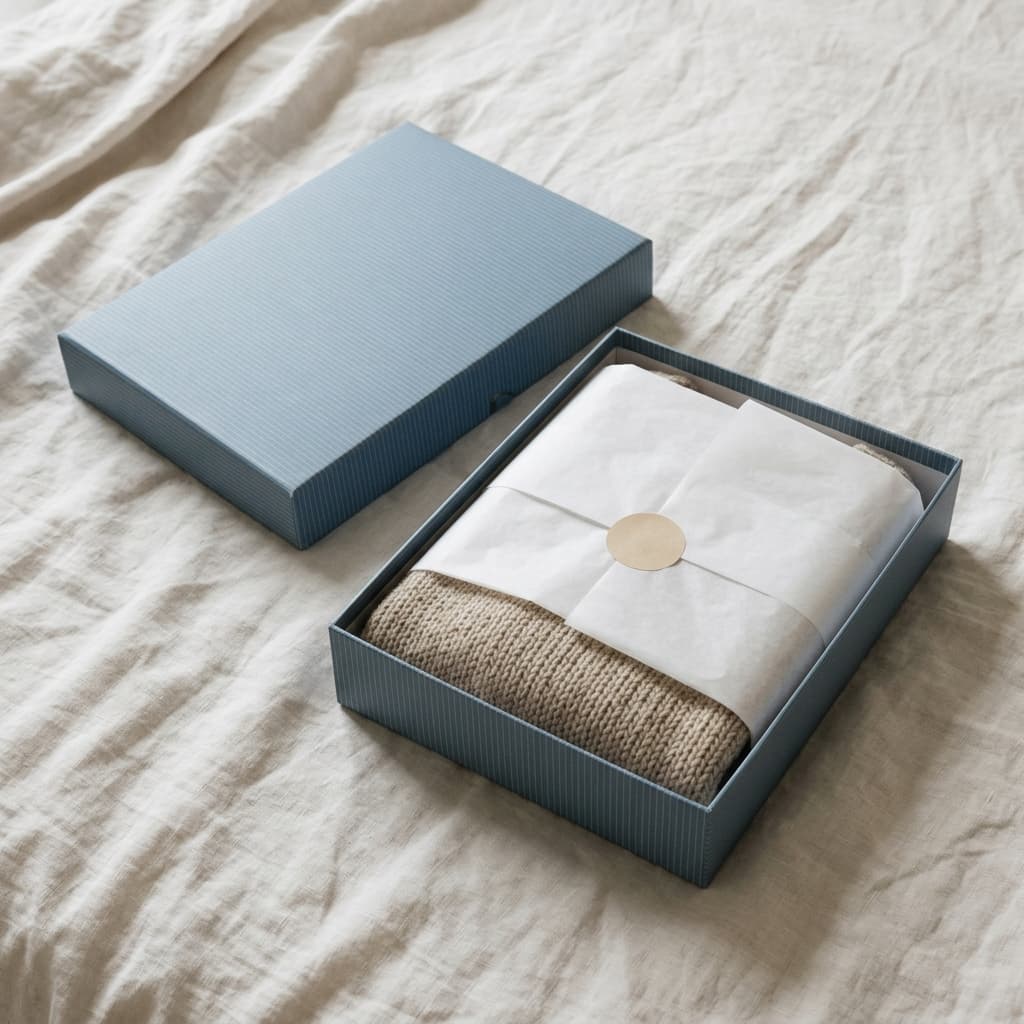
Apparel Boxes
Premium apparel packaging made for folds, reveals, and repeat use.
Explore box style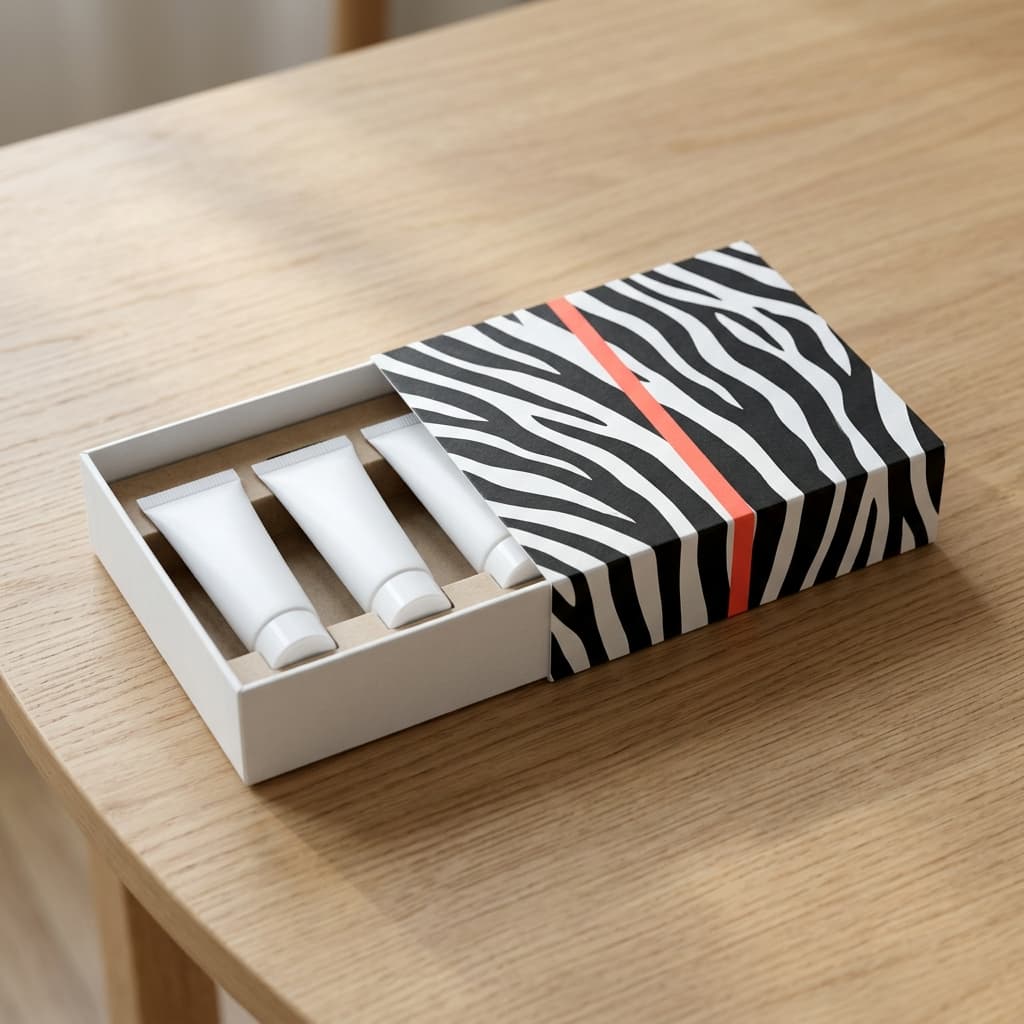
Sleeve Boxes
A printed sleeve over a plain tray or box, so one structure serves a whole range.
Explore box style
Shipping Boxes
Right-sized corrugated shipping boxes made for protection and efficient transit.
Explore box styleQuestions about shoe boxes.
Box style FAQsWe’ll confirm the exact details that apply to your structure and volume.
Read all frequently asked questionsWhy do some shoe boxes have holes in the ends?+
Holes in the end panels let air escape as the lid is pressed down, so it closes easily. They also work as finger holds for pulling a box from a stack and let air move round the shoes in storage. We can add them to your box, placed clear of the end label area so the panel that carries the stack stays strong.
How should a pair of shoes sit in the box?+
We size shoe boxes for a pair packed heel to toe, one shoe facing each way, with the soles towards the outside walls so they do not rub on the uppers. Tissue between the pair stops scuffing, and paper in the toes keeps their shape. Send us the measurements of your largest size, packed this way, and we size the box around it.
Can a shoe box have a carry handle?+
Yes. We can cut a handle into the lid or ends, or thread a rope handle through, so your customer carries the box out without a bag. We make the board around the handle strong enough for the pair, with a sturdier build for boots than for trainers. A handle on the lid needs the lid to lock onto the base, and we design it that way.
Can one shoe box design cover several colourways?+
Yes. We print one design for a style and identify each colourway on the end label. For limited releases, we can add a printed sleeve or band over a plain box, so each colourway gets its own look without printing a separate box. One stock of boxes then serves the whole range, and only the sleeve changes.
Start with a free recommendation
Get pricing