

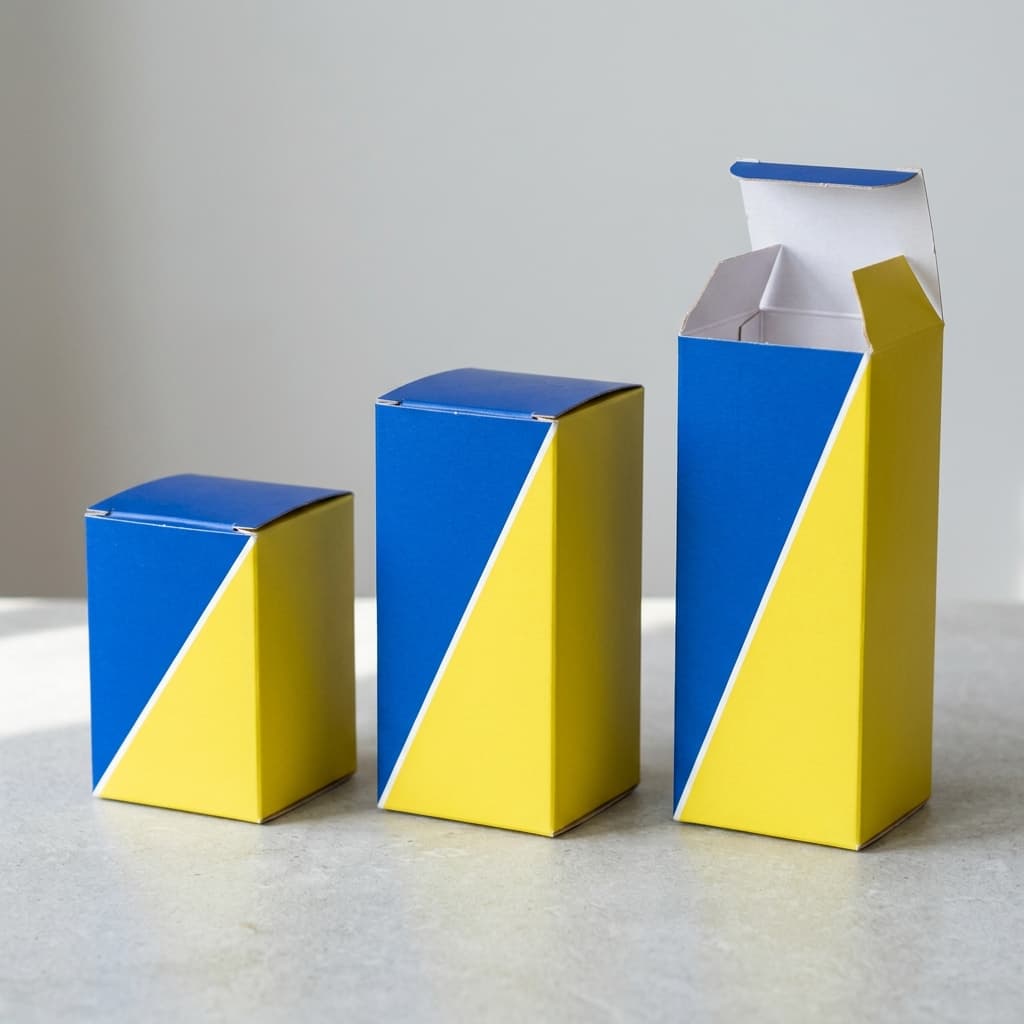
 Made to your size
- 100 boxes
- Custom sizes & styles
- Free dieline support
- Quality print options
- Proof before production
- 8–12 business day production
From tuck-end cartons to auto-lock bottoms, our folding cartons balance efficient storage with high-impact print. Every dieline is tailored to your product and fulfillment workflow.
Retail ready
Custom Folding Cartons
✓Clear proofing before productionSee our process
Get a free quote
Tell us what you are packing and we’ll reply with practical options.
Product features
Built around the jobVibrant CMYK or PMS
Window cutouts
Protective coatings
Crash-lock bottom option
Machine-ready creases
Sample to retail-pack sizes
Ships flat as a glued tube
Specifications made for your product.
Technical snapshotEvery final specification is confirmed against product weight, packing method, print coverage, route, and order volume.
View artwork preparation guide- SKU
- bm-1002
- Dimensions
- Custom-made around the product and packing workflow
- Materials
- SBS paperboard, Uncoated paperboard, Recycled kraft
- Printing
- CMYK, Pantone, white ink, or unprinted
- Finishes
- Matte, gloss, soft-touch, foil, embossing, spot UV
- Quantities
- Starting at 100 on selected configurations
- Proofing
- Dieline and digital proof
Sharp print on every panel.
Artwork and materialsA folding carton gives you a front, back, sides and both end flaps to design. Solid paperboard holds fine detail, so small type and colour accuracy matter most. Our packaging guides cover sizing, materials, print, and cost in more depth.
Panels, flaps and glue seam
We lay your artwork across the flat carton dieline, with bleed over each crease and the glue flap kept clear of ink. Ingredient or product text gets its own panel, so the front stays clean.
Explore print and finishesSBS, uncoated or kraft board
SBS gives the whitest surface and the closest colour to your screen. Uncoated and recycled kraft board feel more natural and soften fine detail. Varnish, spot gloss or a window then change how the carton catches the light.
Explore material decisionsChoose your box
Tell us the product, its measurements and whether cartons are filled by hand or by machine.
Request a quote
We recommend the tuck or auto-lock style, the board and the finishes that suit your product.
Finalize the order
Confirm the carton style, board, print, coatings, any window and the quantity you need.
Build the dieline
We draw the carton to your product size, with creases, glue seam and closures set for packing.
Approve the proof
Review every panel and end flap, colour setup, text sizes and how the artwork wraps the folds.
Roll on production
Your cartons are printed, cut, glued into flat tubes, checked and packed ready to square up.
Best for
CosmeticsSupplementsFoodSmall electronicsBuyer guidance
Choosing this format
From one flat sheet to a carton
One sheet of paperboard, cut and creased flat, with a single glued seam holding it into a tube.
There is no fluting inside the board, just solid stock, which is why print sits flatter and sharper on a carton than on a corrugated box. The carton is delivered as a flat tube and squared up at packing.
Tooling is one cutting die plus a plate per colour. The die carries the creases as well as the cuts, and those creases decide whether a carton squares up cleanly on a packing line or fights whoever is filling it.
- Solid paperboard, no flute
- One glue seam; everything else folds
- Ships flat, squared up at packing
Tuck end or auto-lock bottom?
Tuck ends cost less. An auto-lock base sets up faster and carries more weight.
A straight or reverse tuck end closes with flaps at both ends. It is the cheapest style to make and perfectly sound for light contents, but the packer folds both ends by hand on every unit.
An auto-lock bottom, also called a crash-lock, is glued so the base forms itself as the carton is squared. It costs more per unit and removes a step from every pack, which becomes real money at volume, and it takes more weight before the base gives. Tell us roughly how many you pack and we suggest which base pays off.
- Tuck end: lowest cost, both ends closed by hand
- Auto-lock: base forms itself, faster to pack, holds more
Choosing the board
Two decisions: how white the surface is, and how thick the board is. The thickness is the one that fails.
SBS is bleached through the sheet and prints closest to what a screen shows, which is why cosmetics and supplements tend to default to it. Uncoated and recycled boards feel more natural in the hand, absorb more ink, and soften fine detail.
Caliper gets less thought than it deserves. Board that is too thin lets a tall carton lean once it is on a shelf; board that is too thick cracks along the crease as it folds, and cracking shows worst through dark solid ink. Heavier is not automatically safer, so tell us the carton's height and what it holds, and we choose a caliper that stands up without cracking.
- SBS: whitest surface, sharpest print
- Kraft and recycled: warmer, cheaper, shifts every colour on it
- Too thick cracks at the crease, too thin leans on shelf
Windows and coatings
A window sells the product and takes strength out of the panel it sits in.
A cut-out window lets the contents do the selling. It also removes structure, so a large window in a tall carton has to be placed around the creases rather than wherever the layout looks best, or the panel bows in the middle.
Film patched behind a window adds a lamination step and makes the carton harder to recycle. Gloss and matt varnishes cost far less than laminate, and spot gloss over a matt base is the usual way to get contrast without coating the whole sheet.
If it holds food
Food contact is decided by the board and the coating, and it has to be settled at quote rather than after proofing.
Anything touching food directly should be packed in a board and ink made for that use. Recycled fibre is often avoided for direct contact because of what can carry through from the recovered paper, so a food carton frequently means virgin board or a separate liner.
Greasy and wet contents are a different problem again: they need a barrier coating, and the choice of barrier is what decides whether the finished carton can be recycled. Tell us what goes inside before we quote and we build the specification around it.
Folding carton or mailer box?
A folding carton is the pick for the shelf and for packing inside another box. A mailer box is the pick when the product goes in the post on its own.
Paperboard has no flute, so it guards against scuffs and dust, not against being dropped. A carton posted on its own arrives creased at the corners. It is a retail and secondary pack by design, so for the post it belongs inside a shipper or a mailer box.
Weight is the other limit. Dense contents bow the panels and work the glue seam loose over time, and that is the point to move to corrugated rather than simply to a heavier board.
Related packaging formats
Compare your options
Cosmetic Boxes
Color-accurate beauty packaging designed to look sharp on shelf and camera.
Explore box style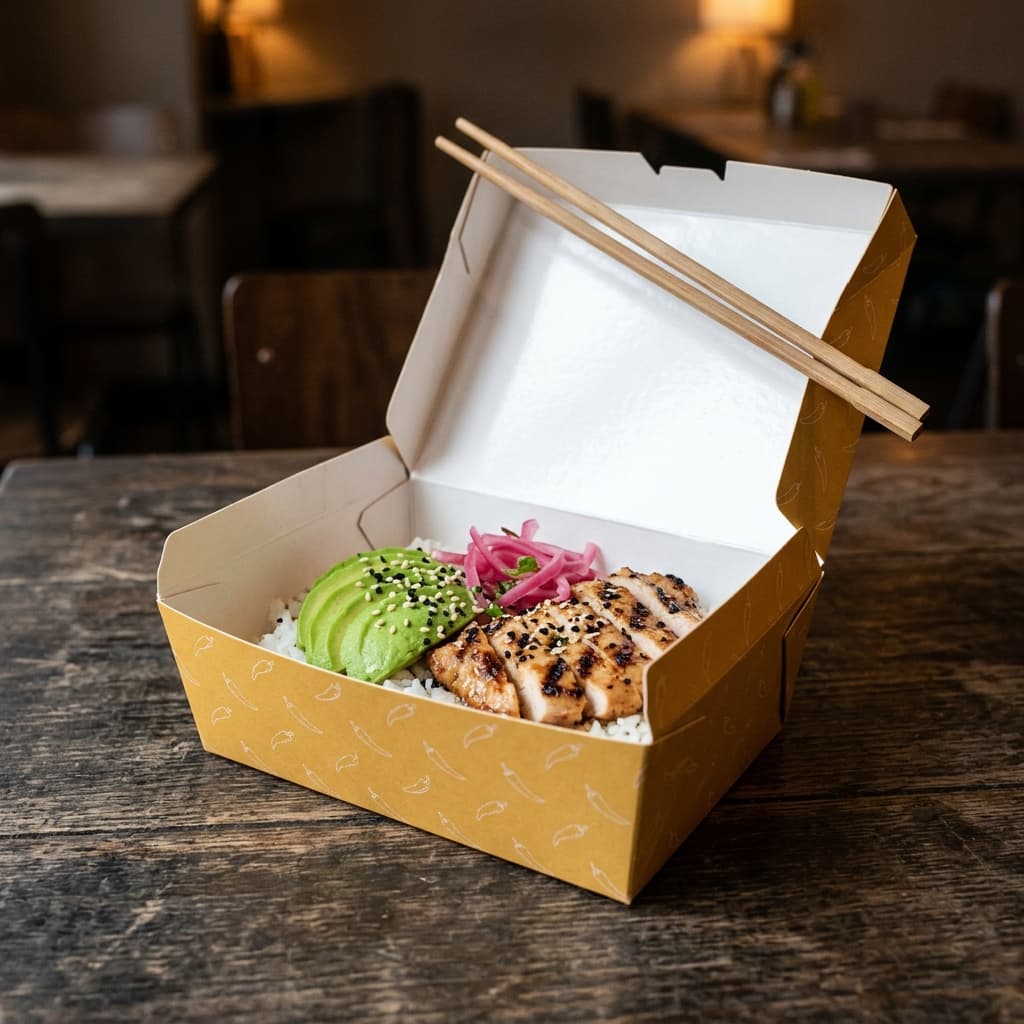
Food Boxes
Thoughtful cartons, sleeves, and carry boxes for food and beverage brands.
Explore box style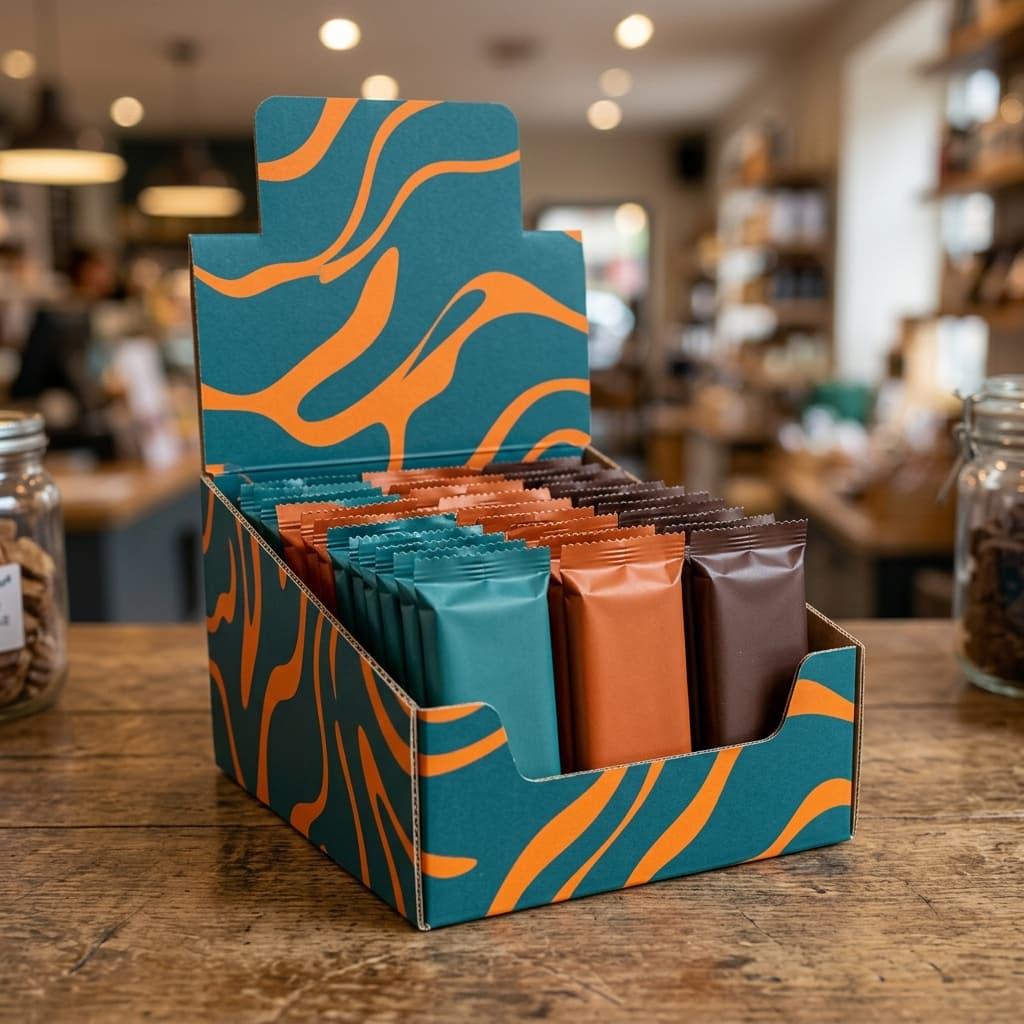
Display Boxes
Retail displays that ship flat, assemble quickly, and merchandise clearly.
Explore box styleQuestions about folding cartons.
Box style FAQsWe’ll confirm the exact details that apply to your structure and volume.
Read all frequently asked questionsWhat is the difference between a straight tuck and a reverse tuck carton?+
It comes down to which panel each end flap folds from. On a straight tuck end, both flaps fold from the same side, so the front panel stays clean at both ends. On a reverse tuck end, the flaps fold from opposite panels, which nests the layout more tightly on the sheet, with one flap edge showing on the front. We make both and recommend the one that suits your design.
Can your folding cartons run on an automatic cartoning machine?+
Yes. Send us the make and model of your cartoner before we draw the dieline, and we set the creases, glue seam and folds to suit it, so the cartons open cleanly and feed at the machine's pace. A carton that packs well by hand is not always machine-ready, which is why we plan for the machine from the start.
How small or large can a folding carton be?+
We make folding cartons from small sizes, such as lip balm and sample cartons, up to boxes for larger retail products. On very small cartons the panels leave little room for text, so we keep the layout simple. For a heavy product or a tall box, we recommend corrugated board over ever-thicker paperboard, because it keeps the panels from bowing.
How do I know the carton will fit my product before it is printed?+
We draw the carton from your product's measurements, then send a digital proof showing your artwork on the dieline before anything is printed. Give us the exact height, width and depth of the product, including any cap, pump or label, and we allow for the board thickness so the ends tuck without force and nothing rattles inside.
Start with a free recommendation
Get pricing