
 Made to your size
- 100 boxes
- Custom sizes & styles
- Free dieline support
- Quality print options
- Proof before production
- 8–12 business day production
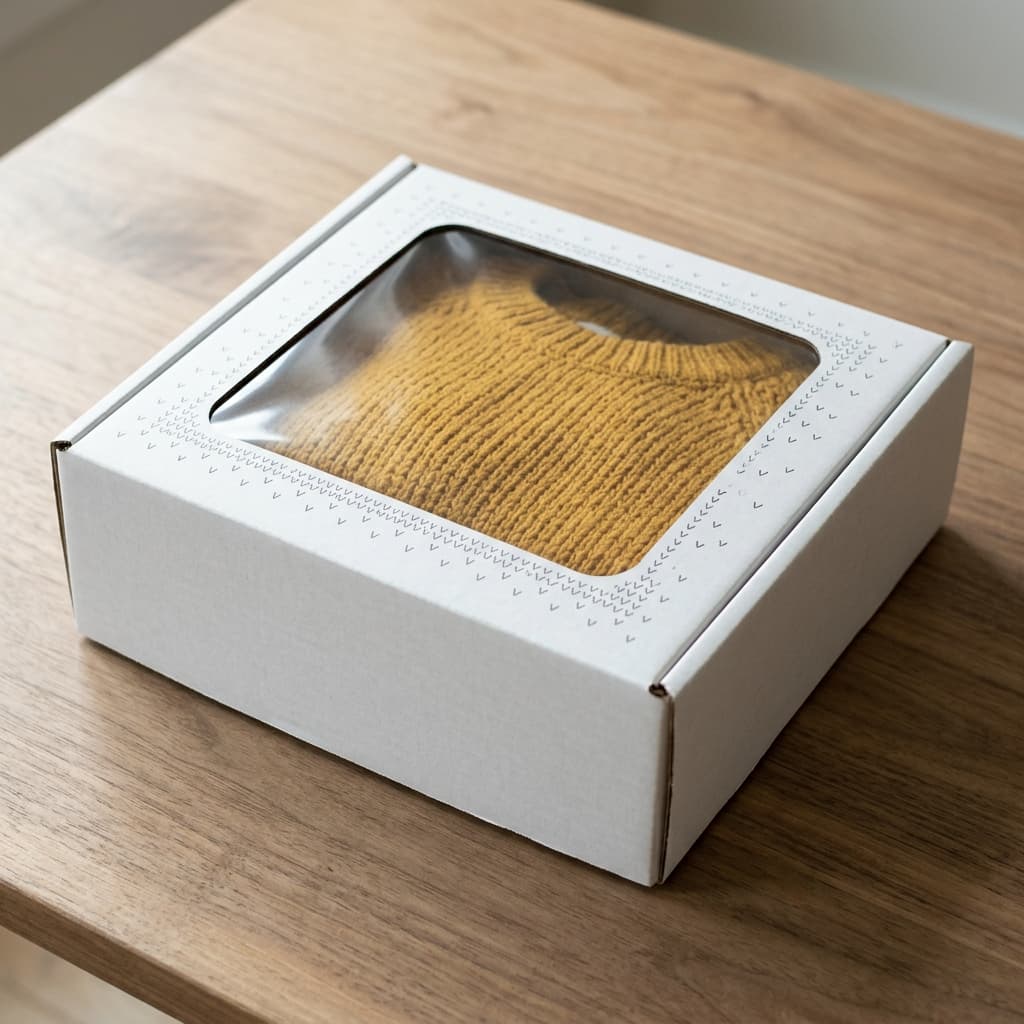
A window box lets a shopper see what they are buying without opening anything, which matters most where the product is the decoration: baked goods, confectionery, toys, candles and craft items. The cut-out is covered with a clear film patch, and the shape of the window is drawn into the dieline rather than picked from a stock list.
Show the product
Custom Window Boxes
✓Clear proofing before productionSee our process
Get a free quote
Tell us what you are packing and we’ll reply with practical options.
Product features
Built around the jobClear film patch
Stackable structures
Coating options for contents
Plant-based cellulose film
Open cut-out option
Corner-wrap windows
Product-aligning inserts
Specifications made for your product.
Technical snapshotEvery final specification is confirmed against product weight, packing method, print coverage, route, and order volume.
View artwork preparation guide- SKU
- bm-1017
- Dimensions
- Custom-made around the product and packing workflow
- Materials
- SBS paperboard, Corrugated board, Recycled kraft
- Printing
- CMYK, Pantone, white ink, or unprinted
- Finishes
- Matte, gloss, soft-touch, foil, embossing, spot UV
- Quantities
- Starting at 100 on selected configurations
- Proofing
- Dieline and digital proof
Frame the product, not just the box.
Artwork and materialsA window box lets the product do the selling, so your artwork frames the opening. Where the window sits, and what shows through it, matter most. Our packaging guides cover sizing, materials, print, and cost in more depth.
Artwork around the window
We draw the window shape into the dieline and place your artwork around it, with print kept off the opening. A border of board keeps the panel strong, and the window lines up with the product's best side.
Explore print and finishesBoard, film and what shows
SBS gives a bright frame, corrugated adds strength, and recycled kraft warms the colours around the window. Gloss film adds shine, matt film cuts glare, and a plant-based film or open cut-out are options too.
Explore material decisionsChoose your box
Tell us the product, its measurements and which side of it shoppers should see first.
Request a quote
We recommend the board, window shape and film, with any insert to hold the product in view.
Finalize the order
Confirm the box style, board, window shape, film or open cut-out, print and the quantity.
Build the dieline
We draw the box and window around your product, with any insert keeping it lined up.
Approve the proof
Review the window position, artwork around it and every panel, so the product shows at its best.
Roll on production
Your window boxes are printed, cut, patched with film, glued, checked and packed flat.
Best for
BakeryConfectioneryToysCandlesBuyer guidance
Choosing this format
How the window is cut and patched
A window box is an ordinary carton with a hole cut in one panel and a clear film glued behind it.
The window shape is part of the cutting die, so it is made in the same pass as the box outline. The film is a thin, clear sheet cut slightly larger than the opening and glued to the inside of the panel before the carton is folded.
The shape of the opening is drawn into the dieline rather than chosen from a list. A circle, a rectangle or a custom outline are all possible, though sharp corners and fine detail are harder to cut cleanly and to patch.
- Window cut with the box outline
- Clear film glued to the inside
- Shape drawn into the dieline
Film patch or open cut-out?
Film keeps dust off the product and adds a step. An open window is simpler but exposes the contents.
A film patch seals the opening, so the product stays clean and cannot be touched. It adds a gluing step and a second material to the carton, which can make the box harder to recycle.
An open window is just a hole. It needs no film, so the box stays one material. The product can be handled and collects dust, so it only suits items that are already wrapped or that sell fast.
- Film: clean, protected, extra material
- Open cut-out: one material, contents exposed
Where the window goes and how big
A bigger window shows more and weakens the panel it sits in.
Board does the structural work in a carton. Remove too much of a panel and it bows, particularly on a tall carton under the weight of a stack. Leave a border of board around the opening, roughly a centimetre or more, and keep the cut-out away from creases and glue flaps.
Think about what the shopper sees. A window should frame the best part of the product, not the plain end of it, from the angle a customer will see it on the shelf. Tell us which part should show, and we place the window on the dieline so you can check it on the digital proof.
- Leave a border of board around the opening
- Keep the cut-out clear of creases and glue flaps
Window box or a fully printed carton?
A window shows the real item. A printed carton shows a photograph, which can be controlled.
A window is honest, and for products that look good, such as baked goods, candles or toys, it does more selling than a picture. It also depends on the product looking right every time, packed by hand.
A fully printed carton hides variation. Handmade or irregular items look the same inside it, and the whole surface is free for artwork. A common middle route is a smaller window with printing around it.
Film, glare and what shows through
The film and the board colour behind it change how the product looks more than the window shape does.
Gloss film catches shop lighting and reflects it, which can wash the product out. Matt film cuts glare but softens colour slightly. Warm contents can fog either type, so food that goes in hot needs time to cool first.
Whatever sits behind the product shows through the window. A white interior makes colours look brighter, while kraft makes them look warmer and darker. Print never covers the window area, so we place the artwork around it on the dieline.
- Gloss film reflects light, matt softens colour
- Warm contents fog the film
- Interior colour changes how the product looks
Window box or a closed mailer?
A window box is the pick for a product that sells on sight on a shelf. A closed mailer box is the pick when it goes in the post or must stay out of the light.
If the product does not look good, or must be protected from light, a window works against it. Items that vary, crumble or look untidy by the time they reach the shelf are better hidden. Products damaged by light, such as some foods and cosmetics, fade when displayed through a clear panel.
A window also removes strength, so heavy or fragile contents in a large-windowed carton need a sturdier structure or a smaller opening. For items that ship in the post, an unwindowed mailer box protects better.
Related packaging formats
Compare your options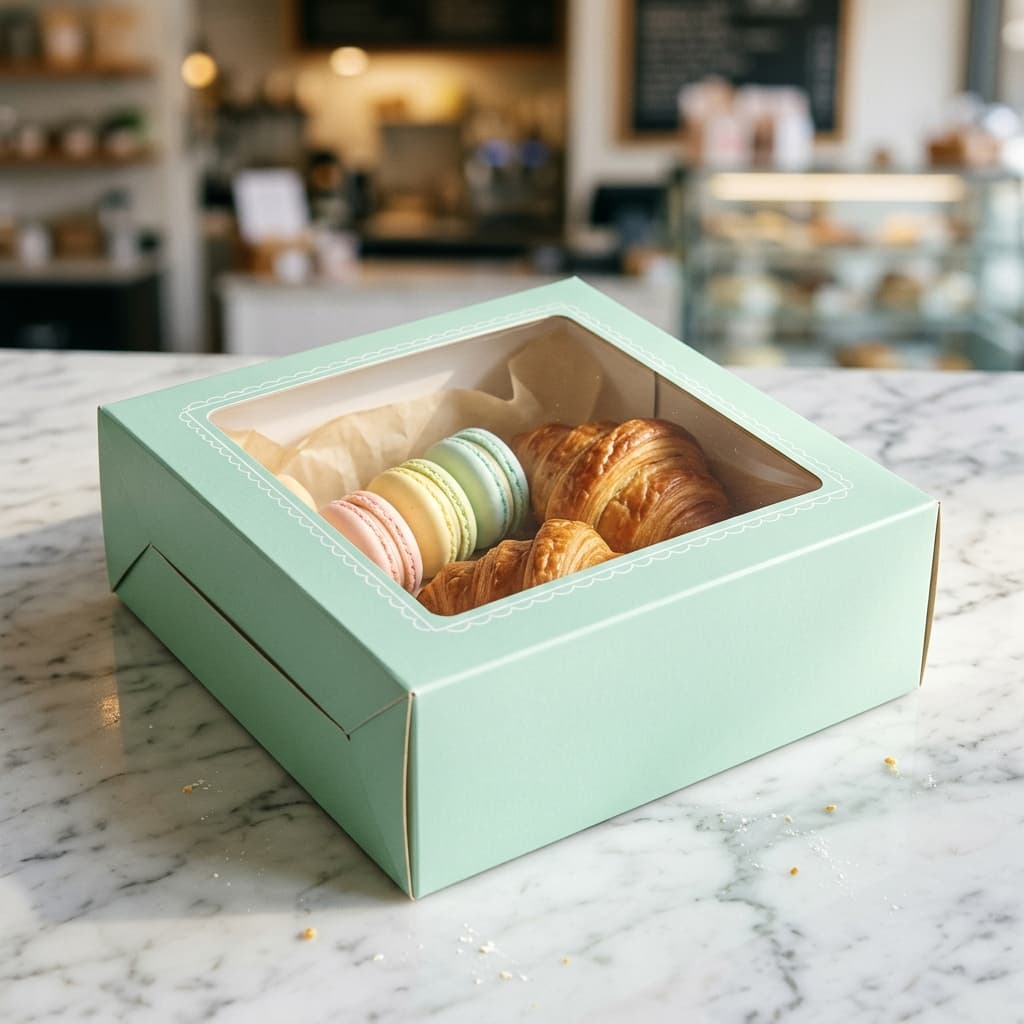
Bakery Boxes
Food-conscious carry boxes for pastries, cakes, cookies, and counter service.
Explore box style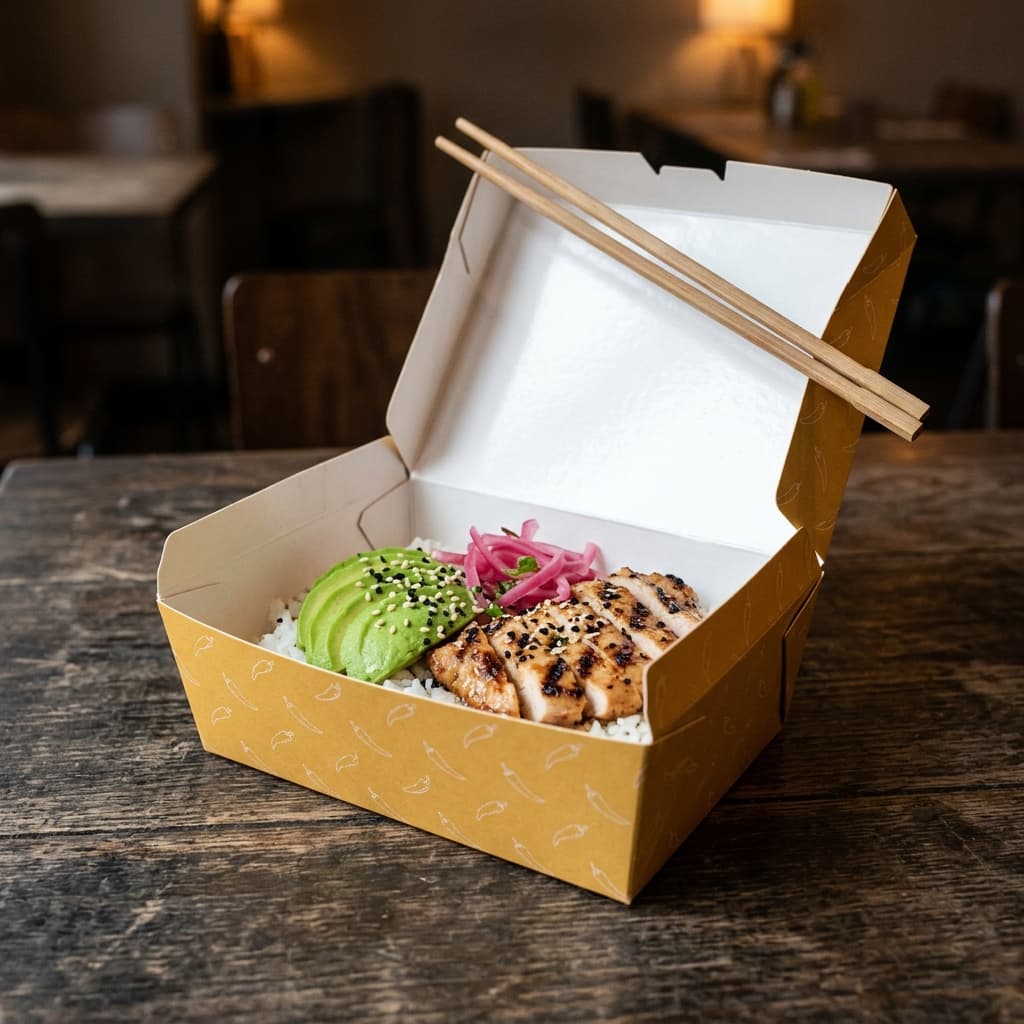
Food Boxes
Thoughtful cartons, sleeves, and carry boxes for food and beverage brands.
Explore box style
Display Boxes
Retail displays that ship flat, assemble quickly, and merchandise clearly.
Explore box styleQuestions about window boxes.
Box style FAQsWe’ll confirm the exact details that apply to your structure and volume.
Read all frequently asked questionsWhat is the window film made from, and can it be plastic-free?+
We cover windows with a clear film, and a plant-based cellulose film is an option alongside standard plastic film. If you want the pack fully plastic-free, we can leave the window as an open cut-out with no film at all, which works well for wrapped products such as soaps or individually wrapped treats. Tell us what matters most to you and we recommend the right option.
Can a window box be recycled?+
Yes. The board goes in with paper recycling, and the small film patch is easy for your customer to tear out first. If you like, we can print a short line on the box asking them to remove the window before recycling it. For a box that needs no separating at all, we can leave the window as an open cut-out with no film.
Can food sit directly against the board in a window box?+
Yes. We confirm the board and film are suitable for direct food contact before production. For greasy or buttery items such as shortbread or pastries, we recommend a grease-resistant coating on the inside or a greaseproof liner, so the board stays clean and the window still shows the food at its best. Our bakery boxes are made with this kind of food in mind.
Can a window wrap round a corner onto two panels?+
Yes. A corner window shows the product from the front and the side at once, which helps on a shelf seen at an angle. Because it takes board from the corner, where a carton gets much of its stacking strength, we recommend it for lighter products. Send us your product and we suggest how far round the corner the window should go.
Will the product stay lined up with the window?+
Yes, when we fit an insert that holds it in place. A backing card or tray keeps the product in one position, so it arrives with its best side facing the window rather than a bare corner. Send us your product's measurements and we size the window and insert together, then show both on the digital proof.
Start with a free recommendation
Get pricing