What size box should I order for an ecommerce product?
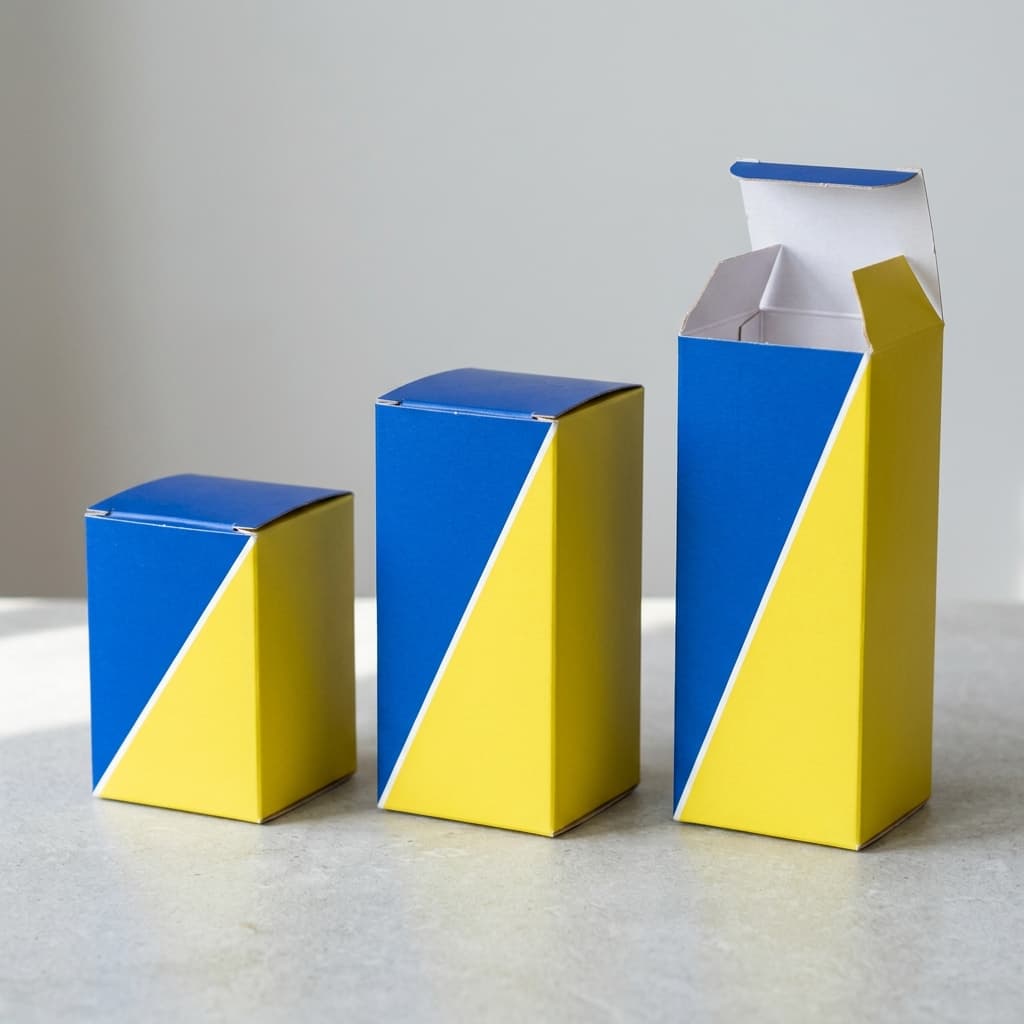
Send us your product's measurements as it will be packed, and we size the box by its inside dimensions with just enough clearance for it to slide in.
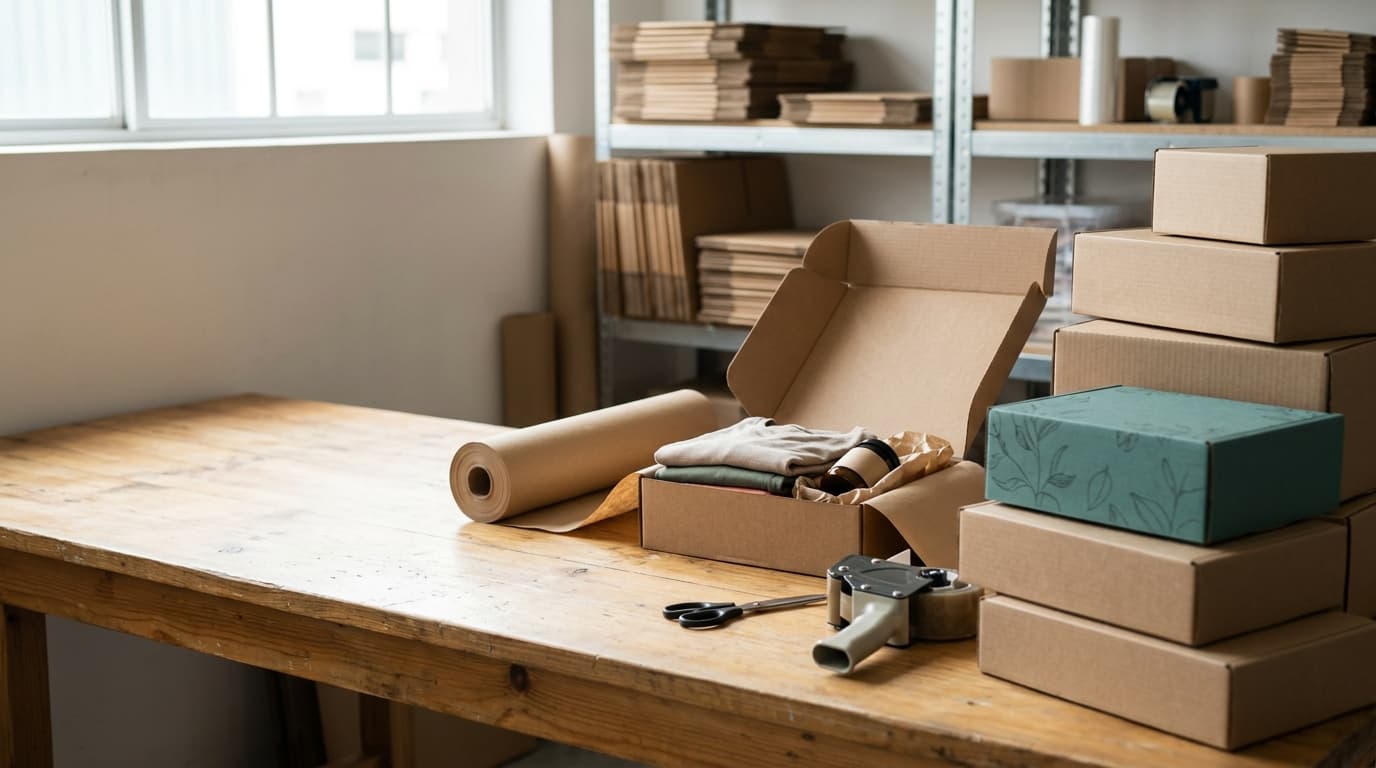
Measure the finished item exactly as it leaves your packing bench: folded, bagged or in its own retail carton. The longest side is the length, the next is the width and the shortest is the depth. We add a few millimetres of clearance on each side, which is enough for most goods to go in without forcing. For fragile items we add more room only where an insert or cushioning fills it, so nothing is left loose.
If you sell several products, you rarely need one box per item. Tell us your range and we help you group it into the fewest box sizes that cover it without large gaps. Two or three well-chosen sizes are easier to store, quicker to pick at packing and still keep empty space low. We recommend sizing for your most common order first, not your largest, because that is where most of your shipping spend goes.
- We size by inside dimensions, length x width x depth
- Measure the product as packed, not bare
- Size for your most common order first
- A small family of sizes beats one box per product
How does dimensional weight affect shipping costs?
Couriers bill on whichever is greater, the actual weight or a weight worked out from the box's volume, so we size your box to keep that second figure down.
Dimensional weight, often called DIM weight or volumetric weight, is the box's length, width and height multiplied together and divided by a set figure. Light, bulky products feel it most: a pillow, a hoodie or a lampshade can weigh little and still be billed as if it were heavy. That is why the size of the box matters as much as what goes in it.
The calculation uses outside dimensions, so a single extra centimetre on each side adds up across thousands of parcels. When we size your box, depth is usually the first place we trim, because many products end up in a box far taller than they are. For apparel and flat goods we often recommend a slim mailer with thinner walls, which keeps the outside dimensions close to the product itself.
- Billable weight is the higher of actual and volumetric
- Outside dimensions count, so wall thickness matters
- Trimming excess depth is usually the quickest saving
- Slim mailers suit apparel and flat goods
Should I use a mailer box or a shipping box?
We recommend a mailer box when the box is the first thing your customer sees and the goods are light to medium, and a shipping box when the load is heavy, bulky or packed in multiples.
Our mailer boxes are made from one die-cut piece with a hinged lid that tucks into the front. They look finished on the doorstep, take print inside and out, and close without tape. That makes them the usual pick for apparel, beauty, gift sets and subscription orders, where opening the box is part of the purchase.
Our shipping boxes are the slotted carton with flaps top and bottom, built for strength and volume. They handle heavier products, multi-item orders and wholesale cartons, and they are the more economical choice in large sizes. Print is usually simpler and the box is sealed with tape, so it suits orders where protection matters more than presentation. Many of our customers use both: mailer boxes for single direct orders and shipping boxes for bulk or heavy ones. Tell us what you send and we recommend the mix.
How do you make sure an ecommerce box arrives in good shape?
We build protection into the box from the start: a close fit, the right board for the weight and an insert where the product needs one.
Parcels pass through sorting belts, vans and doorsteps, and they get tipped and stacked along the way. The best protection is a product that cannot move, so we size the box closely around it and choose a board strong enough for the weight and the journey. For heavier or fragile items we recommend a sturdier corrugated build, and for anything with several pieces or a delicate shape we add a fitted insert that holds each item in place.
Before production we send you the dieline and a digital proof, so you can check the size, the fit of the insert and where everything sits. Tell us what the product is, what it weighs and whether it ships alone or with other items, and we match the build to it. If you change one thing later, such as a heavier product or a new item in the set, let us know and we adjust the box to suit.
- A close fit stops the product moving in transit
- We match the board to the weight and the journey
- Fitted inserts hold fragile and multi-piece orders
- You check size and fit on the dieline and proof
Is inside printing worth it on ecommerce boxes?
Yes, when your customer opens the box themselves, because inside print puts your brand where their attention is highest while the outside can stay simple.
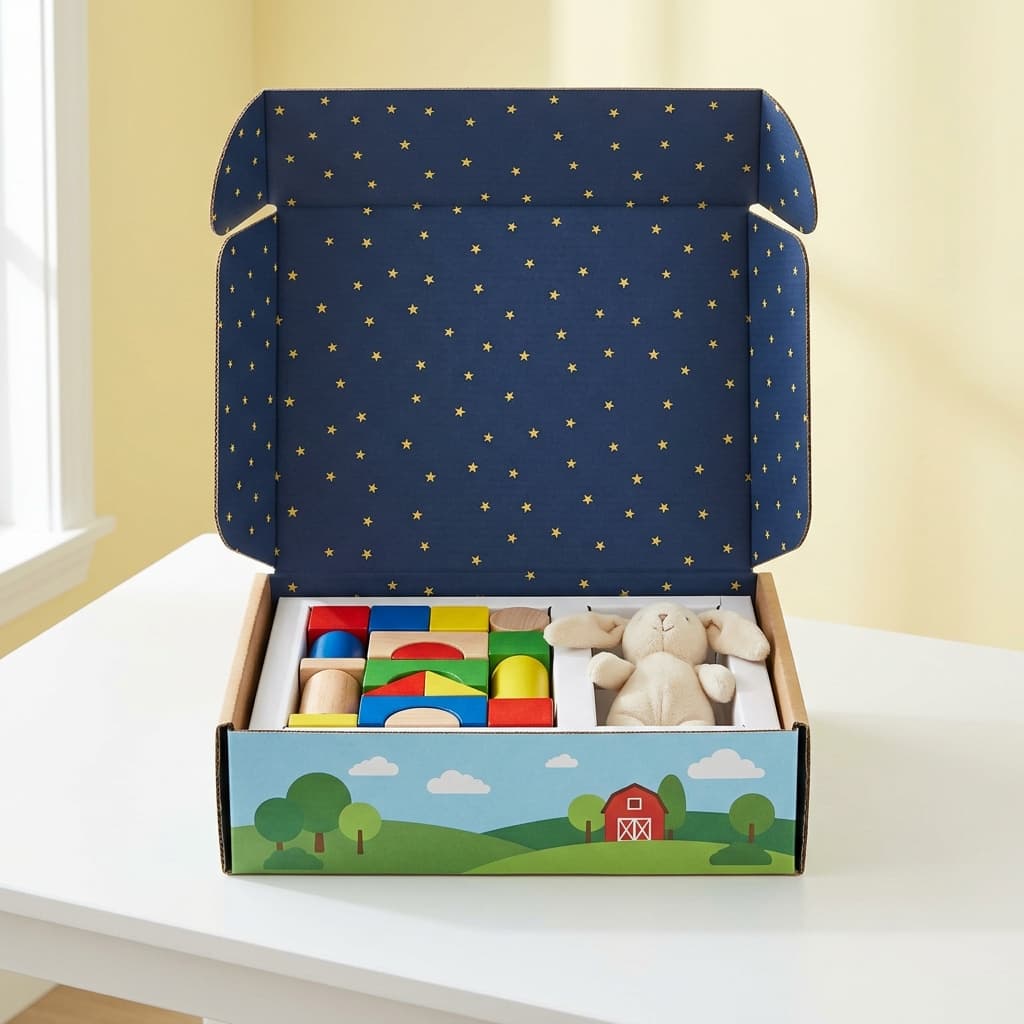
The inside of the lid is the first surface your customer sees once the box opens, and it is the one that shows up in unboxing photos and videos. A short message, a pattern or a pointer to care instructions or your reorder page works better here than a crowded layout. When we set your artwork on the dieline, we keep text and fine detail clear of the folds and the tuck, so it stays sharp once the box is made up.
A quiet outside has practical value too. A plain or one-colour exterior says less about what is inside while the parcel sits on a doorstep, and it keeps print simple. If you want to print only one side, we often recommend a branded inside with a simple logo outside, which gives more of the effect than full colour on the outside alone. Your digital proof shows both sides before anything is printed.
Do ecommerce boxes need inserts or void fill?
We recommend an insert when the product is fragile, has several pieces or would otherwise move, and loose paper fill for orders that change every time.
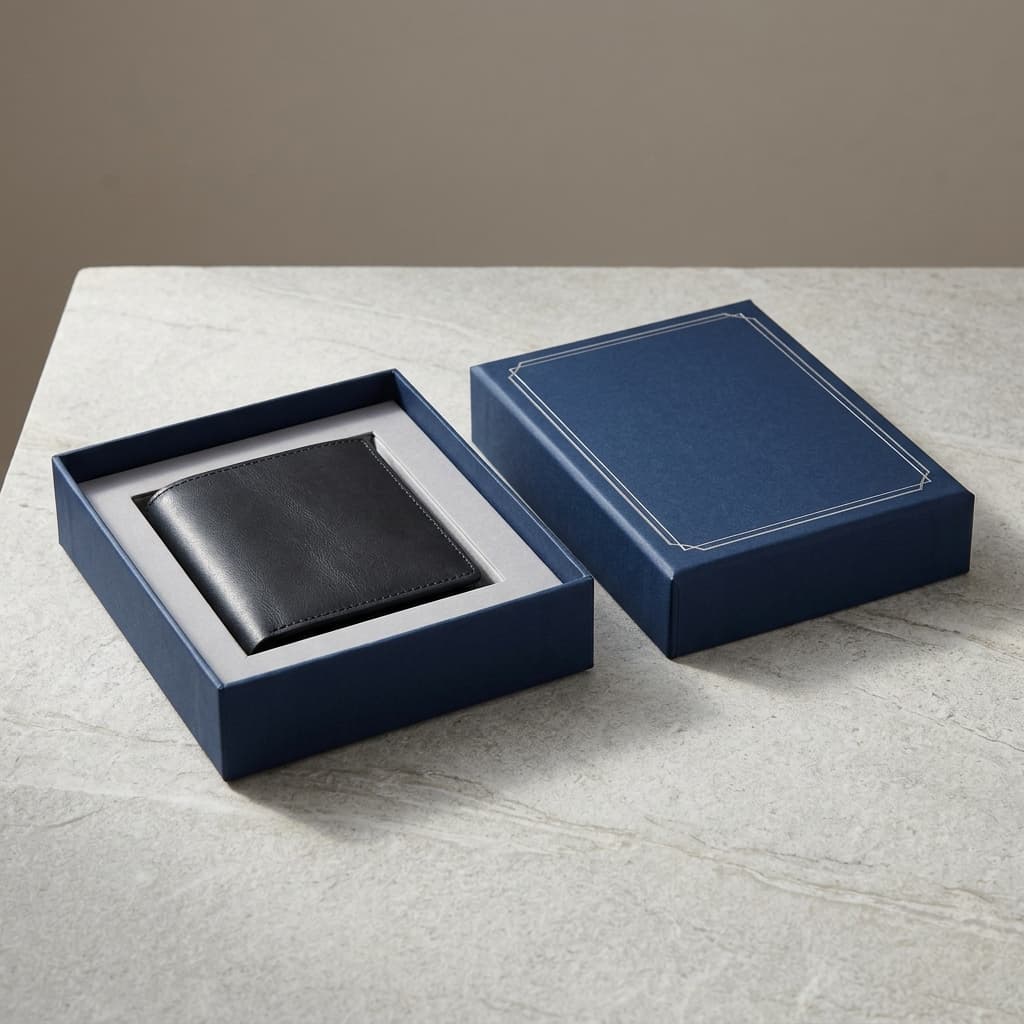
A fitted insert holds each item in a fixed position, so the order arrives looking arranged rather than tumbled. We make die-cut corrugated and paperboard inserts for kits and gift sets, and foam inserts where the product is delicate or heavy. We size the insert and the box together, so the outer box is only as big as the insert needs.
An insert also speeds up packing. Your team drops items into marked spaces with no guesswork, which makes training quicker and keeps every order the same. Paper fill is more flexible for mixed orders but takes longer to pack well. Our self-locking mailer boxes fold up in a few moves without tape, and we deliver them flat, so they store neatly and are quick to make up on a busy day.
- Inserts suit fixed kits, sets and fragile items
- Paper fill suits mixed, changing orders
- We size the insert and the box together
- Tape-free closures save time at the bench
Can an ecommerce box be used for returns?
Yes. We can build the box for two trips, with a tear strip to open it cleanly and a second peel-and-seal strip so your customer can close it again.
Returns are part of selling online, apparel and footwear most of all. A tear strip lets your customer open the box without damaging it, and a peel-and-seal adhesive strip under it lets them close it again without hunting for tape. The box goes back in good shape, protecting the item on the return journey and, in many cases, ready to use again.
We can print short return steps on the inside of the lid or on a card that goes in with the order, and we leave a clear, flat area on the outside for the return label so it does not cover the outbound one. A box made for returns also means your customer is not reaching for whatever box they have to hand, so items come back in the condition they left.
How can ecommerce packaging be more sustainable?
The biggest gains come from a right-sized box, one paper-based material and less filler, and we design for all three.
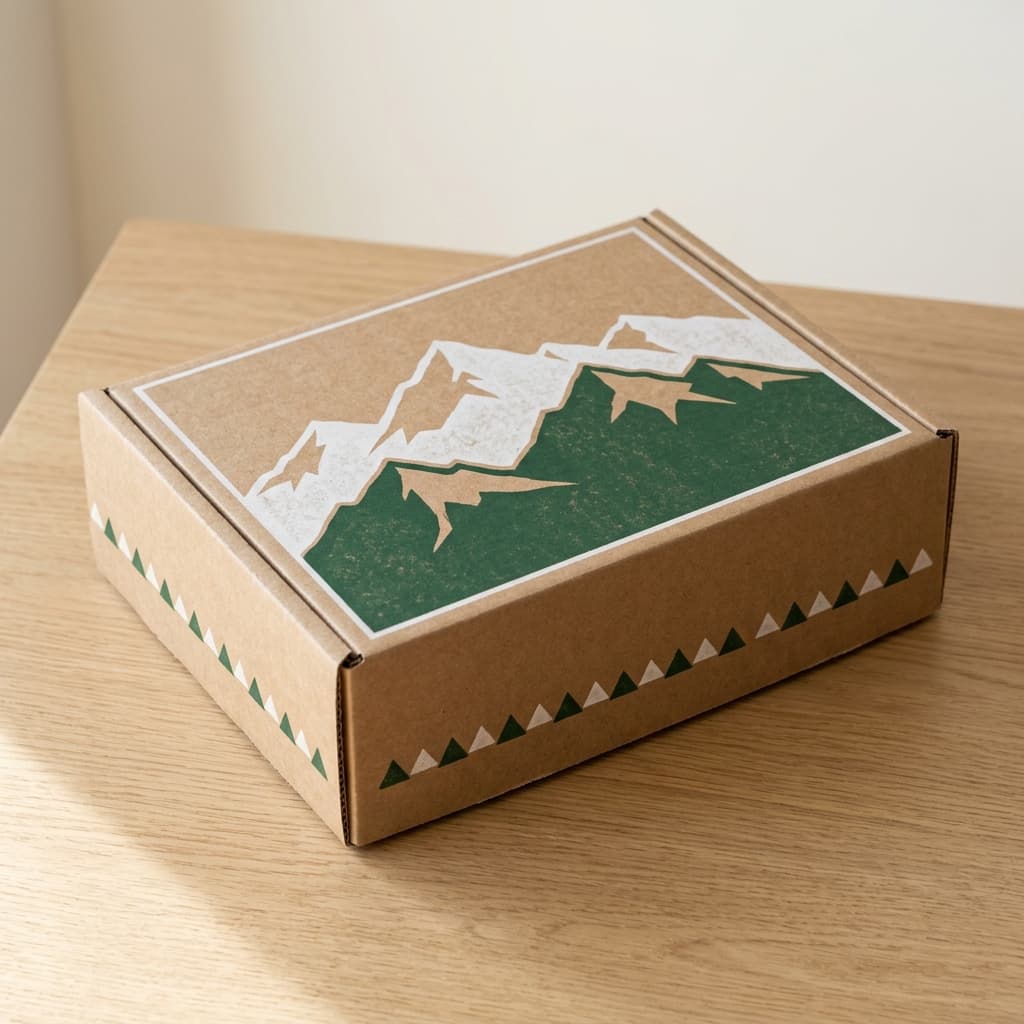
Corrugated board and paperboard go in with paper recycling, and a box made only of paper is the easiest for your customer to deal with. We can make the whole pack paper-based, with board inserts in place of foam and finishes that avoid a plastic laminate, so everything goes into one recycling stream. Kraft board with simple print is a popular choice for brands that want the material to look as natural as it is.
Right-sizing is the quiet win: a smaller box uses less board, needs less fill and fits more parcels in each van. If you want to tell your customers how to recycle the box, we can print a short recycling note on a side panel or inside the lid, and you approve the wording on the proof before printing.
- Keep the pack to a single paper-based material
- Smaller boxes save board, fill and van space
- Board inserts in place of foam keep it all paper
- We can print a recycling note on the box