

 Made to your size
- 100 boxes
- Custom sizes & styles
- Free dieline support
- Quality print options
- Proof before production
- 8–12 business day production
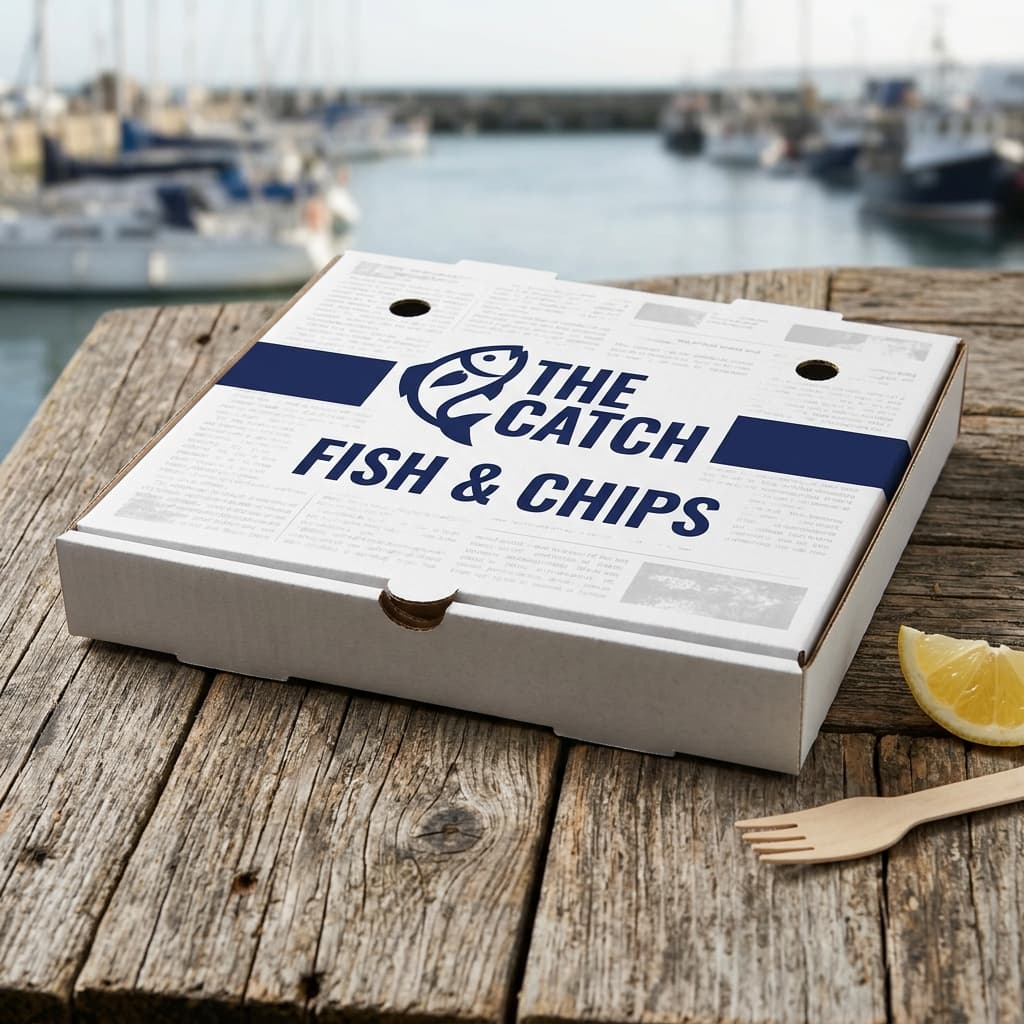
Fish and chips boxes are wide, flat-bottomed cartons, often with a hinged lid, sized to hold a battered fillet next to a portion of chips. They replace or sit alongside the traditional paper wrap, keeping the meal hot and in one piece on the way home. Venting matters most here, because trapped steam turns crisp batter and chips soft within minutes.
The chippy classic, boxed
Custom Fish and Chips Boxes
✓Clear proofing before productionSee our process
Get a free quote
Tell us what you are packing and we’ll reply with practical options.
Product features
Built around the jobVented lid
Grease-resistant board
Hinged clamshell closure
Stack-friendly vent placement
Family-size corrugated build
Matching chips box sizes
Lid-top print panel
Specifications made for your product.
Technical snapshotEvery final specification is confirmed against product weight, packing method, print coverage, route, and order volume.
View artwork preparation guide- SKU
- bm-1084
- Dimensions
- Custom-made around the product and packing workflow
- Materials
- Grease-resistant paperboard, Kraft paperboard, Corrugated board for large portions
- Printing
- CMYK, Pantone, white ink, or unprinted
- Finishes
- Matte, gloss, soft-touch, foil, embossing, spot UV
- Quantities
- Starting at 100 on selected configurations
- Proofing
- Dieline and digital proof
Put your shop name on top.
Artwork and materialsThe flat lid top is the main print panel, with the walls and ends carrying smaller detail. Vent holes cut through the lid, so we plan the design around them. Our packaging guides cover sizing, materials, print, and cost in more depth.
Lid top around the vents
We set your logo and design on the lid top around the vent holes, place the vents so stacked boxes never cover each other, and use the side walls for your shop name or number.
Explore print and finishesGrease-resistant and corrugated
Grease-resistant paperboard keeps print clean around hot, oily food. Kraft gives a traditional chippy feel, and corrugated board for family-size boxes takes the same design while carrying a heavier shared portion.
Explore material decisionsChoose your box
Choose single or family sizes, with matching chips boxes if you need them.
Request a quote
Send us your largest fillet length and portion sizes, and we recommend box sizes.
Finalize the order
Approve the board, vent layout, lid print and quantities for each size before we start.
Build the dieline
We draw the box so your largest fillet lies flat, with the vents placed over the food.
Approve the proof
Check the lid design, vent positions and side wall text on your digital proof.
Roll on production
We print, cut and crease your fish and chips boxes, then check and pack them flat.
Best for
Fish and chip shopsSeaside takeawaysPub takeaway menusDelivery ordersWhat changes the price.
Cost factorsEvery project is quoted individually. These are the choices that move the price on almost every order.
- Size
- Large fillets need a long, wide box, which uses more board.
- Vents
- Cut vent holes are part of the die but add a little to its complexity.
- Grease protection
- Fried food needs treated or coated board, which costs more than plain board.
- Full-colour lids cost more than a simple one-colour design.
Buyer guidance
Choosing this format
Venting is everything
Battered fish and chips are steaming hot when packed, and that steam ruins the crunch.
A sealed box traps moisture, which softens the batter first and the chips soon after. Fish and chips boxes use vent holes or slots in the lid so steam can escape while heat stays in. When we draw the lid, the vents go over the food, not at the edges, so moisture rises out rather than pooling.
- Vent holes in the lid
- Vents over the food
- Do not seal the box in plastic
Room for a whole fillet
A fish fillet is long and breaks easily, so the box is sized around it.
A fillet bent to fit will crack its batter, so the box needs a little more length than the biggest piece you fry. Send us that length and we add the extra for you. Chips can fill around it, but the fish should lie flat.
Box or paper wrap?
Many shops use both: a box for takeaway, and paper for eating on the spot.
Paper wrapping is traditional and breathes well but squashes easily and is hard to stack. Boxes stack in delivery bags, keep the meal in shape and give a lid to print on. A sheet of greaseproof paper inside a box combines the two.
Related packaging formats
Compare your options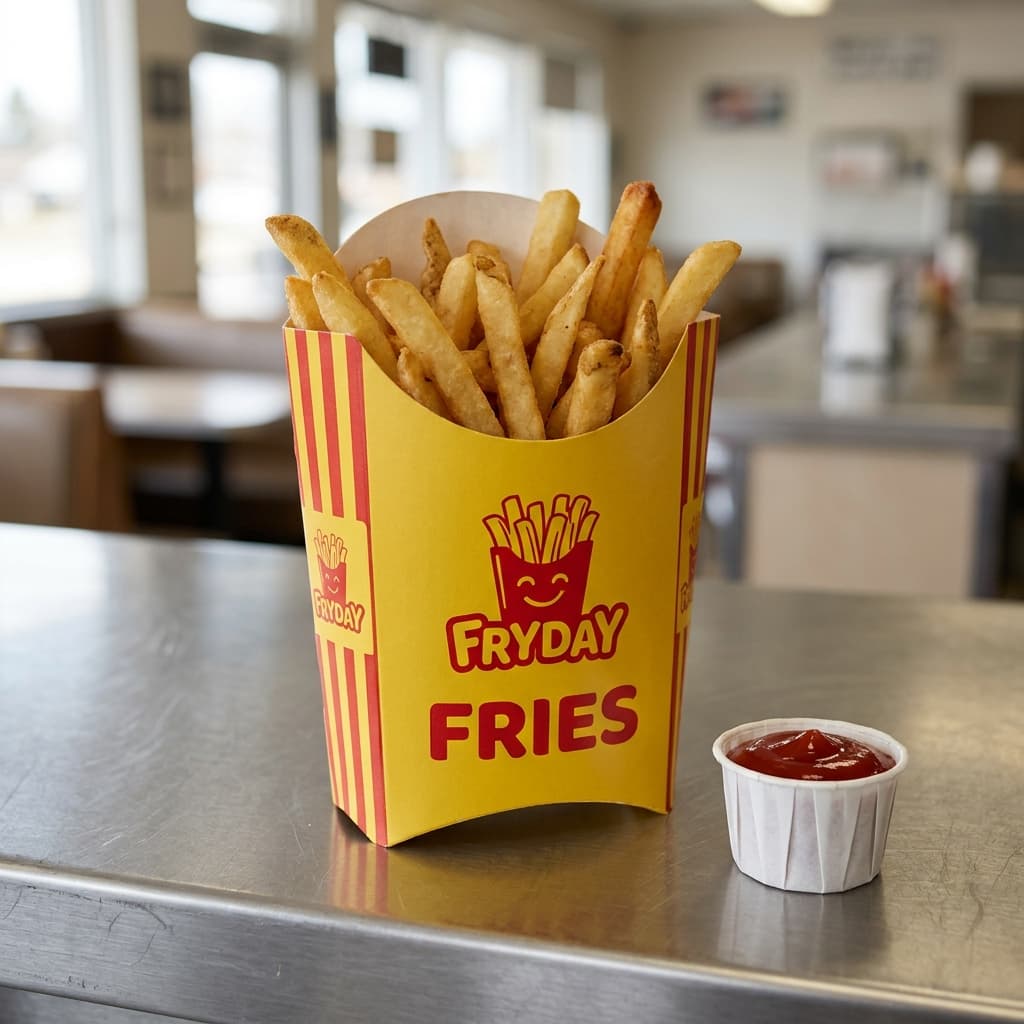
French Fry Boxes
Open-top fry scoops and cartons that keep chips upright, crisp and easy to grab.
Explore box style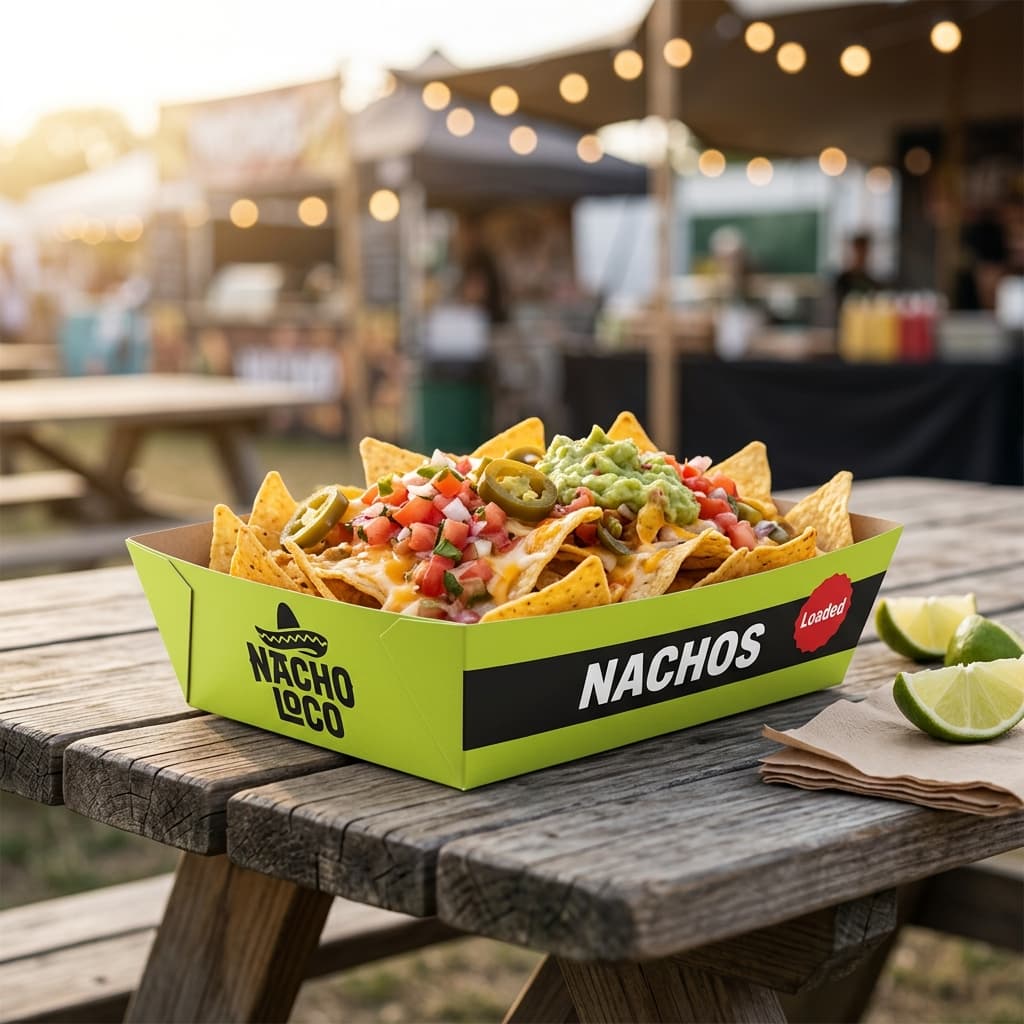
Food Trays
Open paperboard trays for serving snacks, sides and street food, with no lid to fiddle with.
Explore box style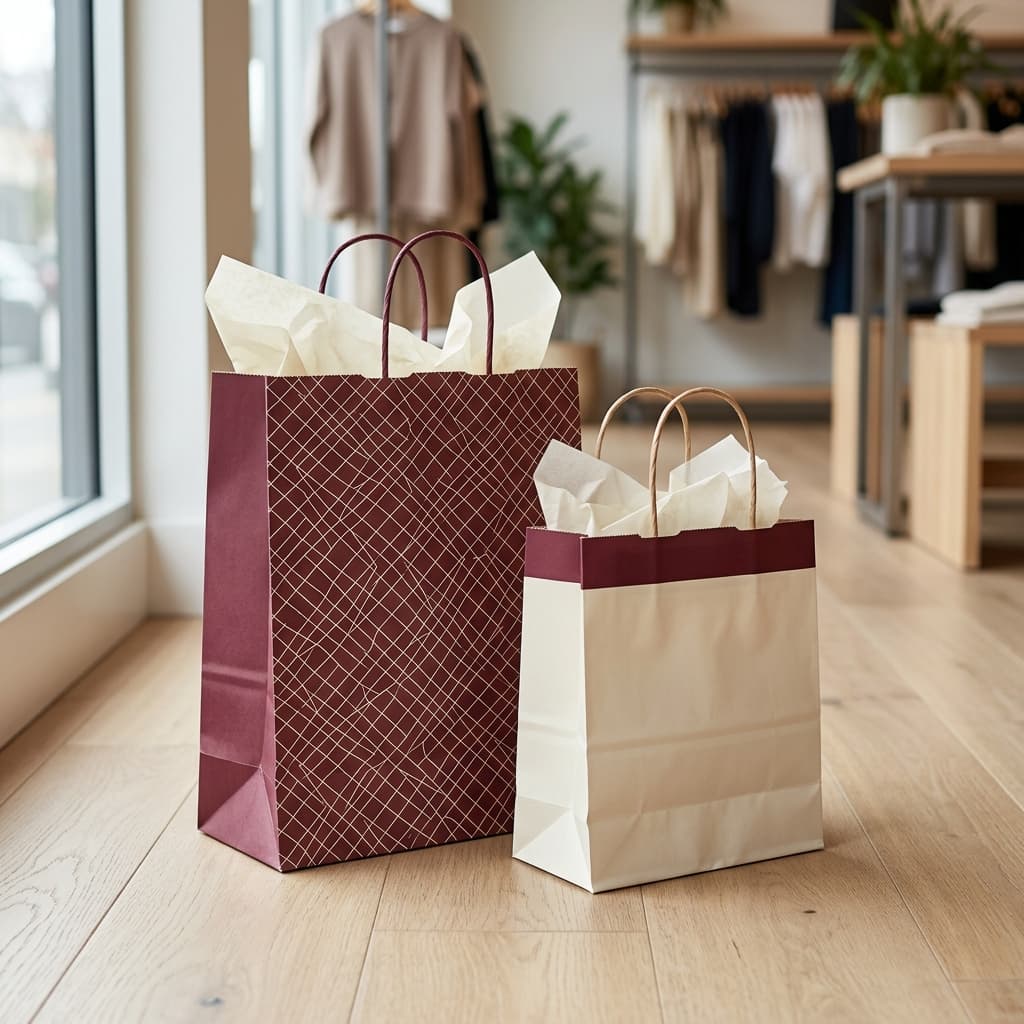
Paper Bags
Printed paper carrier bags with handles, sized to what you sell.
Explore box styleQuestions about fish and chips boxes.
Box style FAQsWe’ll confirm the exact details that apply to your structure and volume.
Read all frequently asked questionsWhere should mushy peas and curry sauce go?+
In separate lidded pots, beside the box rather than poured into it. A fish and chips box is folded board with a hinged lid, so wet sides run into the corners and soften the batter. Pots also let customers add sauce when they eat, so the chips stay crisp on the way home and the box stays dry.
Can a fish and chips box take salt and vinegar?+
Yes. Our grease-resistant board is made for oily, seasoned food, and a normal shake of salt and vinegar is fine. A heavy splash is different, as vinegar is wet and acidic and pools in the base over a long trip. For delivery orders, many shops season lightly in the box and add vinegar sachets in the bag.
Will fish and chips boxes stack in a delivery bag?+
Yes. The flat lid stacks well, and we can place the vent holes so a box on top does not cover the vents of the one below and trap its steam. Keep stacks low, and put fish and chips at the top of a mixed order rather than under drinks, so the boxes keep their shape and the batter stays crisp.
Can one box hold a family-size fish and chips order?+
Yes. We make larger fish and chips boxes for sharing portions, usually in corrugated board so they carry the weight without sagging. A big shared box holds more steam, so we give it extra venting. Many shops pack each fish in its own box and send the chips in a larger shared box, which keeps the batter crisper.
Start with a free recommendation
Get pricing