How many shoe box sizes does a footwear range need?
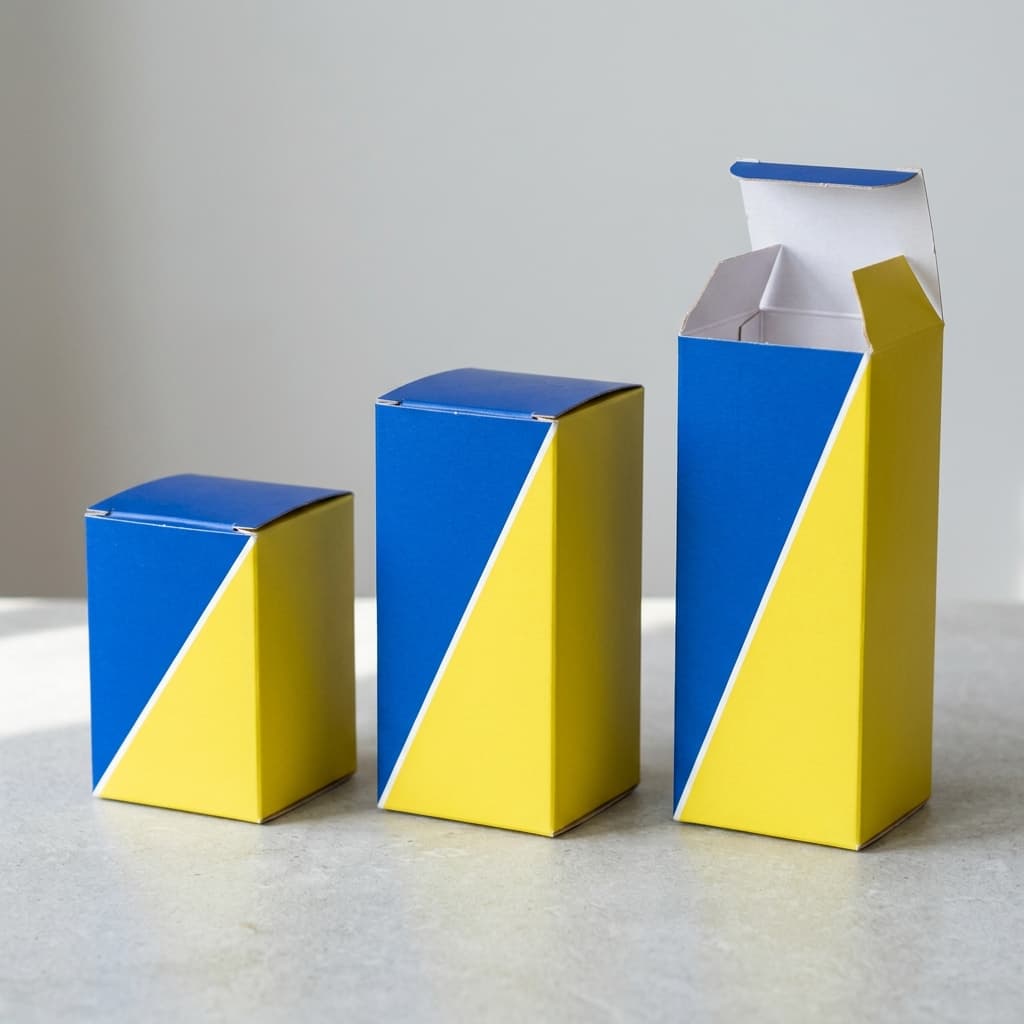
Most ranges need far fewer box sizes than shoe sizes. We group your styles by length and height, then give each group one box that holds its largest pair well.
Shoe sizes change in small steps, so a single box can carry several of them without the smaller pairs rattling about. Where the real jumps come is between kinds of shoe: men's against women's, adult against children's, low trainers against high tops. We start from those groups rather than from your size chart, because that is where one box stops working for the next pair.
Send us your full list of styles and sizes and we map them onto the smallest number of Custom Shoe Boxes that covers the lot. Fewer sizes means fewer cutting tools, less stock to store and quicker picking, and tissue or a paper toe fill takes up the extra room in the smaller sizes of each group.
- We group by kind of shoe first, then by size
- Each box is drawn around the largest pair in its group
- Tissue and toe fill settle the smaller sizes
Do trainers, boots, heels and kids' shoes need different boxes?
Yes, and we build each one around how that shoe is shaped. The difference is mostly in height, length and how much weight the box carries.
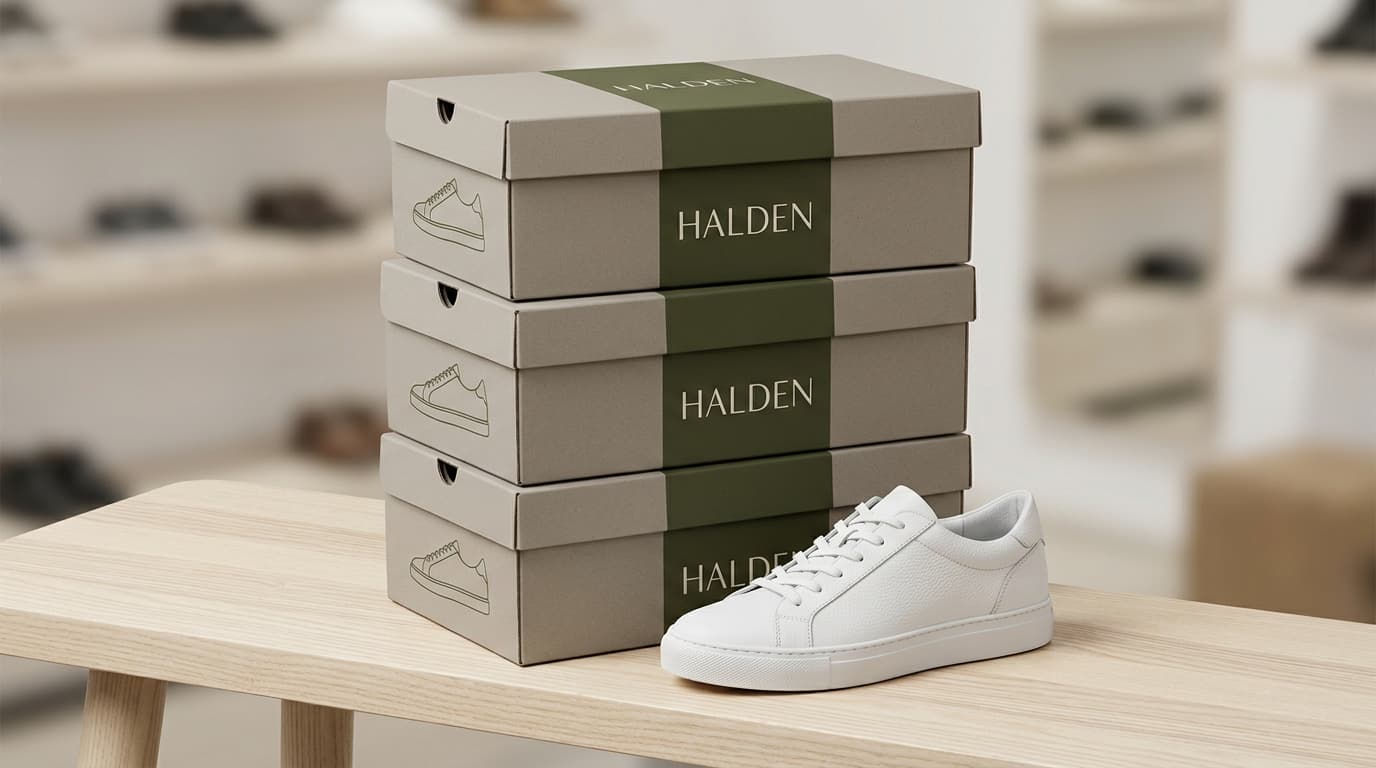
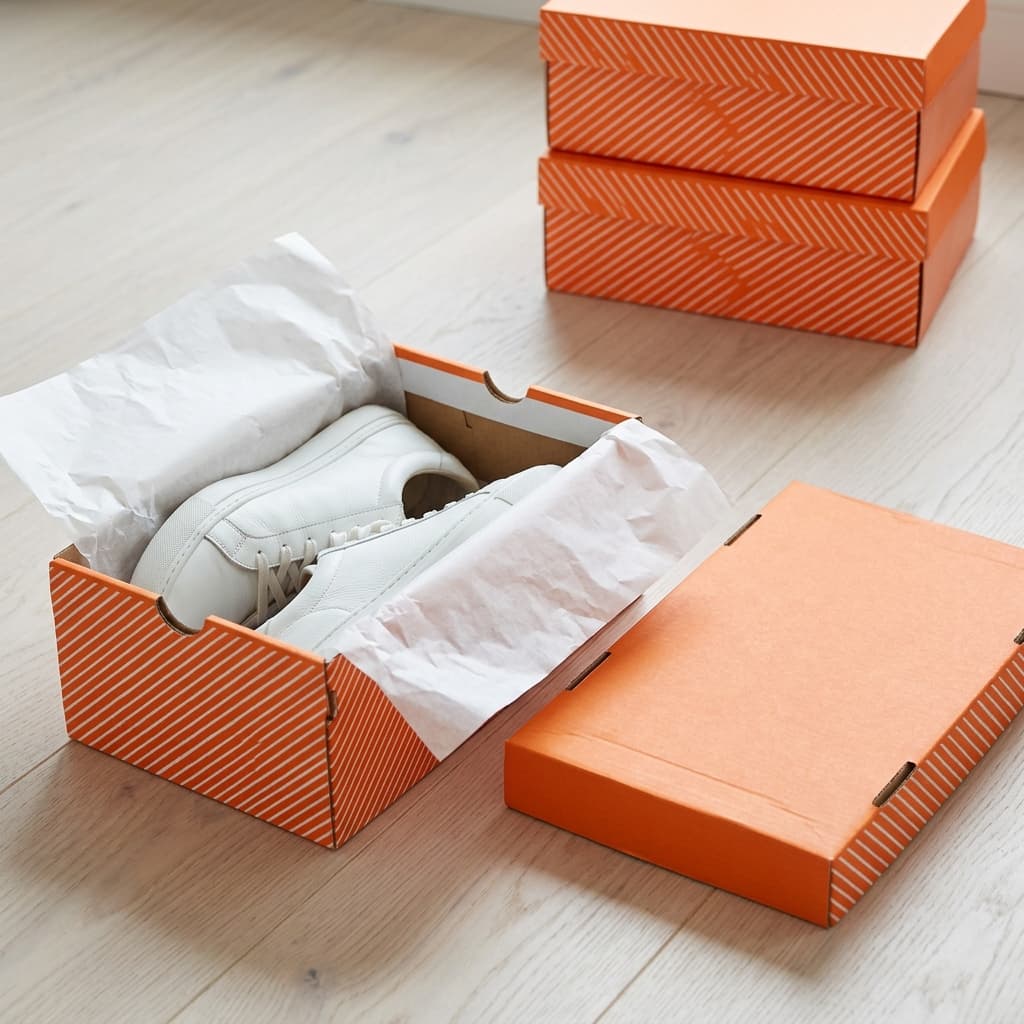
Trainers sit in our standard lidded or hinged-lid shoe box, with height for a chunky sole or a padded collar. Ankle boots need a deeper, longer box and a sturdier corrugated build, because a pair of boots is heavier and the box sits under others on the shelf. Tall boots go in a long, deep boot box, often with paper rolled into the shafts so they stay upright.
Heels need height so the heel tip never presses on the lid, and a card insert can hold each shoe at the arch so the pair cannot slide into each other. Children's shoes go in a smaller, lighter box that is easy for a parent to carry out of the shop. Telling us which of these you sell is the quickest way for us to get every box right.
Can a shoe box go in the post as its own parcel?
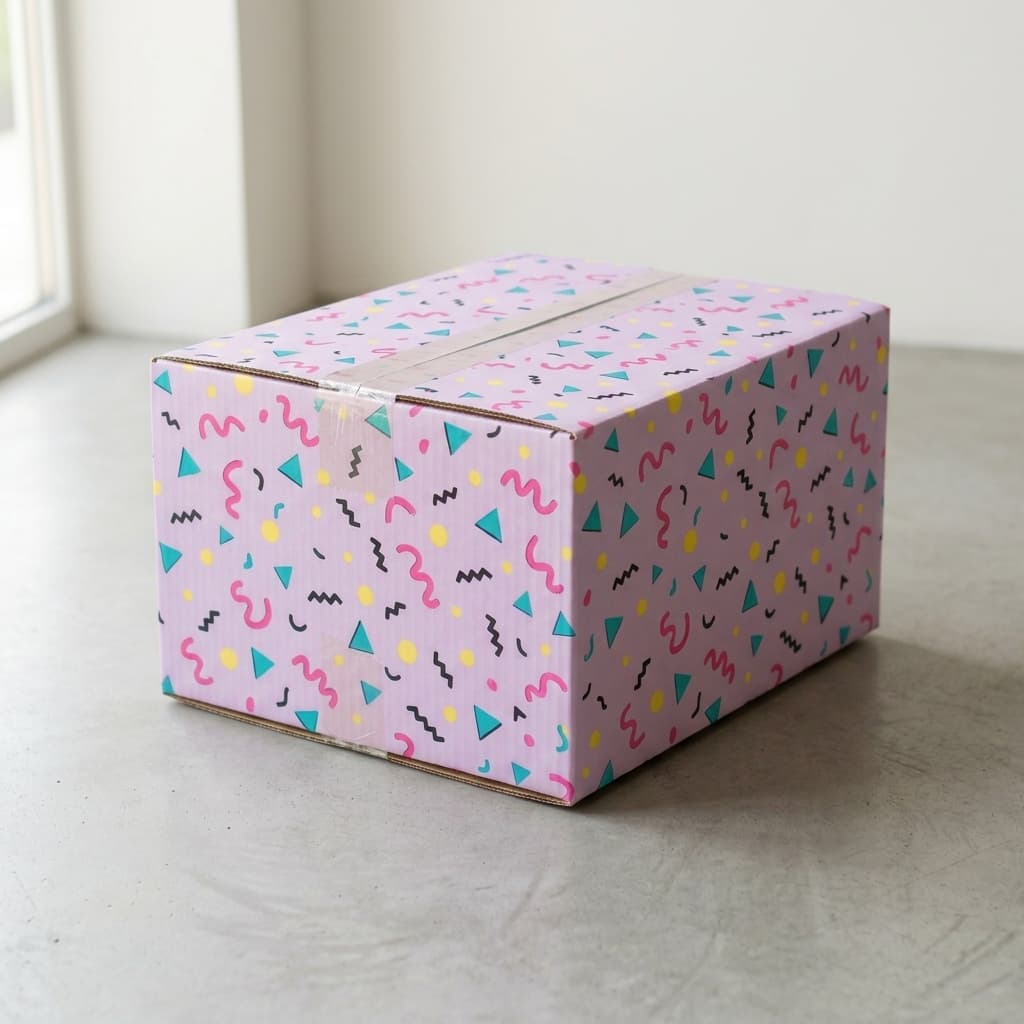
Yes. We can make your shoe box in heavier corrugated board so it ships on its own with a label on the lid, or size a plain outer shipping box that your shoe box drops straight into.
Shipping in the shoe box alone keeps parcels small and packing quick, and suits everyday pairs. We add a locking lid so it cannot lift open in transit, and keep the print clear of where the address label goes.
When the shoe box is part of what the customer is paying for, as with premium or collectable pairs, we recommend Custom Shipping Boxes as an outer. We size the outer around your finished shoe box rather than around the shoes, so it sits snugly with just enough space for a little paper fill, and the printed box arrives without courier labels or scuffs on it.
How do you make a shoe box that collectors want to keep?
We make it feel like part of the release: a stronger build, a closer-fitting lid and a finish that still looks good after years on a shelf.
Sneaker collectors and fans of limited lines keep the box with the pair, and many stack them at home as a display. For those editions we recommend a sturdier lid and base or a drawer-style box that slides out end-on, with print on the inside of the lid and on the base, so there is something to see each time it is opened. Gold, Silver & Rose Gold Foiling, Embossing & Debossing on the lid, or spot UV picking out a logo all hold up well on a box that is handled again and again.
For a numbered or collaboration release we can print the edition details on the box, or put them on a printed sleeve over your usual box, so the special run looks distinct while your standard stock stays the same. Lamination on the outside helps a dark or full-colour box resist scuffs on a collector's shelf.
- Inside print on the lid and base
- Foil, embossing or spot UV on the logo
- Edition details on the box or a sleeve
How do shoe boxes stay easy to find on a stockroom wall?
We set the end panel in the same place, with the same label space, on every box size in your range, so staff read a whole wall the same way.
On a stockroom wall, staff see hundreds of box ends side by side, and they look for a style, a colour and a size in seconds. When the logo, the label area and any colour band sit in the same spot on each end panel, the eye goes straight to the right place, whatever the size of the box.
We can print a different colour on the end panel for each line, such as running, casual and kids, so a section of the wall can be picked out from across the room. The size and colourway label then goes on the clear space we leave for it. We size the boxes so they sit square on one another, and the lids line up into neat columns that stay steady as boxes are pulled out and put back.
How do I pack spare laces, insoles and a care kit with a pair?
We add a small die-cut card insert or a compartment at one end of the box, so extras sit in their own place and never press on the shoes.
Spare laces, a shoe bag, insoles, a cleaning cloth or a small brush add real value to a pair, but loose in the box they rattle about and can mark the uppers. Our Custom Packaging Inserts give each extra a home: a card panel with a slot for a coiled lace, a shallow tray at the toe end, or a fold-out divider that sits beside the pair.
If you sell care kits on their own, we can make a small printed box in the same design as your shoe boxes, so a cleaning set bought at the till looks like part of the range. Tell us every item you want to include with the pair and we draw it into the dieline, so you can see where each piece sits on the digital proof.
What carrier bag holds a shoe box?
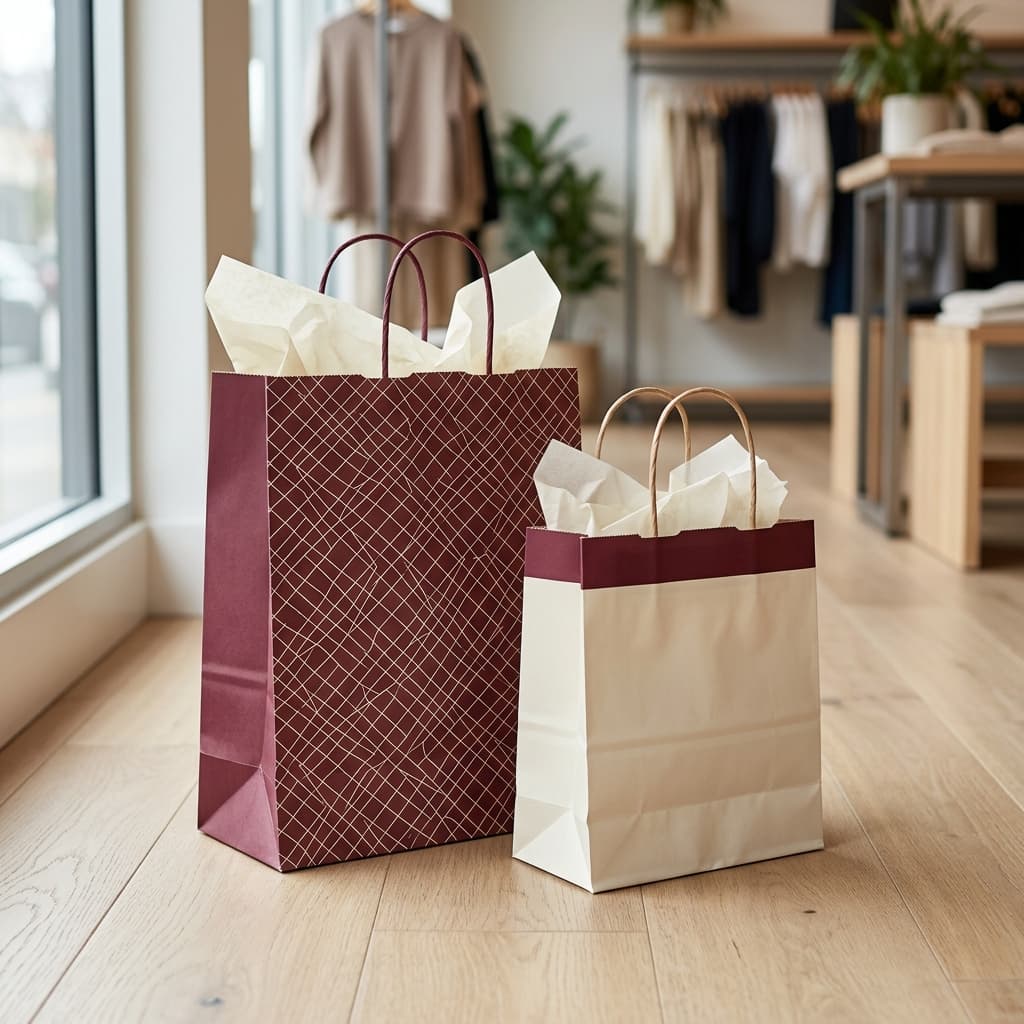
A paper carrier bag with a wide gusset and a reinforced base card, sized to the length and width of your largest shoe box so it sits flat in the bottom.
A shoe box is long, flat and heavy at the corners, so an ordinary narrow bag tips it on its end. We size Custom Paper Bags so the box lies flat on the base card, with the handles high enough above it to carry comfortably. A bag that fits your boot box usually carries a pair of trainers too, which keeps the number of bag sizes down.
We make the handles in twisted paper, flat paper or rope, and print the bag to match your boxes.
What should I tell you before you size my shoe boxes?
Tell us each style you sell, the size range of each, and the measurements of the largest pair in each group, packed heel to toe with its tissue.
Measure the longest point from heel to toe, the widest point across the pair as packed, and the tallest point, usually the heel or the ankle collar. Let us know which pairs are boots, heels or children's shoes, whether the box will ship on its own or inside an outer, and what extras such as laces or a care kit go inside.
It also helps to know how your stockroom works: how high boxes are stacked, which end faces out and what goes on your size labels. With that, we recommend the box style, board and number of sizes, then send a dieline and a digital proof for every size so you can check the fit, the lid and the end panel before production.
- Styles, size ranges and the largest pair in each
- Boots, heels, kids' shoes and any extras
- How you stack, label and ship