

 Made to your size
- 100 boxes
- Custom sizes & styles
- Free dieline support
- Quality print options
- Proof before production
- 8–12 business day production
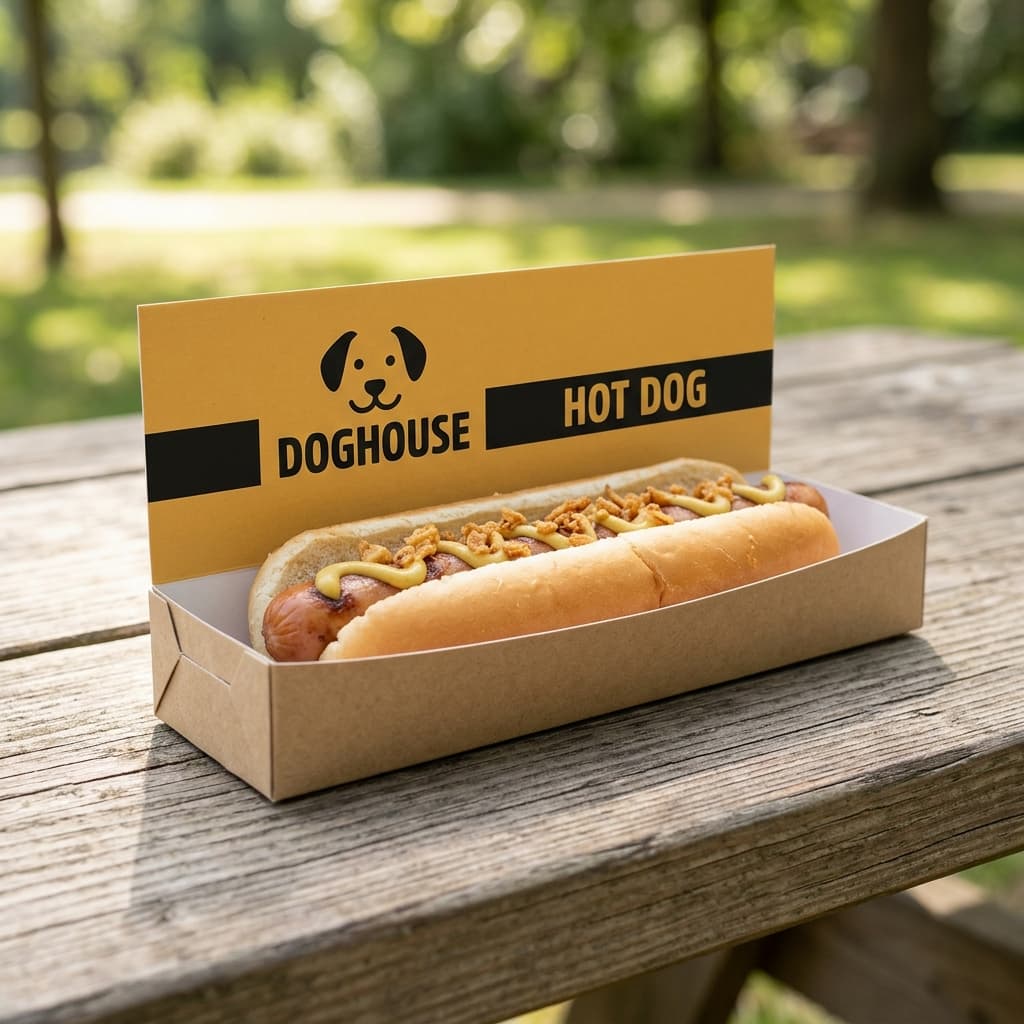
Hot dog boxes are long, narrow cartons - usually clamshells or open trays - sized around a bun so it sits upright and keeps its toppings on. A fold-up base or inner ridge stops the hot dog rolling, and a lid keeps relish and onions in place for takeaway. They suit stands, stadiums, carts and cafes serving hot dogs, sausages in rolls and similar long items.
Long boxes for long buns
Custom Hot Dog Boxes
✓Clear proofing before productionSee our process
Get a free quote
Tell us what you are packing and we’ll reply with practical options.
Product features
Built around the jobHolds the bun upright
Clamshell or open tray
Grease-resistant board
Bun channel or inner ridge
Sized to bun or sausage length
Stiffer board for warmers
Lid height for heavy toppings
Specifications made for your product.
Technical snapshotEvery final specification is confirmed against product weight, packing method, print coverage, route, and order volume.
View artwork preparation guide- SKU
- bm-1080
- Dimensions
- Custom-made around the product and packing workflow
- Materials
- Grease-resistant paperboard, Kraft paperboard, Corrugated board for larger sizes
- Printing
- CMYK, Pantone, white ink, or unprinted
- Finishes
- Matte, gloss, soft-touch, foil, embossing, spot UV
- Quantities
- Starting at 100 on selected configurations
- Proofing
- Dieline and digital proof
Brand the long lid well.
Artwork and materialsThe long clamshell lid is the largest print area, with the side walls and end panels carrying smaller details. A design that reads along the length suits this narrow shape. Our packaging guides cover sizing, materials, print, and cost in more depth.
Long lid, sides and ends
We lay your design along the lid so it reads end to end, put a logo on each side wall, and keep detail off the creased base and fold lines where the bun channel forms.
Explore print and finishesKraft, white and corrugated
Grease-resistant paperboard keeps print clean around mustard and ketchup drips. Kraft gives a classic stand look, and corrugated board for footlong and jumbo sizes adds stiffness while still taking a bold design.
Explore material decisionsChoose your box
Choose a clamshell or open tray, in regular, footlong or jumbo lengths.
Request a quote
Send us your bun length, its width with the sausage in, and your topping height.
Finalize the order
Approve the board, style, lid height and quantities for each length before we prepare your dieline.
Build the dieline
We draw the box just wider than your bun, with a bun channel or inner ridge.
Approve the proof
Check the lid artwork, side logos and fold lines on your digital proof before we print.
Roll on production
We print, cut and crease your hot dog boxes, then check and pack them flat.
Best for
Hot dog stands and cartsStadiums and eventsSausage rolls and subsKids' mealsWhat changes the price.
Cost factorsEvery project is quoted individually. These are the choices that move the price on almost every order.
- Style
- Open trays are the simplest cut; clamshells with a locking lid use more board.
- Length
- Footlong and jumbo sizes need longer blanks and sometimes a stiffer board.
- Grease protection
- Treated or coated board costs more than plain board.
- Full colour costs more than one colour, and the long lid is a large print area.
Buyer guidance
Choosing this format
Keeping the hot dog upright
A hot dog rolls, and when it rolls the toppings fall off - the box is shaped to stop that.
Good hot dog boxes are only slightly wider than the bun, with a V-shaped or creased base that cradles it. Some trays fold up into a narrow channel. The fit matters more than the outer size: too wide and the bun tips over on the first bump. We size the channel from your own bun rather than a standard one, because rolls vary more than people expect.
- Narrow fit around the bun
- Creased or V-shaped base
- Lid holds toppings in
Toppings, sauces and grease
Mustard, ketchup and fried onions are what mark a box, not the sausage itself.
Sauces drip to the ends of the box, so the corners take the most moisture. Grease-resistant board stops dark patches, and a clamshell lid that clears the toppings avoids smearing them across the top.
Clamshell or open tray?
Open trays suit eating on the spot; clamshells suit carrying away.
At a stadium or cart, the hot dog is eaten within a minute, so an open tray is quicker to serve. For takeaway or delivery, a closing clamshell keeps heat and toppings in and can be stacked in a bag.
Related packaging formats
Compare your options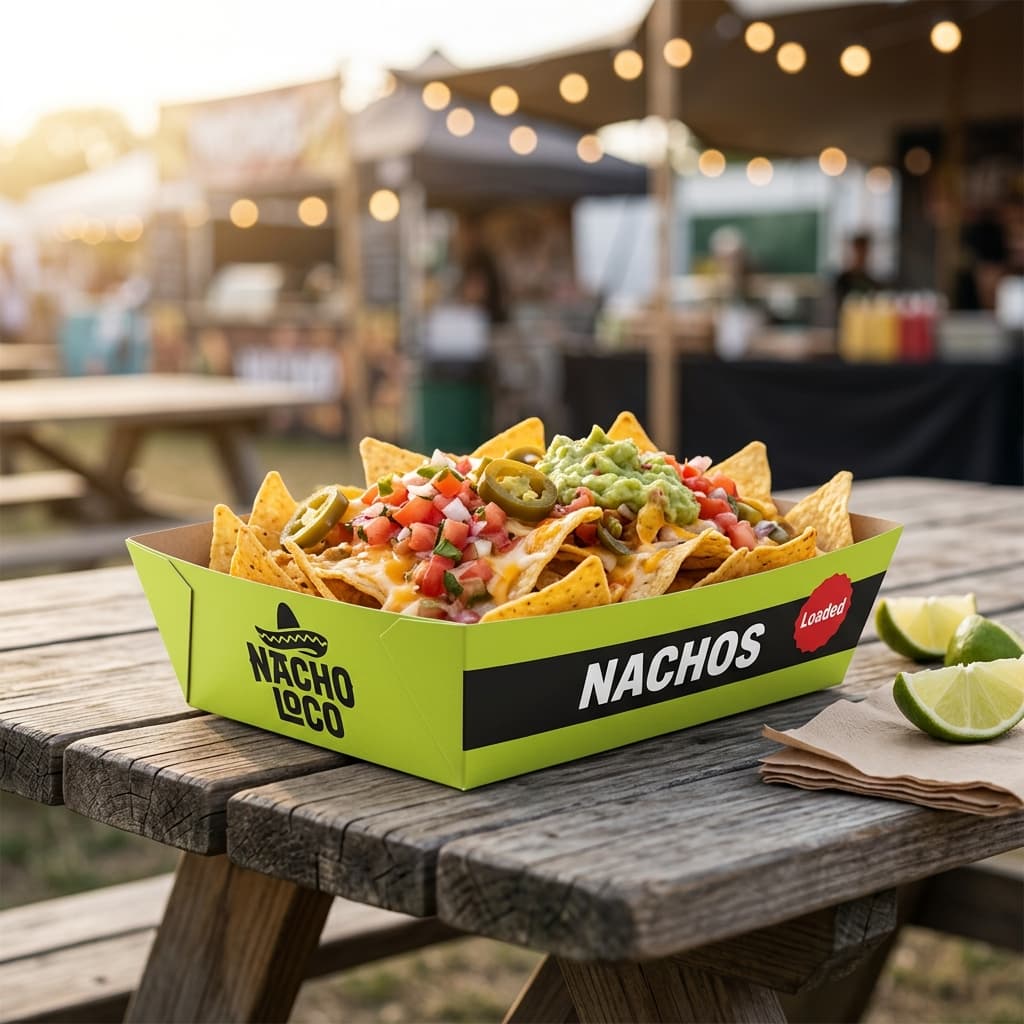
Food Trays
Open paperboard trays for serving snacks, sides and street food, with no lid to fiddle with.
Explore box style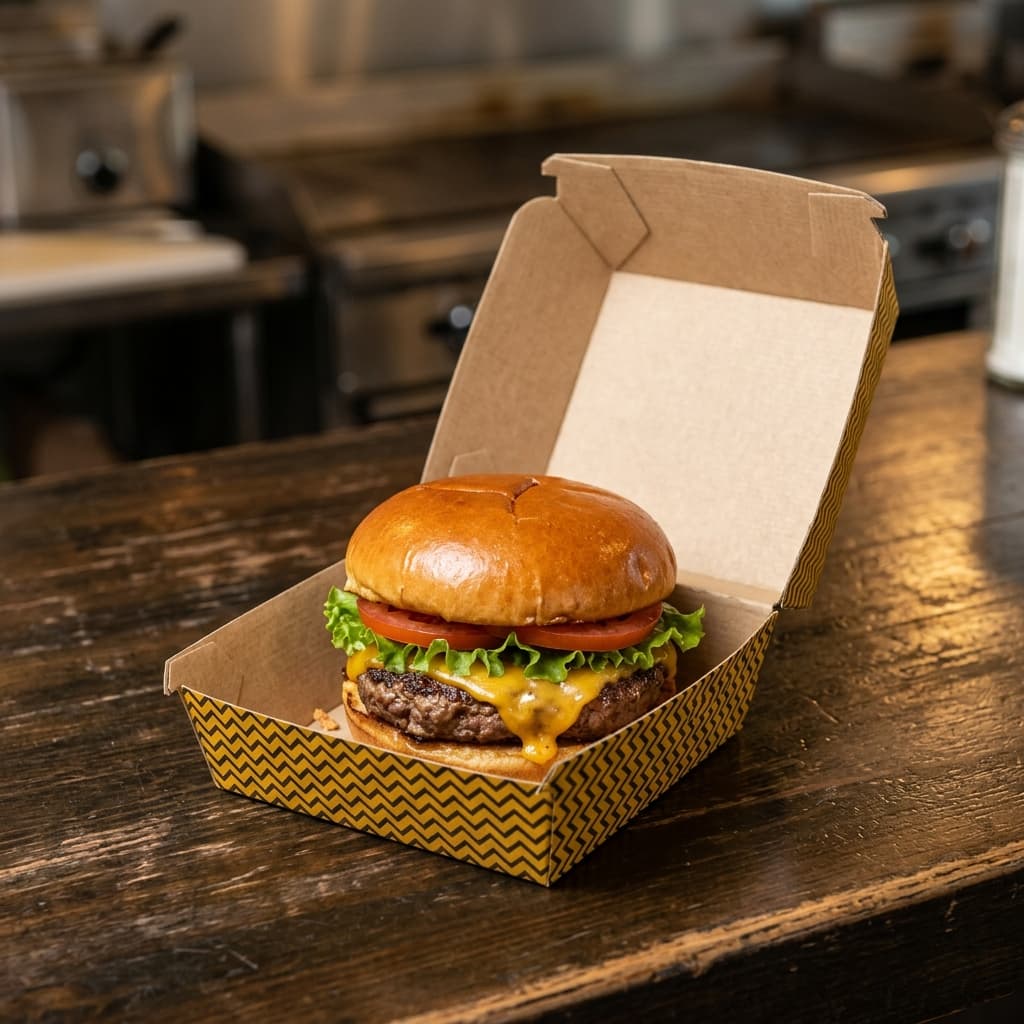
Burger Boxes
One-piece clamshells that keep a burger's shape and stack neatly in a delivery bag.
Explore box style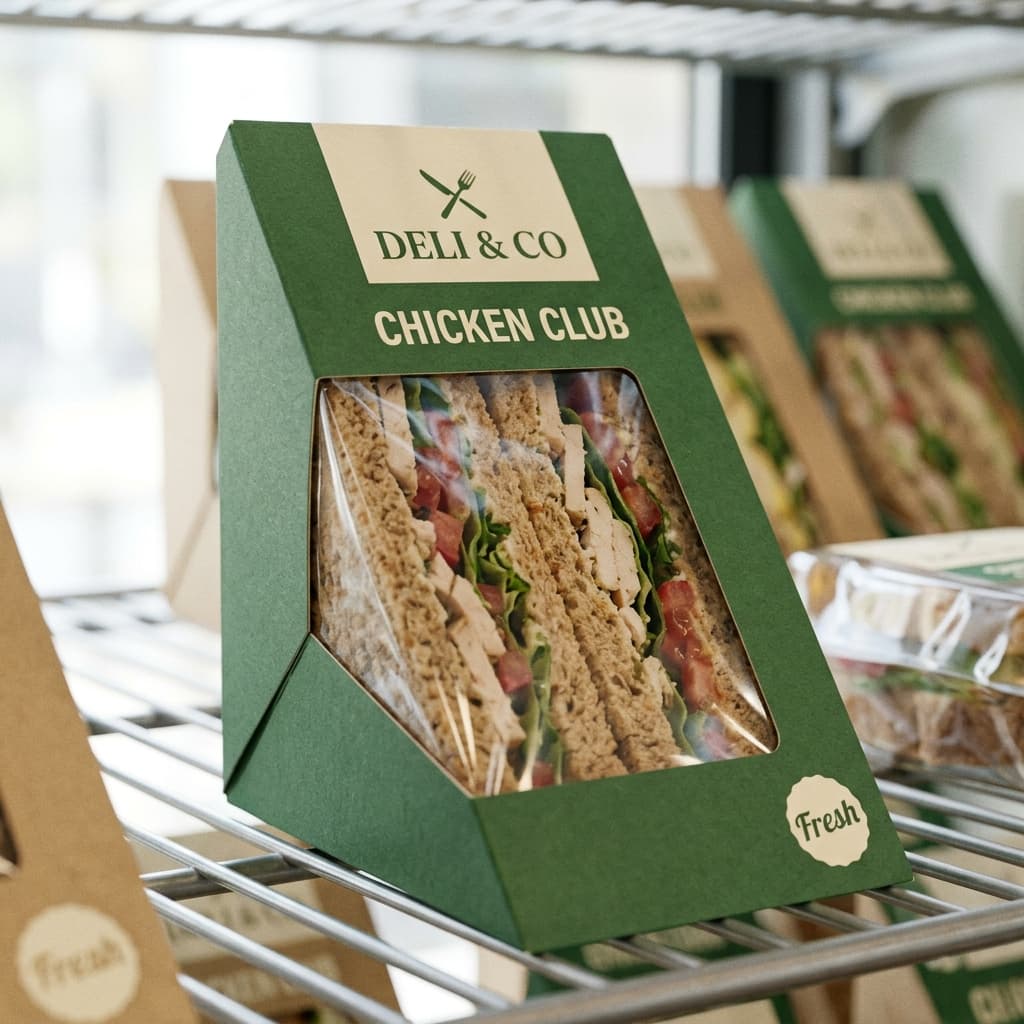
Sandwich Boxes
Wedge and rectangular boxes for cold sandwiches, wraps and subs, often with a window.
Explore box styleQuestions about hot dog boxes.
Box style FAQsWe’ll confirm the exact details that apply to your structure and volume.
Read all frequently asked questionsHow do I measure for a hot dog box?+
Measure the length of the bun, its width when opened with the sausage in, and the height of the most heavily topped hot dog on your menu, then send us those measurements. We make the box only a little longer and wider than the bun so it cannot roll. If the sausage hangs past the ends of the bun, measure the sausage instead, so the lid clears it.
Can fries go in the hot dog box too?+
Can hot dog boxes sit in a heated holding cabinet?+
Yes, for short holding times. Warm, humid air and steam from the food slowly soften paperboard, so the box loses stiffness the longer it waits. If your hot dogs will sit in a warmer at busy events, tell us and we can make the boxes in a stiffer board. Packing close to serving time keeps them at their best.
How is a hot dog box different from a sub or sandwich box?+
A hot dog box is built for hot, greasy food eaten soon after, so we make it from grease-resistant board with a bun channel, usually without a window. A sub box is made for cold sandwiches on a chiller shelf, with a window and space for labels. A hot sausage roll or a hot sub belongs in a hot dog style box.
Start with a free recommendation
Get pricing