
The best custom packaging decisions connect structure, material, print, and logistics. Use this guide to prepare a clearer brief and ask better questions before production.
Start with internal dimensions
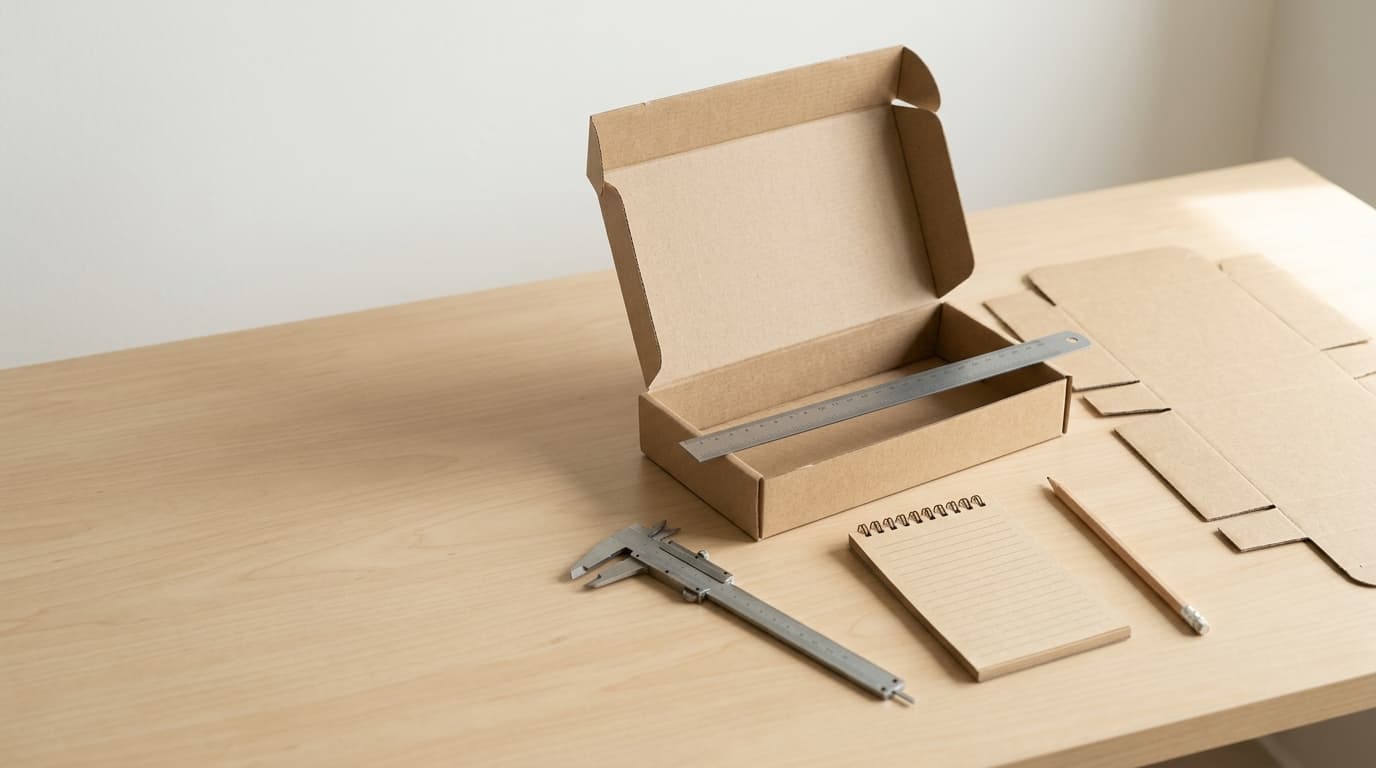
Custom boxes are normally specified using internal dimensions because those measurements describe the usable space around your product. Measure the product at its widest, longest, and deepest points before adding clearance for inserts or protective material.
Record dimensions as length × width × depth. Length is the longest side of the box opening, width is the shorter side, and depth is the distance from the opening to the base.
Allow the right clearance
A close-fitting folding carton may need only a few millimeters of clearance, while fragile items in a corrugated shipper need room for cushioning. Too much space increases movement, material use, and shipping cost; too little can make packing difficult or damage the product.
Prototype before production
A plain structural sample is the best way to confirm fit, assembly, and product presentation. Test the sample using the same inserts and packing process you expect to use in production.
Turn the guide into a real box.
Share your product dimensions, quantity, and timing. We'll recommend a practical packaging route.
Request a free quote