

 Made to your size
- 100 boxes
- Custom sizes & styles
- Free dieline support
- Quality print options
- Proof before production
- 8–12 business day production
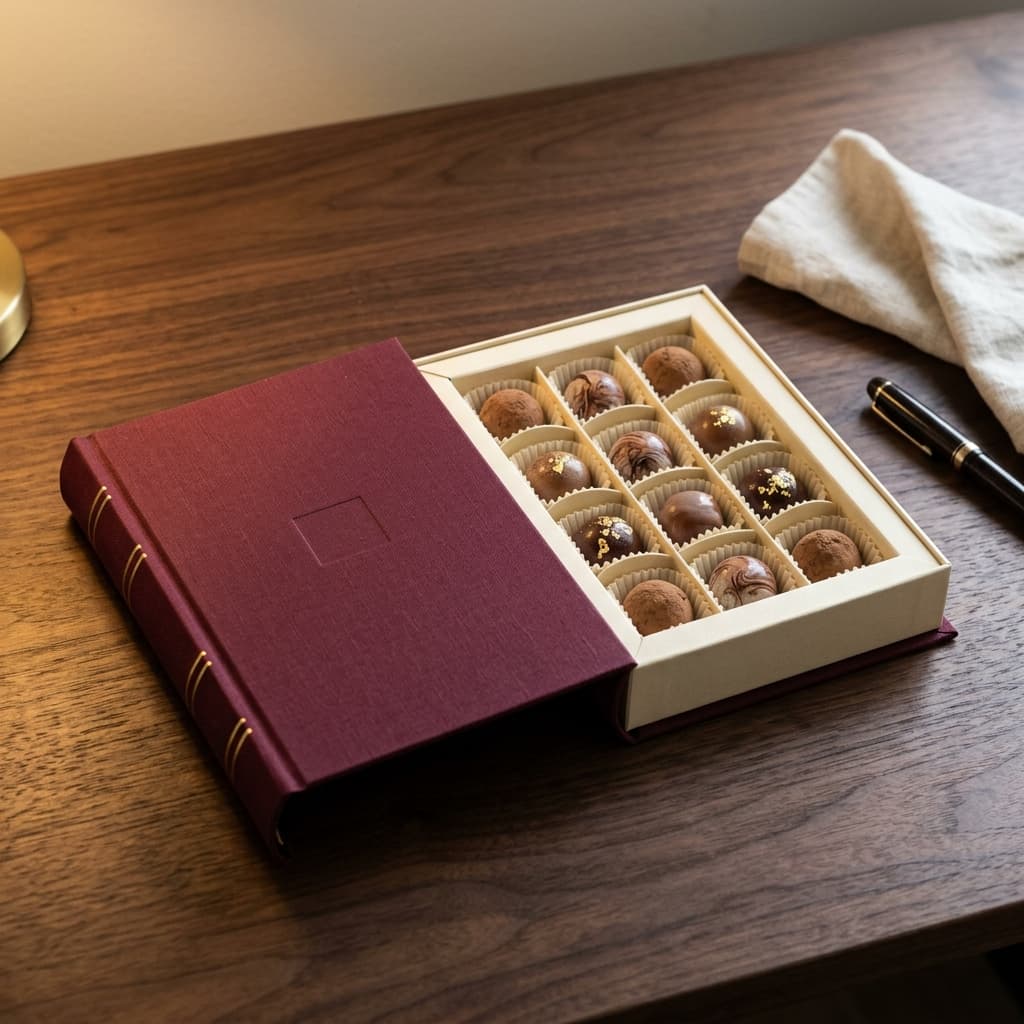
A book-style box has a hinged lid along one edge and a spine, so it opens flat like a hardback rather than lifting off. That makes it easy to display open on a shelf, and it holds its contents in view while the lid stays attached. Common for collections, sets and anything presented rather than simply shipped.
Opens like a book
Book Style Boxes
✓Clear proofing before productionSee our process
Get a free quote
Tell us what you are packing and we’ll reply with practical options.
Product features
Built around the jobOpens flat
Magnet or ribbon closure
Fitted insert options
Printed spine title
Inside-lid card pocket
Book cloth spine reinforcement
Folding paperboard version
Specifications made for your product.
Technical snapshotEvery final specification is confirmed against product weight, packing method, print coverage, route, and order volume.
View artwork preparation guide- SKU
- bm-1021
- Dimensions
- Custom-made around the product and packing workflow
- Materials
- Wrapped rigid board, Textured paper, Printed paperboard
- Printing
- CMYK, Pantone, white ink, or unprinted
- Finishes
- Matte, gloss, soft-touch, foil, embossing, spot UV
- Quantities
- Starting at 100 on selected configurations
- Proofing
- Dieline and digital proof
Open it like a favourite book.
Artwork and materialsA book style box gives you the front cover, the spine and the inside lid to design. The spine and the open view are what set this format apart. Our packaging guides cover sizing, materials, print, and cost in more depth.
Cover, spine and inside lid
We set your artwork on one wrap across the lid, spine and base, with a title or logo on the spine if you want one. The inside lid can carry a print, a card pocket or a booklet.
Explore print and finishesWraps, papers and paperboard
Coated wrap paper takes foil, spot gloss and photographic print well, while textured paper feels richer in the hand. We keep heavy foil away from the hinge line, and a folding paperboard version gives a lighter feel.
Explore material decisionsChoose your box
Tell us the contents, the tallest item and whether the box will stand on a shelf.
Request a quote
We recommend the board, wrap, closure and insert, with a magnet or ribbon catch to suit.
Finalize the order
Confirm the size, spine width, wrap, finishes, closure, inside lid details and the quantity.
Build the dieline
We draw the lid, spine and base around your contents, with the insert holding everything in place.
Approve the proof
Review the cover, spine title, inside lid and hinge area artwork on the digital proof.
Roll on production
Your book style boxes are wrapped, assembled by hand, checked for a flat close and carefully packed.
Best for
Product setsCollector editionsStationeryPremium samplesBuyer guidance
Choosing this format
Panels, spine and a paper hinge
Rigid board panels joined by a spine, wrapped in paper so the hinge is formed by the wrap itself.
A lid panel and a base panel are cut from thick board, with a narrow spine panel between them and a small gap that lets the box fold. A sheet of printed or textured paper is then wrapped across all three, and that paper is what forms the hinge.
A flap on the front edge carries the catch, which is either a hidden magnet or a ribbon. Inside, a fitted insert holds the contents in place, so the box can be shown open without anything moving.
- Lid, spine and base panels wrapped in one paper
- Hinge is the wrap, not a separate fitting
- Fitted insert keeps contents in place when open
Magnet or ribbon closure?
A magnet closes with a click and stays shut. A ribbon is quieter and slower, and asks the customer to tie it.
Magnets are set in the lid and the front flap before wrapping, so the closure disappears into the board. They suit boxes that are opened often, though they add a component and a step to assembly.
A ribbon tie costs less, suits stationery and keepsakes, and gives a gentler opening. It does not hold the lid as firmly, so heavier contents may press the lid open a little.
- Magnet: firm close, hidden, one-handed
- Ribbon: softer look, no magnets, weaker hold
Depth, spine and the insert
The spine width sets how deep the contents can be, and getting it wrong shows when the lid is closed.
The spine panel must match the internal depth plus the lid's own thickness. If the contents are taller than the spine allows, the lid bows outward, pulls on the hinge and will not sit flat.
Fitted inserts remove the guesswork. Cut to the product, they stop it sliding to the hinged side when the box is opened, and they keep a set looking arranged. Send us the tallest item's measurements and we set the spine and the insert around it, with clearance.
Book style or lift-off lid?
A book style box keeps the lid attached and opens flat. A lift-off box is simpler and stacks better.
A two-piece box with a separate lid is quicker to make and stacks in a warehouse without catching. The lid can be put aside, but it can also be lost, and it does not show the contents on display.
The book style opens like a hardback, so contents sit in view against the open lid on a shelf or in a photo. It costs more to assemble by hand and takes more shelf depth when open.
Wrap paper and the hinge line
The hinge is where the wrap paper works hardest, so paper choice matters more here than on most boxes.
Coated art paper takes foil, spot gloss and photographic print well. Textured and uncoated papers feel better in the hand but can crack or split along the hinge fold, especially when the paper grain runs across it.
Keep foil, dense solid colour and fine detail away from the hinge line, where flexing wears them first. The spine itself is a useful place for a title or logo, and we can print one there so it stays visible on a shelf.
Book style box or a printed carton?
A book style box is the pick when the box is kept, shelved or given. A folding carton is the pick for a light product that is unboxed once.
A book style box is made to be presented and kept, and it has to be protected if it is shipped. Rigid board is heavy and the box needs an outer carton to travel safely, so the cost is paid twice on every order. A hinge is also a weak point for dense contents, because the weight of a full lid hangs on it every time the box is opened.
For one-time unboxing of light products, a printed mailer or a folding carton is a better fit. The book style earns its cost where the box stays in view after the product is used.
Related packaging formats
Compare your options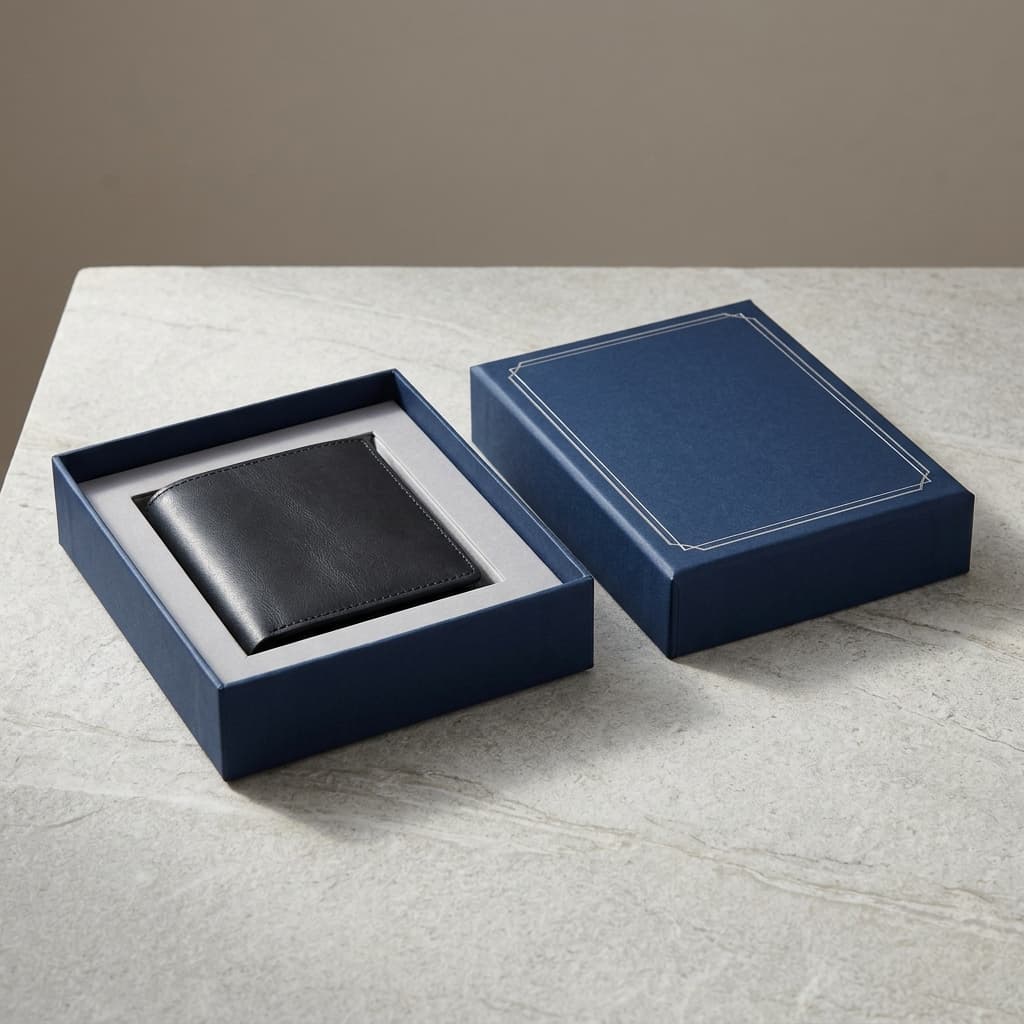
Rigid Boxes
Luxury two-piece and magnetic boxes with a substantial, keepsake feel.
Explore box style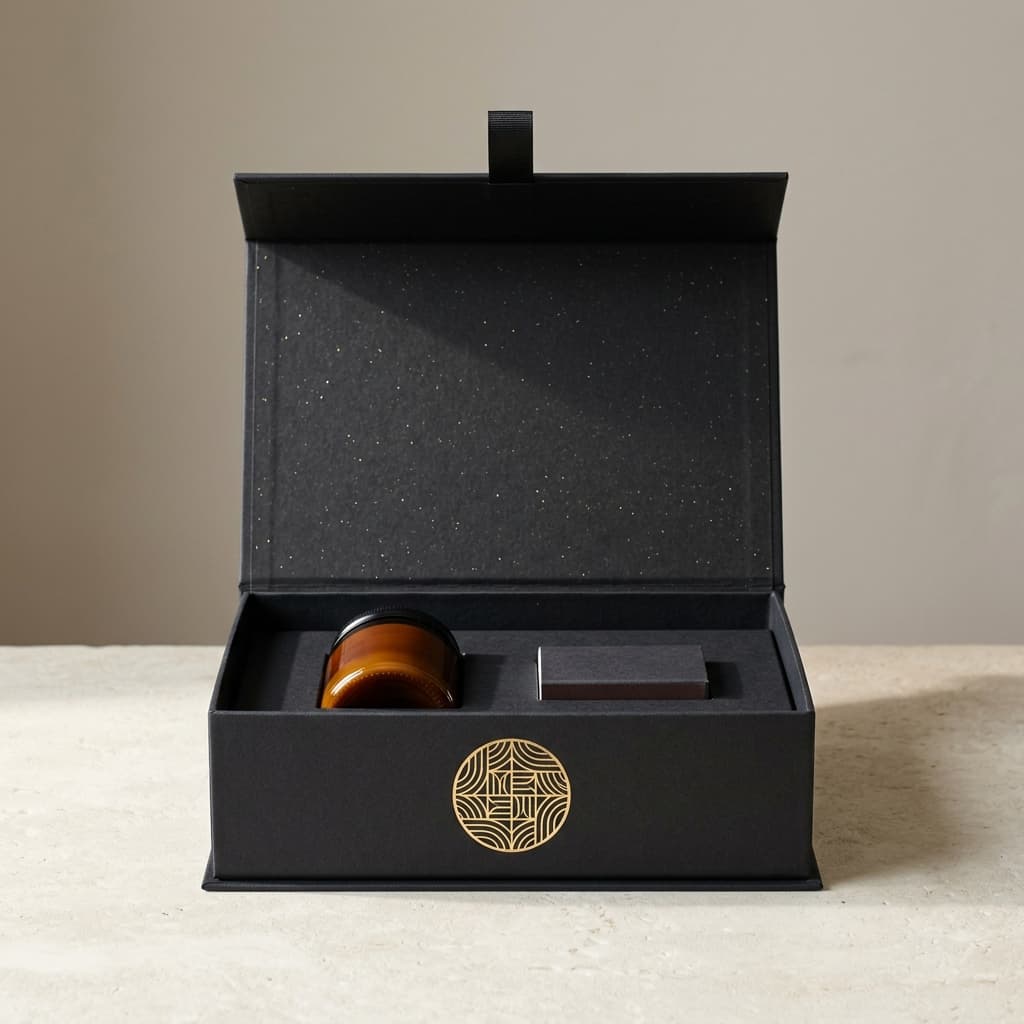
Magnetic Boxes
Rigid boxes with a hidden magnet in the lid, for a deliberate first open.
Explore box style
Inserts
Fitted inserts that hold a product still, so it arrives as it was packed.
Explore box styleQuestions about book style boxes.
Box style FAQsWe’ll confirm the exact details that apply to your structure and volume.
Read all frequently asked questionsCan a book style box stand upright on a shelf like a book?+
Yes. We hold the contents firmly in an insert so they do not slide when the box stands on its end. The spine then faces out and can carry a title or logo that reads like a book on a shelf. Tell us which way the spine should read and we lay out the artwork to match on your proof.
Can the inside of the lid hold a booklet or card?+
Yes. We can fit a card pocket, a ribbon band or a shallow recess inside the lid, so a booklet, certificate or welcome card faces the customer when the box opens. We allow for its thickness in the spine width, so the lid still closes flat. It is a neat way to include instructions without loose paper falling out.
Is a book style box strong enough to open every day?+
Yes. The hinge is wrapped board, and we run the wrap paper along the hinge so it flexes cleanly. For boxes opened often, such as sample sets, collector boxes or keepsakes, we can reinforce the spine with book cloth or a strip of strong material under the wrap, so it stands up to regular use and keeps opening smoothly.
What is the difference between a book style box and a magnetic closure box?+
A book style box has a spine and a lid that opens sideways, like a hardback cover. Our magnetic closure boxes usually have a flap that comes off the back of the base and folds over the top to the front. Many book style boxes use magnets as their catch too, so the two overlap. The spine is the main difference, and it gives you an extra panel to print.
Can a book style box be made from folding paperboard instead of rigid board?+
Yes. We can make a book style box in folding paperboard, which ships flat and costs less to send. It suits samples, stationery and short promotions. The hinge is a crease rather than wrapped board, so it feels lighter in the hand. For a box your customers will keep, we recommend rigid board.
Start with a free recommendation
Get pricing