

 Made to your size
- 100 boxes
- Custom sizes & styles
- Free dieline support
- Quality print options
- Proof before production
- 8–12 business day production
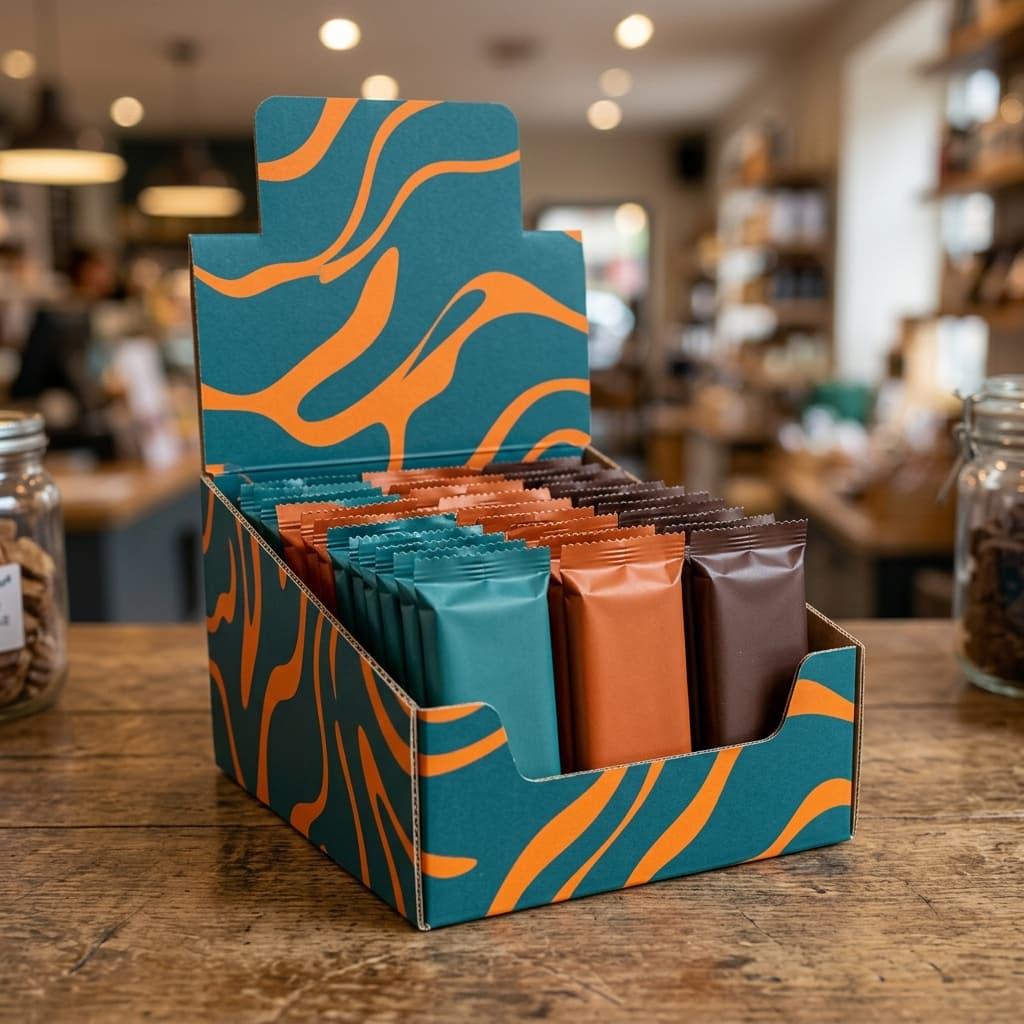
Retail display boxes and counter trays from 100 units, engineered around product count, sightlines and how the unit sits on a shelf or counter. They ship flat and assemble in store, printed on the panels a shopper actually sees. Production runs 8–12 business days after you approve the proof.
Shelf conversion
Custom Display Boxes
✓Clear proofing before productionSee our process
Get a free quote
Tell us what you are packing and we’ll reply with practical options.
Product features
Built around the jobPerforated headers
Retail-ready trays
Custom compartments
Paperboard or E-flute builds
Angled tray with front lip
Refillable tray options
Scuff-resistant varnish
Specifications made for your product.
Technical snapshotEvery final specification is confirmed against product weight, packing method, print coverage, route, and order volume.
View artwork preparation guide- SKU
- bm-1008
- Dimensions
- Custom-made around the product and packing workflow
- Materials
- Paperboard, E-flute corrugated, Kraft board
- Printing
- CMYK, Pantone, white ink, or unprinted
- Finishes
- Matte, gloss, soft-touch, foil, embossing, spot UV
- Quantities
- Starting at 100 on selected configurations
- Proofing
- Dieline and digital proof
Put your brand at eye level.
Artwork and materialsOn a display box the header and the tray front do the selling. We focus your artwork on the panels that face the shopper and keep the rest simple. Our packaging guides cover sizing, materials, print, and cost in more depth.
Header, tray front and sides
We set your brand and message on the header and the front lip, with bleed over every fold. Perforated tear-away sections and fold lines are marked on the dieline, so artwork sits where shoppers see it.
Explore print and finishesPaperboard, corrugated or kraft
Paperboard prints crisply for light products, corrugated adds stiffness for heavier counts, and kraft gives a natural look in either build. A scuff-resistant varnish keeps the print fresh through a promotion of daily handling.
Explore material decisionsChoose your box
Tell us the product, how many units each display holds and where it will stand.
Request a quote
We recommend the display style, board and header shape for your product count and space.
Finalize the order
Confirm the structure, board, header, compartments, print coverage and the quantity of displays.
Build the dieline
We draw the tray, back panel and header around your product, with any compartments in place.
Approve the proof
Review the header, tray front, tear-away sections and every visible panel on the digital proof.
Roll on production
Your displays are printed, cut, checked and packed flat, ready to fold up at the counter.
Best for
CosmeticsSnacksSupplementsSmall retail goodsWhat changes the price.
Cost factorsEvery project is quoted individually. These are the choices that move the price on almost every order.
- Quantity
- Set-up work is the same whether we make 100 boxes or 5,000, so the price per box falls as quantity rises.
- Structure
- A simple counter tray is the most economical. Multi-tier displays and headers use more board and more complex cutting.
- Board strength
- Heavier products need stronger board, which costs more.
- Print coverage
- Printing only the panels a shopper sees keeps the cost down.
- Shipping
- Displays that ship flat cost less to send than units that arrive assembled.
Buyer guidance
Choosing this format
How a counter display stands up
A display box is a tray with a back and header, folded from one flat sheet to stand on a counter or shelf.
The tray holds several units of a product and presents them at the front. A raised header carries the brand and the message. Perforations let a shipping carton tear open and convert into the display.
Everything is die cut from one sheet, so the unit ships flat and goes up in seconds in the shop. The structure has to hold the product count without bowing and stay upright without a separate stand.
- Tray, back panel and header from one sheet
- Perforated tear-away sections convert shipper to display
- Ships flat, folded up at the point of sale
Paperboard or E-flute?
Paperboard is smooth and light. E-flute is stiffer and carries more weight without bending.
Solid paperboard prints crisply and suits light products such as sachets, cosmetics and small confectionery. It can sag if the load is high or the display is tall.
E-flute corrugated is thicker and stiffer, which suits heavier items and larger counts. Its surface carries print a little less cleanly. Kraft board is available in either build for a natural look. Pick by the heaviest filled unit, not the empty one.
- Paperboard: sharper print, lighter loads
- E-flute: stiffer, heavier products
- Kraft: natural look in either build
Count, facing and shelf space
Decide how many units, how they face the shopper, and how much space the retailer has, before drawing the structure.
Start with the product's dimensions and how many must sit in the tray. Then check the space available. A counter has limited width and a shelf has limited depth, and many retailers set their own limits on display size. Send us the product's size, the count and the space you have, and we draw the tray around them.
The angle of the product matters too. A tilted tray shows the front of every unit, while a flat one shows only the first row. Custom compartments hold each item upright and stop sliding, and they set the sightline from the shopper's eye height.
Display box or folding carton?
A folding carton wraps one product. A display box presents several and often doubles as the shipping pack.
A carton protects and sells a single unit. It sits on the shelf as one of many, and the shopper picks it up. A display box groups units in one structure that stands apart and draws attention.
The two often work together, with cartons sitting inside the display. A display saves shelf labour because the retailer sets out one unit rather than many. It does take more space than a row of cartons, which some stores will not give.
Print where the shopper looks
Put the artwork on the panels that face the aisle, and keep the rest simple.
The header and the front of the tray carry the brand and message. The inside of the tray is seen only once the product is gone, so heavy print there rarely earns its place. Print coverage is a real cost driver, so spend it on what is seen.
Counter displays get touched often, and unvarnished print scuffs. A varnish or light coating helps, as does keeping dark solid colour away from the fold lines, where cracks show first. Kraft shifts colours, so on a kraft display we set the artwork up for brown board rather than white.
Counter display or plain shipping case?
A counter display is the pick where a retailer gives it a place to stand. A plain shipping box is the pick when the stock goes onto the retailer's own shelves or out by post.
Many retailers have their own fixtures, shelving or planograms, and will not accept an extra display, so confirm space before designing. Where there is no space, the cartons go straight onto their shelves, delivered in a plain shipping box. A display also adds little for products sold online, where there is no shelf to stand on.
Heavy or very fragile goods can overwhelm a paperboard structure, and a long-term fixture needs stronger materials than a promotional display. For heavier stock we build the tray in E-flute, which carries more weight than paperboard without bowing.
Related packaging formats
Compare your options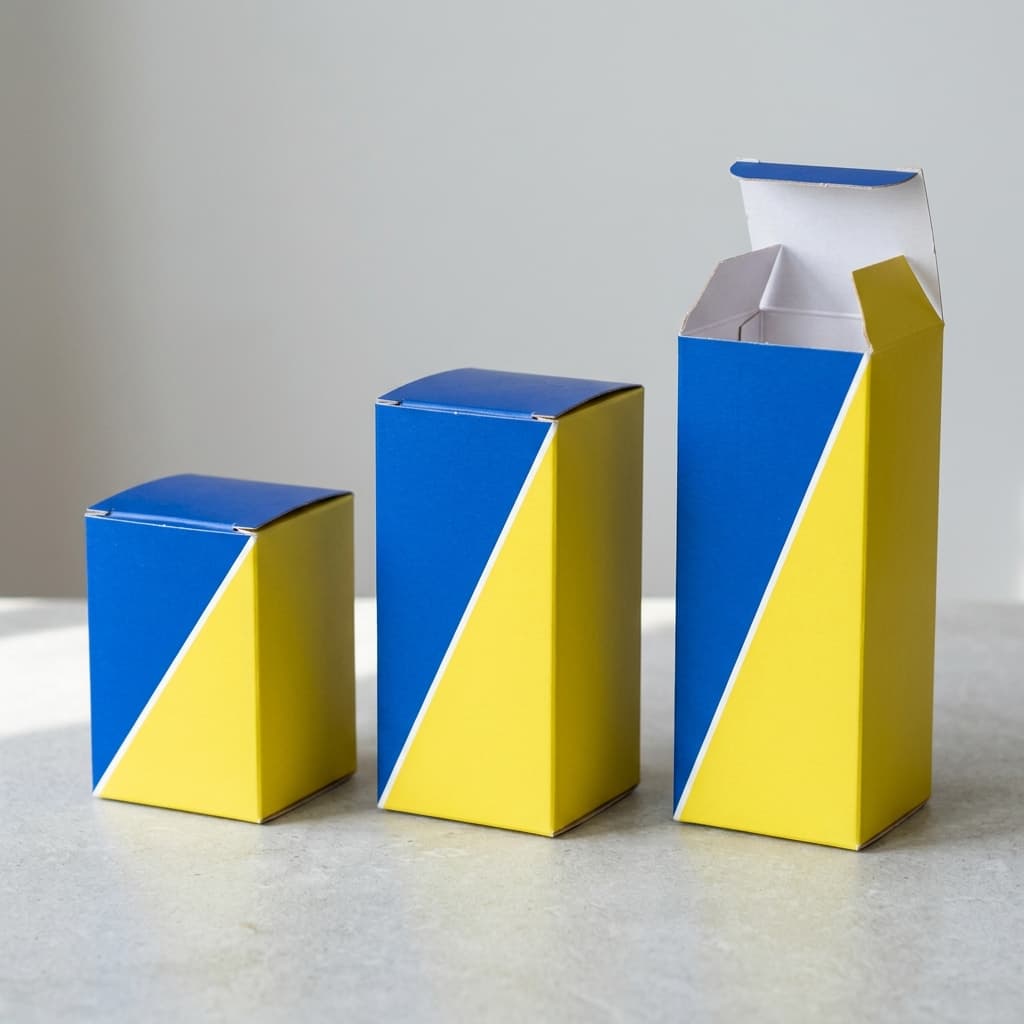
Folding Cartons
Lightweight printed cartons with crisp color, structure, and shelf appeal.
Explore box style
Cosmetic Boxes
Color-accurate beauty packaging designed to look sharp on shelf and camera.
Explore box style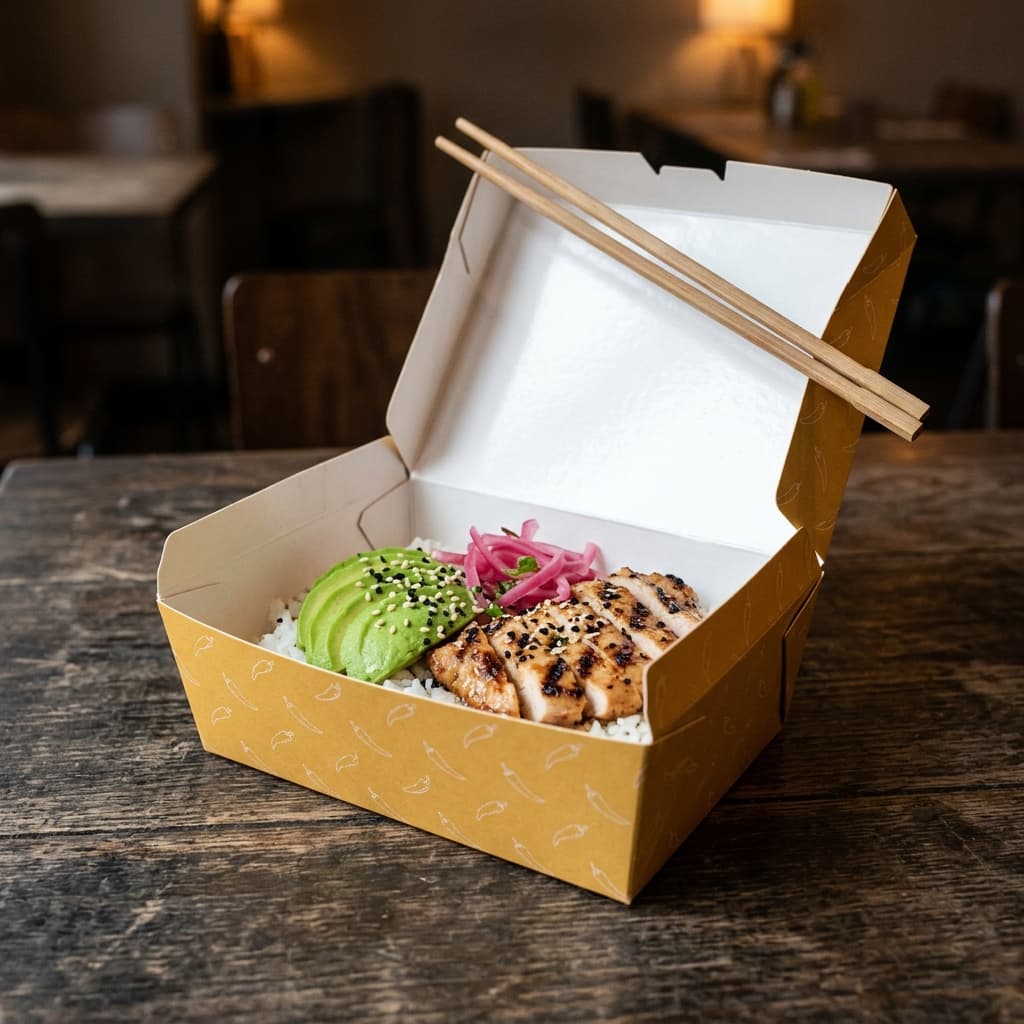
Food Boxes
Thoughtful cartons, sleeves, and carry boxes for food and beverage brands.
Explore box styleQuestions about display boxes.
Box style FAQsWe’ll confirm the exact details that apply to your structure and volume.
Read all frequently asked questionsWhat is shelf-ready packaging, and is a display box the same thing?+
Shelf-ready packaging is a shipping case that opens into a tray and goes straight onto the shelf, so staff do not unpack units one by one. Our display boxes can work the same way, with a tear-off front or lid. If the retailer you supply has packaging guidelines for opening and identifying cases, send them to us and we design the box to meet them.
How long will a cardboard display box last on a counter?+
We make display boxes to look good through a full promotion, usually a few weeks to a few months on the counter. For longer use, we can add a varnish that resists scuffs and wiping, use a stronger board, and shape the tray so it restocks easily. Tell us how long the display needs to stay out and we build it for that.
Can a display box be restocked, or is it thrown away when empty?+
Either, and we build it for the one you choose. A display that ships full and is recycled once empty is the simplest. One made to be refilled gets stronger board, a tray shape that loose units drop back into easily, and print that still looks good half full. Tell us which you plan when you request your quote.
Will products stay upright in a display box?+
Yes. We design the tray with a front lip set to the height of your product and a slight backward tilt, and for tall or narrow items we add dividers so each unit has its own space. The lip holds the front row in place without hiding the front of your pack. Send us your product's measurements and how many units each display holds.
Start with a free recommendation
Get pricing