

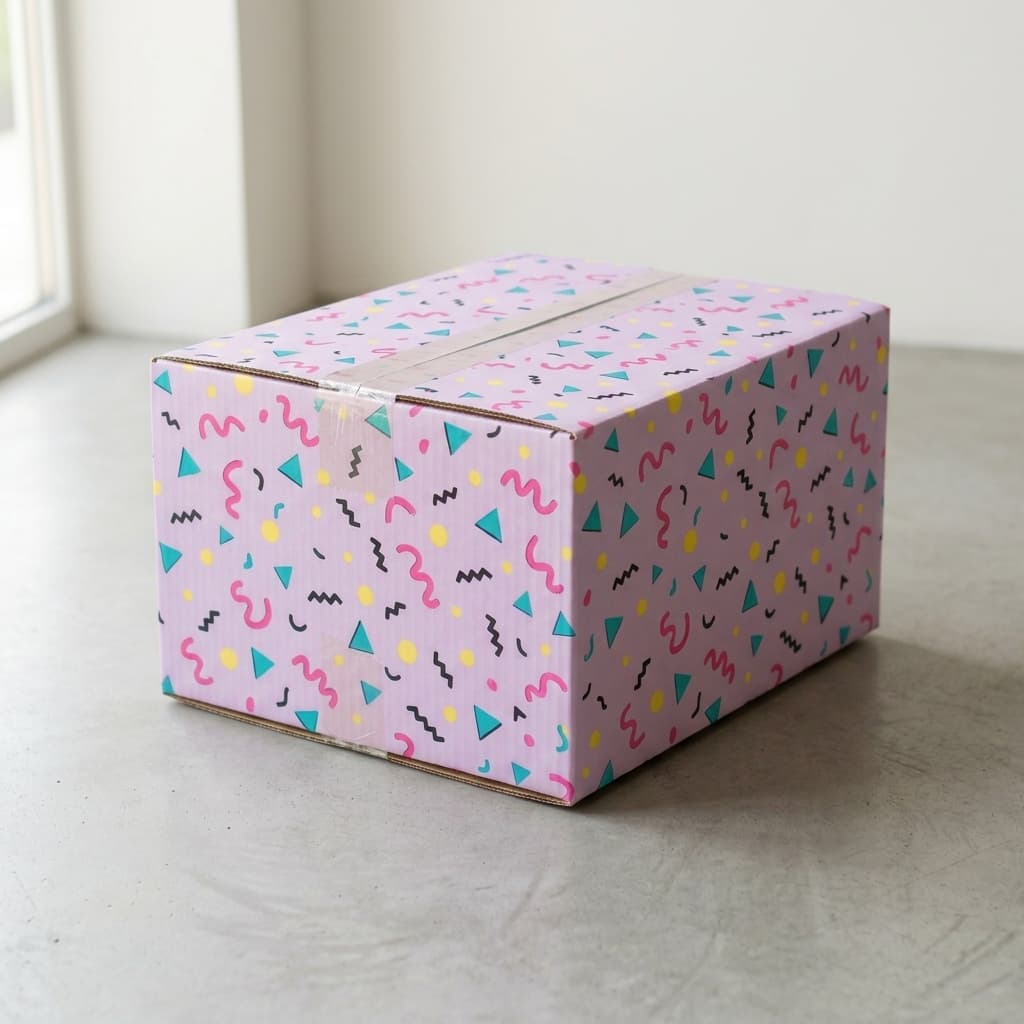
 Made to your size
- 100 boxes
- Custom sizes & styles
- Free dieline support
- Quality print options
- Proof before production
- 8–12 business day production
Reduce damage and wasted space with corrugated shippers engineered around product weight, route, and packing needs. Add one- or two-color print for an efficient branded delivery.
Built to protect
Custom Shipping Boxes
✓Clear proofing before productionSee our process
Get a free quote
Tell us what you are packing and we’ll reply with practical options.
Product features
Built around the jobMultiple flute grades
Water-based inks
Crash-lock options
Single or double wall
Regular slotted or full overlap
Telescope and half-slotted styles
Pallet-footprint sizing
Specifications made for your product.
Technical snapshotEvery final specification is confirmed against product weight, packing method, print coverage, route, and order volume.
View artwork preparation guide- SKU
- bm-1006
- Dimensions
- Custom-made around the product and packing workflow
- Materials
- Recycled corrugated, Double-wall board, Kraft liner
- Printing
- CMYK, Pantone, white ink, or unprinted
- Finishes
- Matte, gloss, soft-touch, foil, embossing, spot UV
- Quantities
- Starting at 100 on selected configurations
- Proofing
- Dieline and digital proof
Bold branding that survives transit.
Artwork and materialsShipping boxes carry one or two colours printed straight onto the corrugated outer faces. Large logos, bold type and clear handling marks read best on board that travels. Our packaging guides cover sizing, materials, print, and cost in more depth.
Outer faces and flap panels
We set your logo and text on the flat box blank, sized to the side panels and top flaps, and keep artwork clear of the joining seam. We can leave space for shipping labels and handling marks.
Explore print and finishesCorrugated and kraft liners
A kraft liner darkens every ink, so dark colours and bold shapes read strongest on it, while a white liner gives truer colour. Single or double wall changes the strength of the box, not the look of the print.
Explore material decisionsChoose your box
Tell us the product with its inner packing, its weight and how it travels to customers.
Request a quote
We recommend the box style, wall strength and print that suit your load and route.
Finalize the order
Confirm the internal size, box style, board, print colours and the quantity you need.
Build the dieline
We draw the box to your internal dimensions, with flaps, seam and any crash-lock base in place.
Approve the proof
Check your logo placement, print colours and every outer panel and flap on the digital proof.
Roll on production
Your shipping boxes are printed, cut, joined, checked and bundled flat for delivery.
Best for
DTC shippingWholesale casesFragile goodsKittingBuyer guidance
Choosing this format
Inside a regular slotted carton
Flat sheets of corrugated, scored and slotted, then joined along one seam so the tube folds up into a box.
The common style is the regular slotted carton. All four flaps are cut from the same sheet, and the outer flaps meet in the middle of the top and bottom. The seam is glued, taped or stitched at the factory, and the box arrives flat.
Corrugated gets its strength from a fluted layer between two flat liners. The arches resist crushing from above and the liners resist tearing and puncture. The liners and the flute are chosen together, because the box is only as strong as the weaker of the two jobs.
- Fluted medium sandwiched between liners
- One factory seam, everything else folds
- Ships flat, closed with tape or a crash-lock base
Single wall, double wall, and which flute
Single wall is enough for most parcels. Double wall earns its place when weight, stacking or rough routes are the real risk.
Single wall has one fluted layer. B-flute is about 3mm thick and cushions well, C-flute is a little thicker and stacks better, and E-flute is thin and suits lighter goods. Double wall joins two fluted layers, often B and C, for far more crush resistance and a much stiffer panel.
The cost of double wall is bulk and weight. Each flat box takes more storage space, folds less crisply and adds to the billed weight. Choose it for heavy items, long routes with several handovers, and boxes that will sit at the bottom of a stack. Tell us the heaviest load and how high the boxes stack, and we recommend the wall.
- Single wall: lighter, easier to store, fine for most DTC parcels
- Double wall: heavy or fragile goods, pallets, long routes
- Edge crush rating matters once boxes stack high
Measure the product, then the gap
Record internal length, width and height in that order, and measure the product with its inner packing, not bare.
A shipping box is specified by the space inside it. Add room for any bag, wrap or insert, then a few millimetres of clearance on each side. A box that is too tight bulges at the seams and splits at the corners. A box that is too loose lets the contents move, and movement causes most damage.
Size also drives the freight bill. Carriers convert a parcel's volume into a billed weight and charge whichever figure is higher, so a box a few centimetres too deep costs more on every shipment. Trim the height first, because it is the easiest dimension to waste, and tell us the parcel size you aim for so we keep the box inside it.
- Internal dimensions, length then width then height
- Measure the product with its inner packing
- Check the carrier's size bands before finalising
Shipping box or padded bag?
A padded bag is lighter and cheaper to post. A corrugated box protects against crushing, which a bag cannot do.
Bags and poly mailers suit soft goods that cannot be crushed, such as clothing and textiles. They add almost nothing to a parcel's size or weight, and they lie flat in a delivery van.
Once a product is rigid, brittle or valuable, a box is the safer choice. The walls carry the load of other parcels stacked on top, and the box gives you something to build a fitted insert into. A mailer box sits between the two, but a plain shipper is still the better fit for heavy, mixed or bulk orders.
Printing on corrugated
One or two colours, printed straight onto the board, is the usual approach and it holds up well in transit.
Corrugated is printed with water-based inks, normally by flexography. The surface is slightly textured and the fluting can show faintly through the liner, so large logos, bold type and simple shapes reproduce well. Fine screens and photographs do not.
Kraft liner is brown and ink sits on top of it, which darkens every colour. Light and pastel tones barely register. A white top liner gives truer colour but reads as less natural. A plain or one-colour box is a sound choice for wholesale cases and for boxes that travel inside a larger carton.
Shipping box or mailer box?
A shipping box is the pick for transit, wholesale and bulk. A mailer box is the pick when the opening is part of the product.
A shipper is built to survive transit, not to be looked at. It is the wrong shape for a shelf and its print is limited, and a customer opening one expects the goods, not an experience. Where the unboxing matters, a printed mailer box is the better fit.
It is also oversized for very small, light items. A carton sized for a single lipstick adds weight and tape for no benefit. Long, thin goods suit a telescope style, and very heavy loads a double-wall build of the same box.
Related packaging formats
Compare your options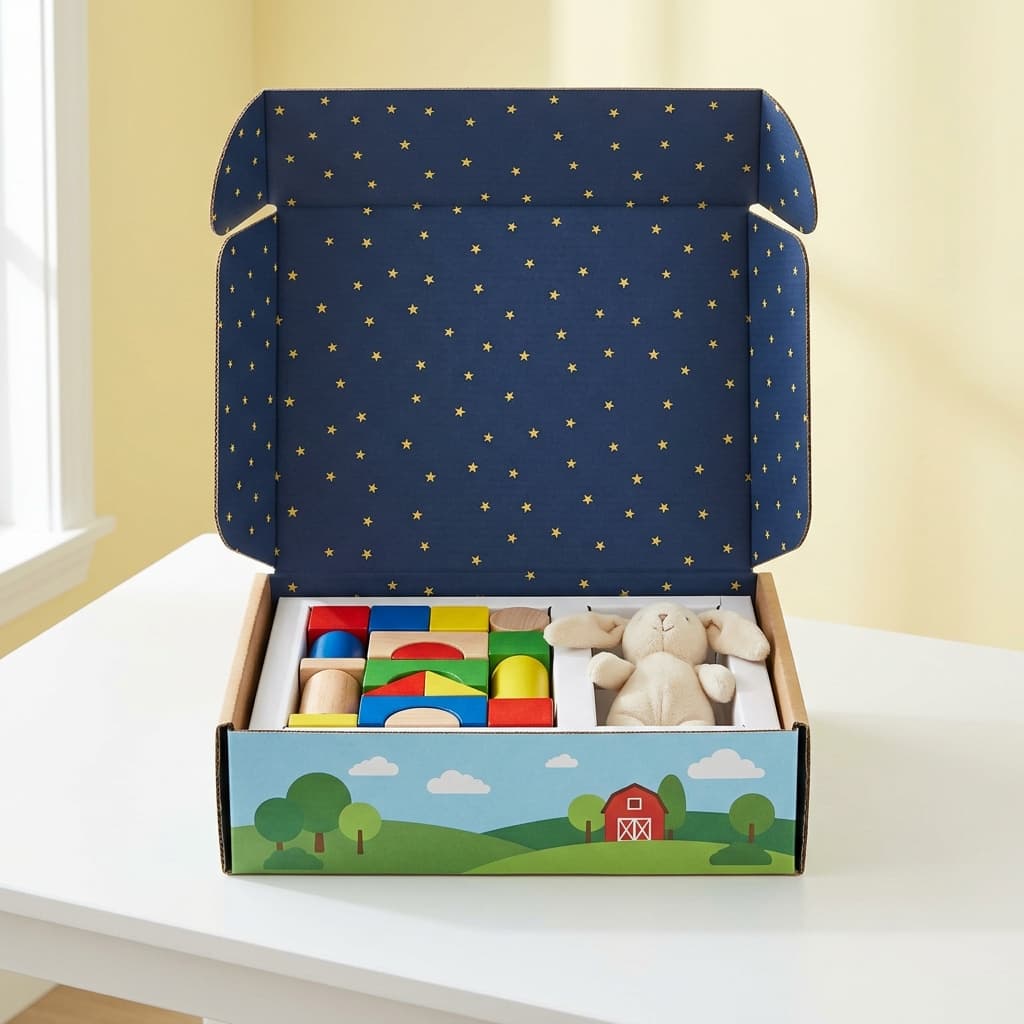
Mailer Boxes
Sturdy, self-locking corrugated mailers built for memorable deliveries.
Explore box style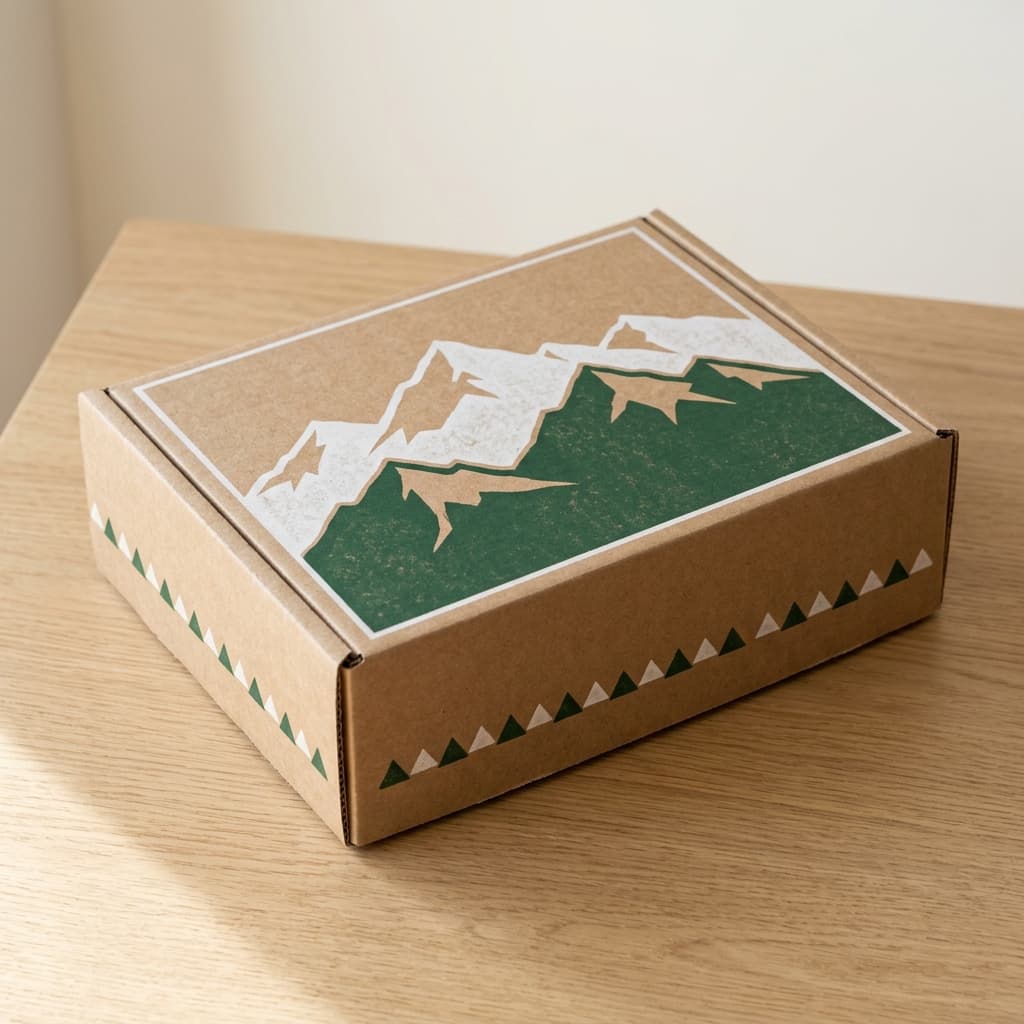
Kraft Packaging
Warm, honest kraft packaging with recycled content and modern print.
Explore box style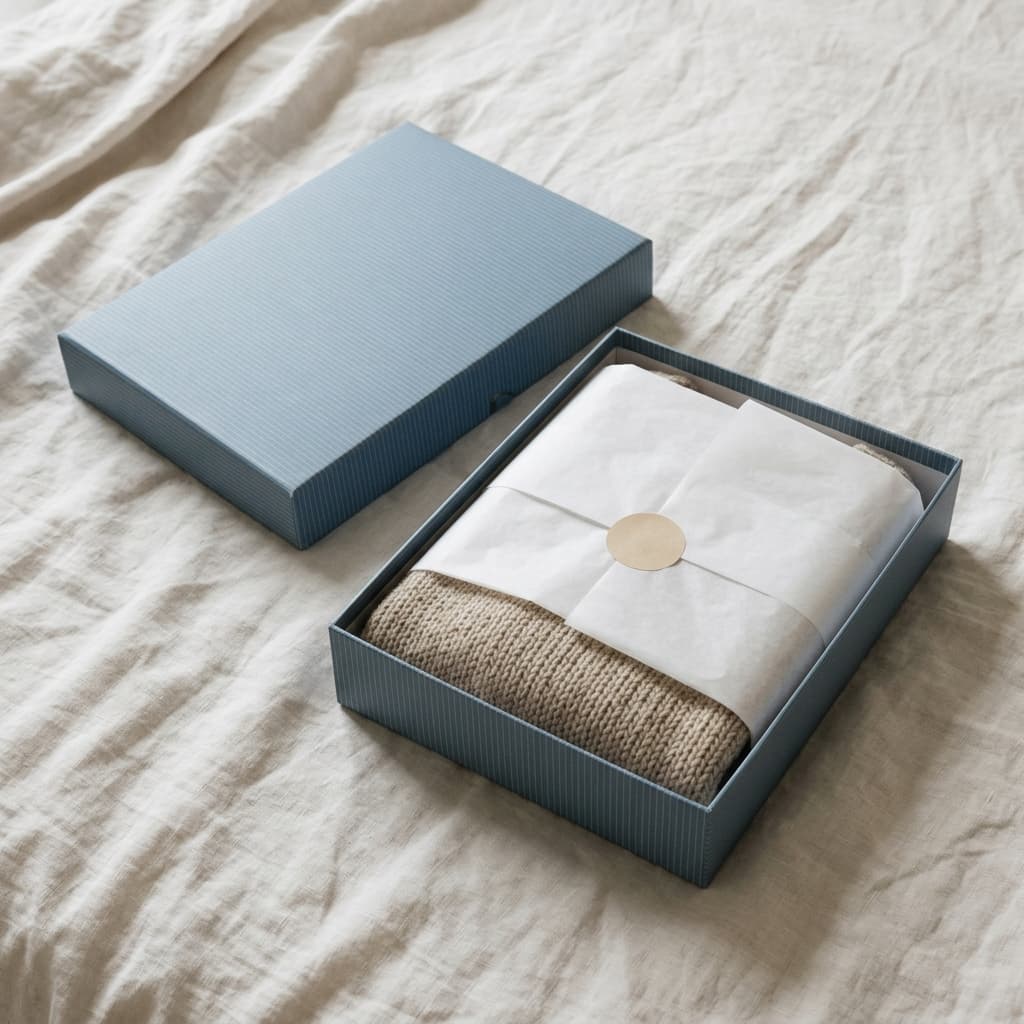
Apparel Boxes
Premium apparel packaging made for folds, reveals, and repeat use.
Explore box styleQuestions about shipping boxes.
Box style FAQsWe’ll confirm the exact details that apply to your structure and volume.
Read all frequently asked questionsWhat is the best way to tape a shipping box?+
We recommend the H method: run tape along the centre seam where the flaps meet, then across both short edges, on the top and the bottom. Use tape wide enough to overlap the sides by several centimetres. Water-activated paper tape bonds into the board, shows if anyone lifts it, and recycles along with the box.
How should shipping boxes be stacked on a pallet?+
Corner on corner, in straight columns, with nothing hanging over the pallet edge, because a box carries most of its weight in its corners and walls. If you ship on pallets, tell us the pallet size and we size your boxes to fill its footprint neatly, so every box sits fully on the pallet and the columns stay strong.
What other shipping box styles do you make besides the regular slotted carton?+
We also make full overlap cartons, whose outer flaps run the full width for a double layer on heavy loads; half slotted cartons, which take a separate lid; and telescope boxes, a lid sliding over a base, for long or flat items. For faster packing, a die-cut mailer box closes with locking tabs and needs no tape.
Can shipping boxes be reused?+
Yes, often. A corrugated box that is still sound can make a second trip, so check for crushed corners, tears and soft patches first, and cover old labels and barcodes completely. For heavy or fragile goods a fresh box is the safer choice, and our double-wall shipping boxes stand up to repeated trips better.
Start with a free recommendation
Get pricing