
 Made to your size
- 100 boxes
- Custom sizes & styles
- Free dieline support
- Quality print options
- Proof before production
- 8–12 business day production
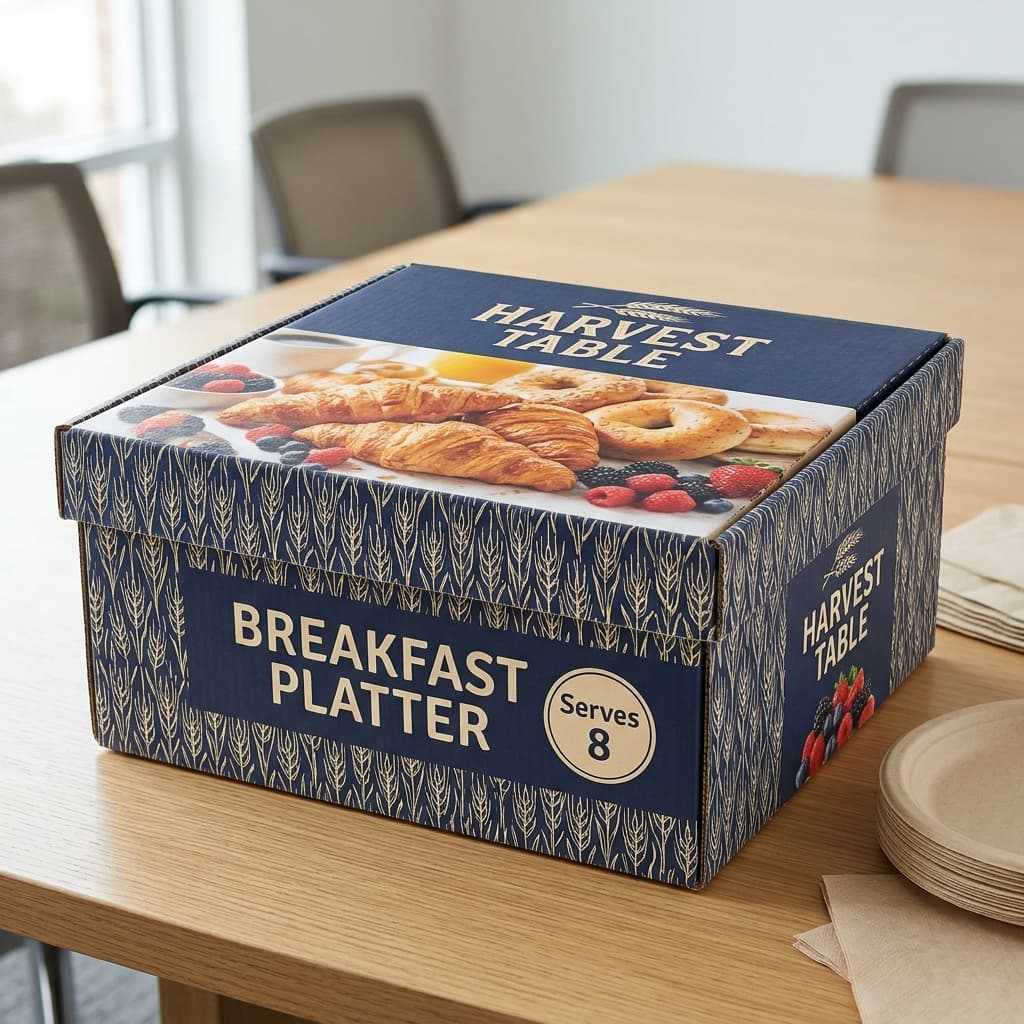
Catering boxes carry food for groups - sandwich platters, grazing boards, pastries, salads and hot trays - from the kitchen to an office, event or home. They are larger and flatter than takeaway boxes and are built to be carried level and opened straight onto a table as the serving dish. Lids with windows, built-in handles and fold-out trays are common.
Platters that travel
Custom Catering Boxes
✓Clear proofing before productionSee our process
Get a free quote
Tell us what you are packing and we’ll reply with practical options.
Product features
Built around the jobWindow lids to show the spread
Carry handles
Serve straight from the box
Small, medium and large sets
Strong flat stacking lids
Inserts for dips and salad bowls
Fold-out tray designs
Specifications made for your product.
Technical snapshotEvery final specification is confirmed against product weight, packing method, print coverage, route, and order volume.
View artwork preparation guide- SKU
- bm-1093
- Dimensions
- Custom-made around the product and packing workflow
- Materials
- E-flute corrugated, Grease-resistant SBS board, Kraft board
- Printing
- CMYK, Pantone, white ink, or unprinted
- Finishes
- Matte, gloss, soft-touch, foil, embossing, spot UV
- Quantities
- Starting at 100 on selected configurations
- Proofing
- Dieline and digital proof
Branding that arrives with the spread.
Artwork and materialsThe large flat lid is the main print area, often with a window showing the arrangement. The base doubles as the serving dish, so its walls are seen on the table too. Our packaging guides cover sizing, materials, print, and cost in more depth.
Lid, window and base walls
We place your design across the lid around any window, keep the window to a size that stays flat when boxes stack, and print the base walls so your brand stays on show at the table.
Explore print and finishesE-flute, SBS or kraft
E-flute corrugated keeps a heavy platter flat and takes clean print, grease-resistant SBS shows bright colour for pastries and sandwiches, and kraft gives a rustic look that suits grazing and charcuterie boards.
Explore material decisionsChoose your box
Choose small, medium and large platter sizes, with windows, handles or fold-out trays.
Request a quote
Send us a full order laid out as you serve it, and we recommend the sizes.
Finalize the order
Approve the board, window, handles, inserts for dips and quantities for each size before we start.
Build the dieline
We draw the box around your platter layout, with a stiff base and clearance under the lid.
Approve the proof
Check the lid design, window size and base wall print on your digital proof before we print.
Roll on production
We print, cut and glue your catering boxes, then check and pack them flat.
Best for
Office and corporate cateringGrazing and charcuterie boardsSandwich and pastry plattersEvent and buffet foodWhat changes the price.
Cost factorsEvery project is quoted individually. These are the choices that move the price on almost every order.
- Size
- Platter boxes are large sheets of board, so size moves the price more than on small food boxes.
- Board
- Corrugated holds a heavy platter flat; lighter board costs less but bends more.
- Window
- A film window in the lid is an extra material and an extra step.
- Grease barrier
- Oily foods such as pastries and cured meats call for a coated or lined base.
Buyer guidance
Choosing this format
Carried level, opened as the serving dish
A catering box has two jobs: keep a heavy spread flat on the way, then look good enough to serve from.
A large platter bends in the middle if the base is too thin, and food slides to one end. Corrugated bases or folded-in rails keep it flat. Handles or hand-holes let it be carried level rather than tipped.
Many catering boxes are designed so the lid comes off or folds back and the base becomes the platter, which saves the venue plating everything up.
- Stiff base that will not bow
- Lid clears the tallest food
- Base doubles as the platter
Grazing boards and charcuterie
Grazing boxes are shallow and wide, often with a window, and usually need a grease-resistant base for meats and cheese.
Cured meats, cheese and oily dips will mark plain board, so a coated base or a liner sheet is common. A window in the lid shows the arrangement without opening the box, which helps at pick-up and delivery.
Keep the depth shallow so the arrangement is visible and food does not shift. Tell us the tallest item on the board, often a wedge of cheese or a pot of dip, and we set the depth just above it.
Hot food and keeping it warm
Hot catering trays need vents or they steam soggy, and board alone does not hold heat for long.
Hot food is usually packed in foil or board trays that sit inside the catering box, with vent holes to let steam out. For long trips, insulated bags around the boxes do more than the board itself.
Related packaging formats
Compare your options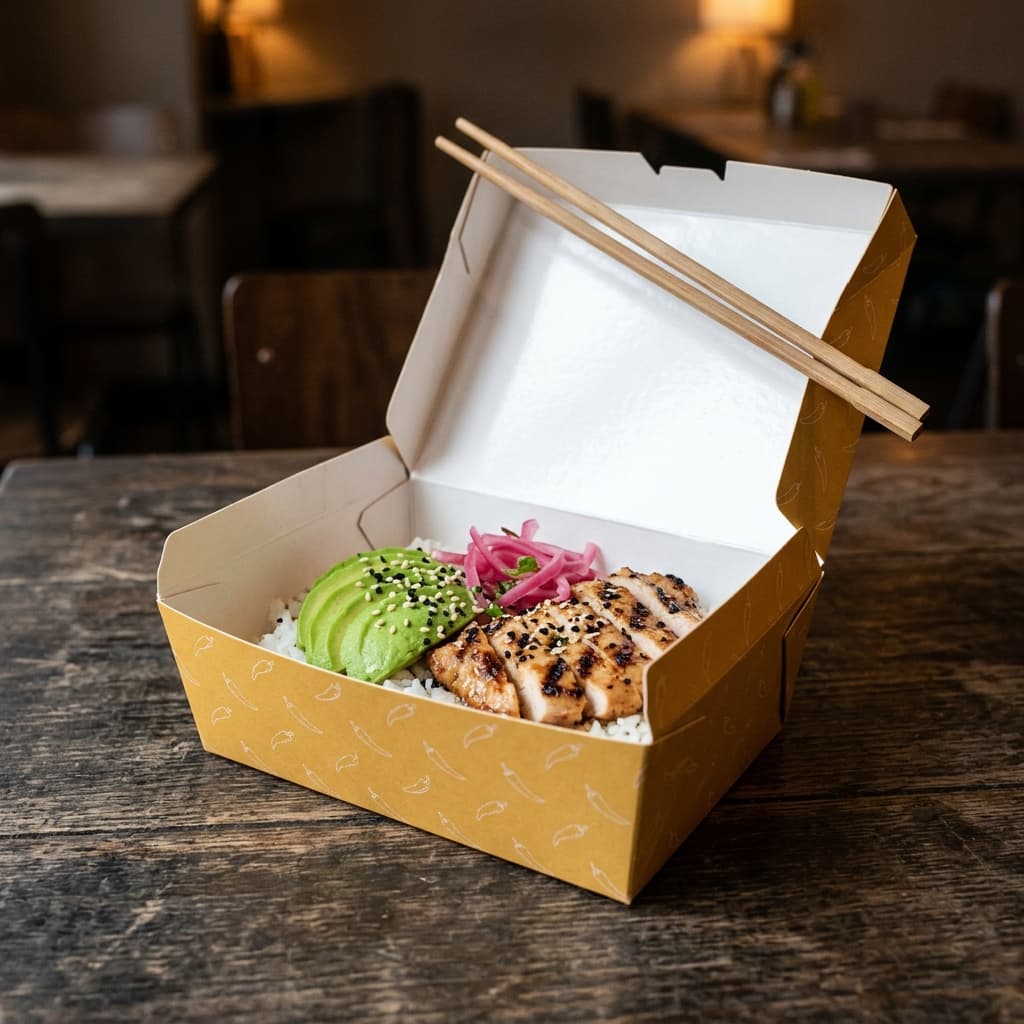
Food Boxes
Thoughtful cartons, sleeves, and carry boxes for food and beverage brands.
Explore box style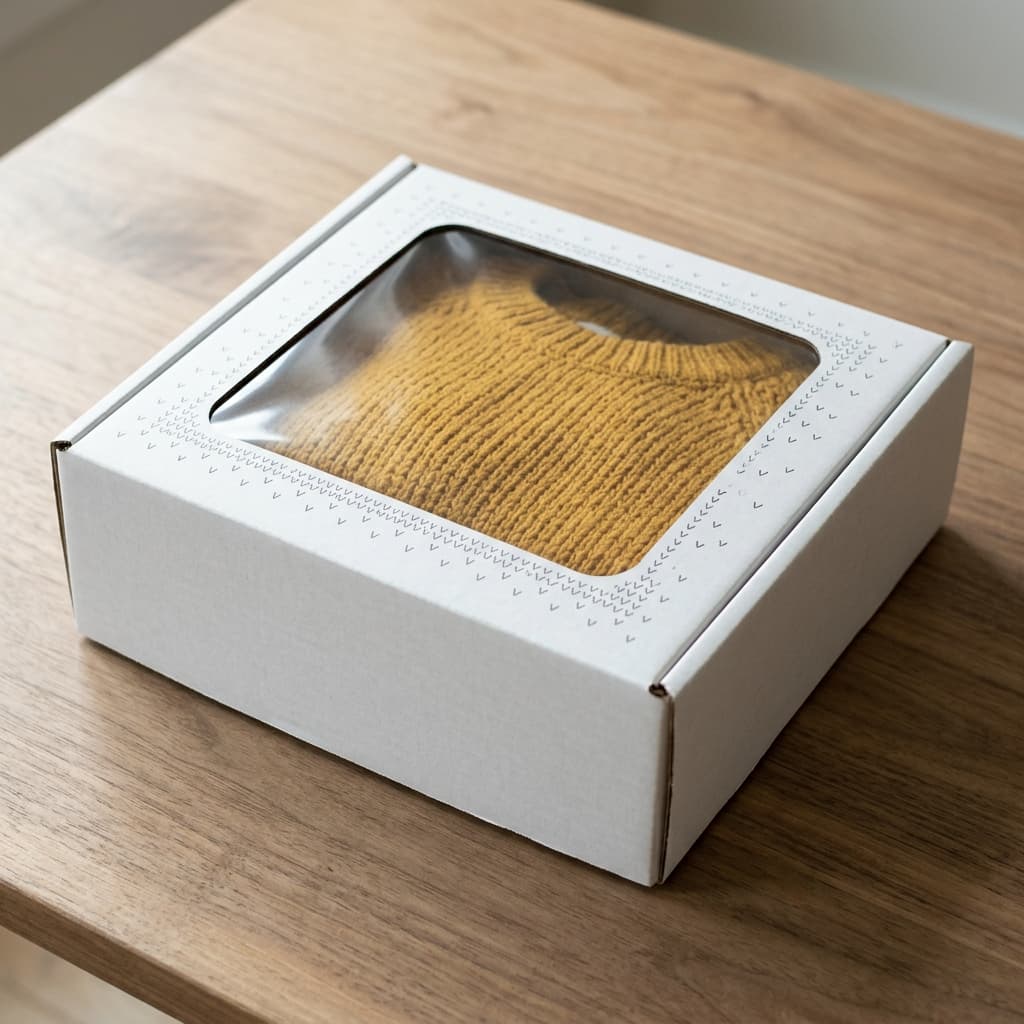
Window Boxes
Cartons with a clear panel, so the product sells itself on the shelf.
Explore box style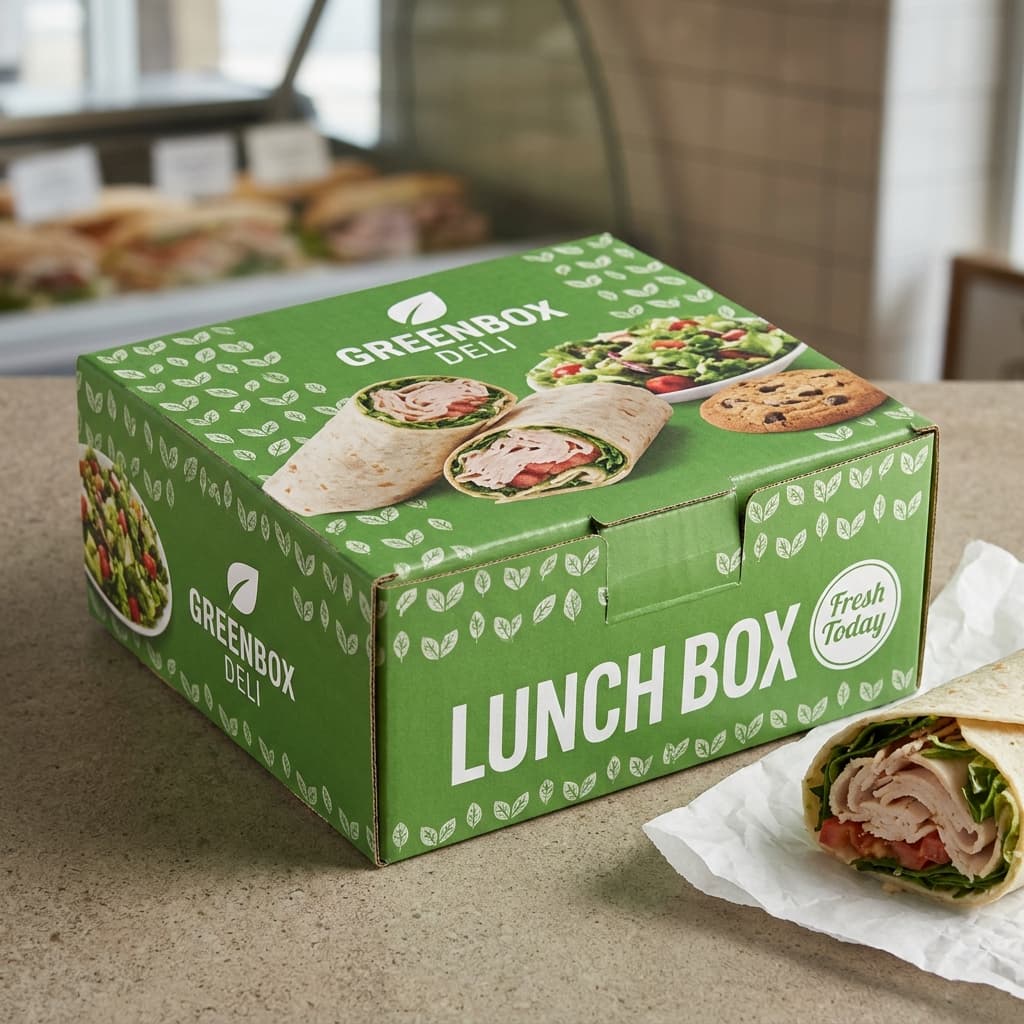
Lunch Boxes
Single-serve boxed lunch packaging for cafes, delis, schools, events and meal prep.
Explore box styleQuestions about catering boxes.
Box style FAQsWe’ll confirm the exact details that apply to your structure and volume.
Read all frequently asked questionsWhat size catering box do I need for a group order?+
Lay out a full order on a tray the way you serve it, measure it with a little space around the edges, and we size the box from that. Most caterers settle on two or three sizes, such as small, medium and large, rather than one per order. Very large boxes get hard to carry level, so we recommend two boxes for big orders.
Can catering boxes be stacked in a delivery van?+
Yes. We make catering boxes with flat, strong lids, and corrugated board stacks well. If you want a film window in the lid, we keep it to a size that will not sag onto the food under a box above. Stacking heavier platters at the bottom and keeping tall items clear of the lid helps every box arrive neat.
Can food sit directly on the base of a catering box?+
Yes. We give catering boxes a food-safe inside surface and confirm the board and coating are suitable for direct food contact before production. Many caterers still add a greaseproof sheet or doily under sandwiches, pastries and cured meats, because it makes the base look cleaner when the box is opened as the serving dish.
Can a catering box hold dips and salads alongside sandwiches?+
Yes. We can add a card insert with spaces for your sealed bowls and pots, so wet items stay put and the dry items sit around them. We recommend placing dips and sauces near the middle, where they are least likely to tip as the box is carried. Send us your pot sizes and we lay out the insert.
Should an office order use catering boxes or individual lunch boxes?+
We make both. Catering boxes suit a meeting where people serve themselves from a shared spread, and they usually use less packaging. Individual lunch boxes suit orders where each person has a different meal or dietary need, or eats at their desk. Many caterers send a shared platter with a few labelled boxes for special diets.
Start with a free recommendation
Get pricing