
 Made to your size
- 100 boxes
- Custom sizes & styles
- Free dieline support
- Quality print options
- Proof before production
- 8–12 business day production
Custom cartons, sleeves and carry boxes from 100 units for bakeries, confectioners, dry foods and beverages, built to stack, carry and hold shape through service. Choose paperboard, kraft or corrugated board, add a window to show the product, and pick a coating suited to the contents. Production runs 8–12 business days after you approve the proof.
Food-safe options
Custom Food Packaging
✓Clear proofing before productionSee our process
Get a free quote
Tell us what you are packing and we’ll reply with practical options.
Product features
Built around the jobGrease-resistant coatings
Carry handles
Display windows
Cartons, sleeves and carry boxes
Allergen and ingredient panel
Moisture-resistant chilled coating
Tear tab or lid seal
Specifications made for your product.
Technical snapshotEvery final specification is confirmed against product weight, packing method, print coverage, route, and order volume.
View artwork preparation guide- SKU
- bm-1005
- Dimensions
- Custom-made around the product and packing workflow
- Materials
- Food-grade paperboard, Kraft board, Corrugated board
- Printing
- CMYK, Pantone, white ink, or unprinted
- Finishes
- Matte, gloss, soft-touch, foil, embossing, spot UV
- Quantities
- Starting at 100 on selected configurations
- Proofing
- Dieline and digital proof
Food packaging that sells the flavour.
Artwork and materialsFood boxes carry your branding on the outside, with a clear panel for ingredients and allergens. The inside stays suited to the food, so where the artwork goes matters. Our packaging guides cover sizing, materials, print, and cost in more depth.
Outer panels and ingredient space
We print your design on the outer panels and keep the food-contact surface plain where needed. Allergen and ingredient text sits on a panel readable without opening the box, clear of folds and glue flaps.
Explore print and finishesPaperboard, kraft or corrugated
Paperboard prints sharpest for dry foods, kraft gives a natural look with warmer colours, and corrugated gives stiffer walls for heavier packs. Grease-resistant or moisture-resistant coatings keep the outside clean and change how glossy the box looks.
Explore material decisionsChoose your box
Tell us the food, its size when packed, and whether it is dry, greasy or chilled.
Request a quote
We recommend the format, board and coating that suit your food, with any window or handle.
Finalize the order
Confirm the format, board, coating, window, print and quantity, and how the food meets the board.
Build the dieline
We draw the box around your food as packed, with room for any tray, liner or wrap.
Approve the proof
Review the outer artwork, ingredient and allergen panel, window placement and every fold on the proof.
Roll on production
Your food boxes are printed, coated, cut and checked, then packed flat ready for your kitchen.
Best for
BakeriesCoffee and teaConfectionerySpecialty foodsWhat changes the price.
Cost factorsEvery project is quoted individually. These are the choices that move the price on almost every order.
- Quantity
- Set-up work is the same whether we make 100 boxes or 5,000, so the price per box falls as quantity rises.
- Structure
- A simple tuck carton or sleeve is the most economical. Carry boxes with handles and multi-part structures use more board and more folding.
- Windows
- A display window adds a die-cut and a clear panel.
- Coatings
- A coating for greasy or moist contents adds a step over plain board.
- Print coverage
- One colour on the outside costs less than full colour printed inside and out.
Buyer guidance
Choosing this format
The formats food packaging comes in
Custom food packaging is a family of formats, and each one is cut and creased from a flat sheet.
Folding cartons come from solid paperboard with one glued seam. Sleeves are an open band that slides over a tray or a wrapped item. Carry boxes add a handle, either cut into the top panel or formed from a folded strap, and corrugated versions give the walls more stiffness.
All of them ship flat and are formed at the point of use, so the contents decide the structure. A tray under a sleeve holds a soft item steady. A carton with an auto-lock base copes with a heavier filling than one closed with tuck ends.
- Carton: solid paperboard, one glued seam
- Sleeve: open band over a tray or wrapped item
- Carry box: handle built into the sheet
Paperboard, kraft or corrugated?
Choose the board by what the food does to it and what it has to carry, before looking at colour.
Paperboard is flat and smooth, so it prints sharply and suits light, dry items such as sweets, tea and biscuits. Kraft is brown and fibrous, looks natural and takes ink more dully. Corrugated adds a fluted layer that stiffens the wall, which suits heavier items, tall boxes and anything carried by a handle.
Corrugated is thicker, so it takes more storage room and holds less fine print detail. Where food sits directly against the board, tell us, and we use a food-safe stock or add a liner. The board that suits the job is not always the board that is suitable for food contact.
- Paperboard: sharp print, light dry foods
- Kraft: natural look, colours shift brown
- Corrugated: stiff walls, handles, taller packs
Measure the food, not the plate
Size the pack around the item as it will be when packed, including anything that rises, spreads or settles.
Baked goods, cheese and warm food can change shape between the kitchen and the box. Measure the largest real example, not the average, and allow room for a tray, liner or paper wrap. A tight pack crushes icing and tears wrap. A loose one lets the item slide and arrive broken.
Height catches people out most. When packs are stacked, the weight above sits on the walls, so internal height and board stiffness have to be chosen together. Send us the size of your largest piece and we build the layout around it, so you can check the fit on the dieline and digital proof.
Printed board or plastic container?
A board pack prints edge to edge and recycles differently from a clamshell, but it is weaker against moisture.
Plastic containers seal, resist liquid and show the food from every side. A board carton prints the whole surface and feels like part of the brand. Moisture and grease reach it faster unless a barrier is added.
Many foods suit a mix: a board outer with a window, plus a liner or wrap inside for the part that touches the food. If the pack has to carry storage, allergen or recycling information, we leave room for it and lay it out on the proof.
Coatings, grease and ink on food stock
On food packaging the coating matters as much as the artwork, because it decides what the board can survive.
A grease-resistant coating or liner stops oil spreading through the board and leaving dark patches on the outside. A varnish gives a wipeable surface. Plain uncoated board looks natural but marks easily.
Kraft pulls every colour toward brown, so pale tones disappear and a white underprint is the usual fix. Any ink or coating on a surface that touches food should be one made for that use, and named in the specification rather than assumed.
- Barrier coating or liner for oily contents
- Varnish for a wipeable outside
- White underprint when colour must hold on kraft
Printed food box or a plain box with a label?
A printed box is the pick for dry and baked food on a settled menu. A plain box with a printed label is the pick when the range keeps changing, and neither suits liquid food.
Soups, sauces and salads with dressing need a container that holds liquid. A carton with a barrier coating resists a spill for a short time, not a long one. Foods that need an airtight or tamper-evident seal also need packaging built for that job.
A fast-changing menu is where the label wins. A printed carton is made to one size and one design, so it only saves money while the contents stay close to the same. Where the range keeps moving, plain cartons with a printed label can be the safer choice.
Related packaging formats
Compare your options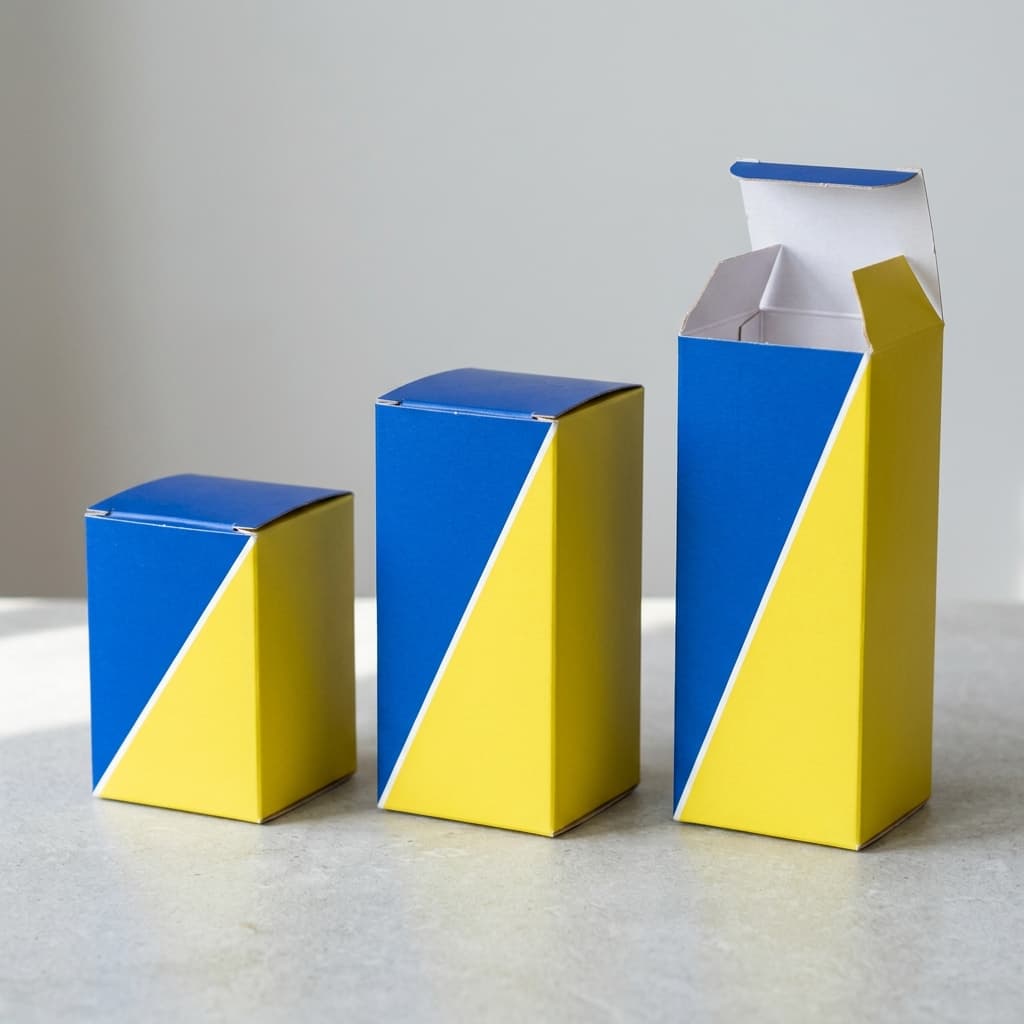
Folding Cartons
Lightweight printed cartons with crisp color, structure, and shelf appeal.
Explore box style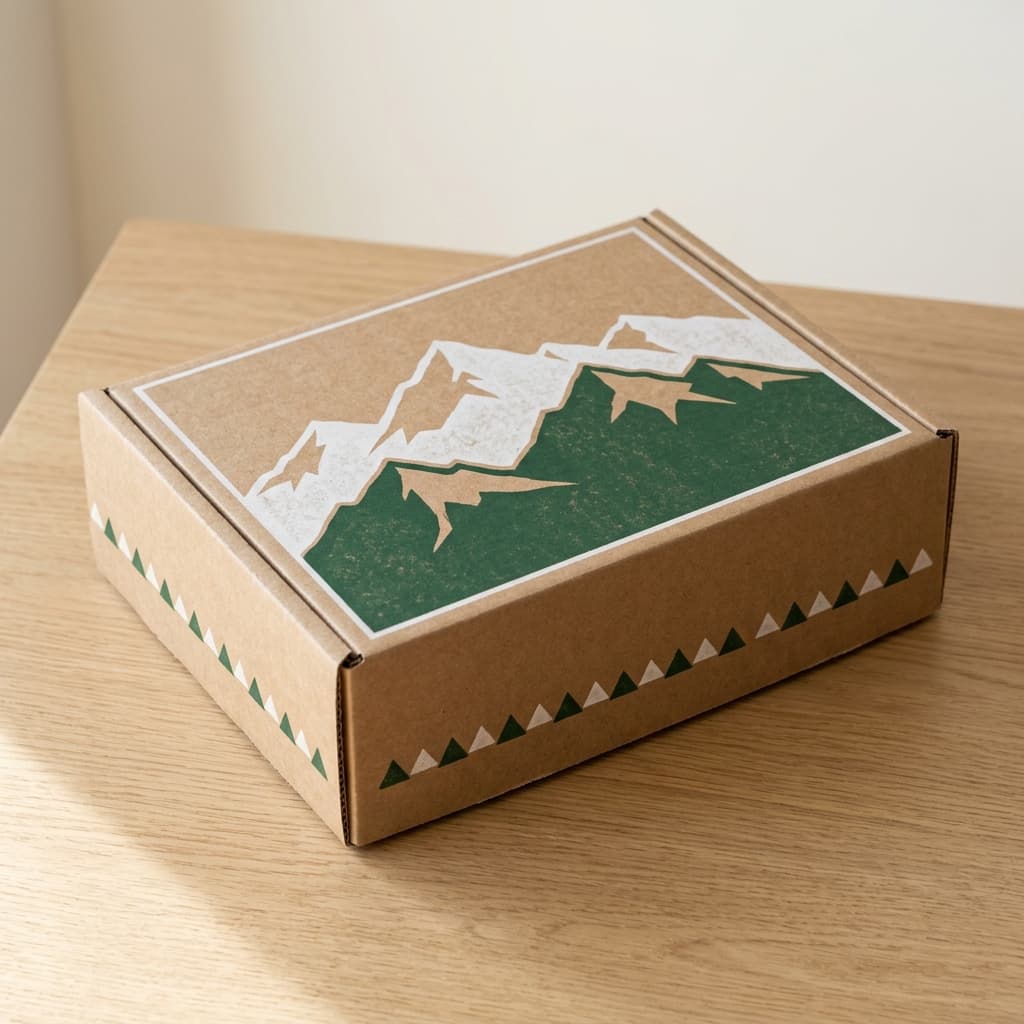
Kraft Packaging
Warm, honest kraft packaging with recycled content and modern print.
Explore box style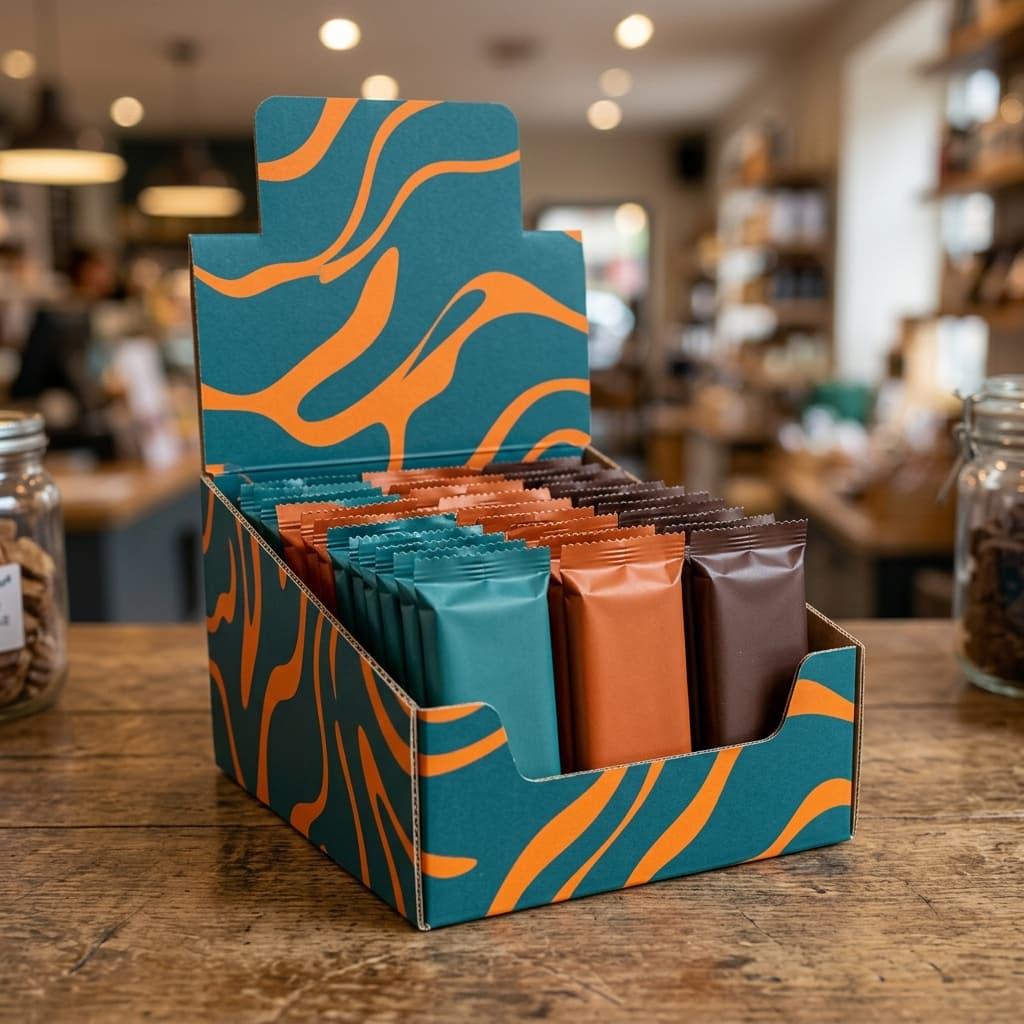
Display Boxes
Retail displays that ship flat, assemble quickly, and merchandise clearly.
Explore box styleQuestions about food boxes.
Box style FAQsWe’ll confirm the exact details that apply to your structure and volume.
Read all frequently asked questionsCan food be reheated in a printed food box?+
Our standard printed food boxes are made for serving and carrying food rather than heating it, and foil finishes must never go in a microwave. If your customers will reheat in the box, tell us before we quote and we confirm whether the board and coating suit that use. We can also print a clear reheating or do-not-heat note on the box.
Can food boxes go in the fridge or freezer?+
Yes, for chilled food. For the fridge, we use a moisture-resistant coating and board a little stiffer than a dry box needs, because condensation forms when a cold box meets warm air. For products that live in the freezer, our frozen food boxes are built for the cold from the start.
Where does allergen and ingredient information go on a food box?+
We place it on a panel the customer can read without opening the box, clear of folds and glue flaps. If your recipes change often, we recommend printing your brand on the box and putting ingredients and allergens on a label, so a recipe change never means reprinting boxes. Tell us what the panel must include and we lay it out on the proof.
Will crackers and biscuits stay crisp in a printed food box?+
Yes, when they sit in a sealed inner bag or wrapped tray inside the box, which is how most dry foods are sold. Paperboard on its own lets moisture through, so we size the printed carton around your inner pack. The carton does the branding, the shelf and the stacking, and the inner pack keeps the food fresh.
Can a food box show it has not been opened during delivery?+
Yes. We can add a perforated tear tab or a glued flap that has to break to open the box, or you can finish it with a seal sticker across the lid. Each one shows your customer at a glance that nothing has been touched since the food left your kitchen, and we place it so the box still opens easily.
Start with a free recommendation
Get pricing